

185 Years of Gay Cruising: A Brief History
Twenty-three events that outline the evolution of how gay men would seek out casual sex in bathhouses, parks and eventually online.

This story was produced in partnership with hankycode, an LGBTQ+ history publication.
While it’s widely believed that cruising culture has existed for hundreds of years, the official term emerged in the 1960s as gay slang referring to a discreet method of men seeking out anonymous same-sex encounters in parks, bathrooms, waterfronts, bathhouses and other such places. Here are 23 key moments that shaped cruising culture in the United States.
1842
While a homosexual subculture is growing in New York City, the general public still refers to gay people as “sodomites,” as the word “homosexual” isn’t coined until 1868. Newspapers regularly publish articles calling out and expressing their disgust of suspected sodomites.
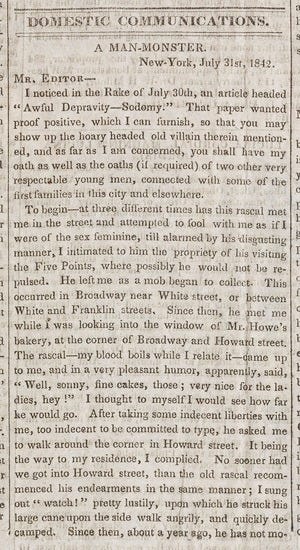
One reader writes a letter to the New York City sporting male weekly newspaper, The Flash, about how he tried to catch a sodomite in the act of what is now considered cruising:
“He met me … at the corner of Broadway and Howard street. … I thought to myself I would see how far he would go. After taking some indecent liberties with me, too indecent to be committed to type, he asked me to walk around the corner on Howard street.”
1903
The first recorded raid of a gay bathhouse in New York City leads to the detainment of 60 men and the arrest of 14. The Russian and Turkish bathhouse, in the basement of the Ariston Hotel, was a free space for gay men to express themselves sexually and to cruise in a safer environment. Police reportedly spied on the bathhouse for weeks leading up to the raid.
1910s
Since at least the 1910s, Washington Square Park has been a popular gay cruising spot. It became so well-known that the 1917 song “The Greenwich Village Epic” contains the line, “Fairyland’s not far from Washington Square.” According to the NYC LGBTQ Historic Sites Project, “The west side of the park, along the fence, was the major cruising area and was referred to as ‘the Meat Rack.’”
1918
The San Francisco Police Department’s Morals Squad, which focuses on prostitution, and the military police begin to survey two residences where men who met cruising in public would go for private sexual encounters. For at least 10 days, any men who entered were locked in rooms for questioning until they provided confessions which included divulging the names of friends who engaged in gay sex as well as surrendering personal address books. The National Parks Service wrote of the event:
“Eleven men were initially arrested. A second wave of arrests soon followed. … All in all, over 30 civilians and six soldiers found themselves behind bars.”
1919
The Navy learns that some of their sailors are engaging in homosexual activity in Newport, Rhode Island. Waterfronts have historically been prime cruising spots because they are often isolated at night. Mid-level Navy official Ervin Arnold has a personal mission to remove homosexuals from the Navy by sending sailors out to seduce and entrap them. This becomes known as the Newport sex scandal.
According to The New York Times, “On May 1, 1919, the Foster court of inquiry … declared that sufficient evidence had been gathered to court-martial fifteen of the arrested sailors. They remained behind bars all summer and were tried in the fall, at which time some were released and others sentenced.”
1920s
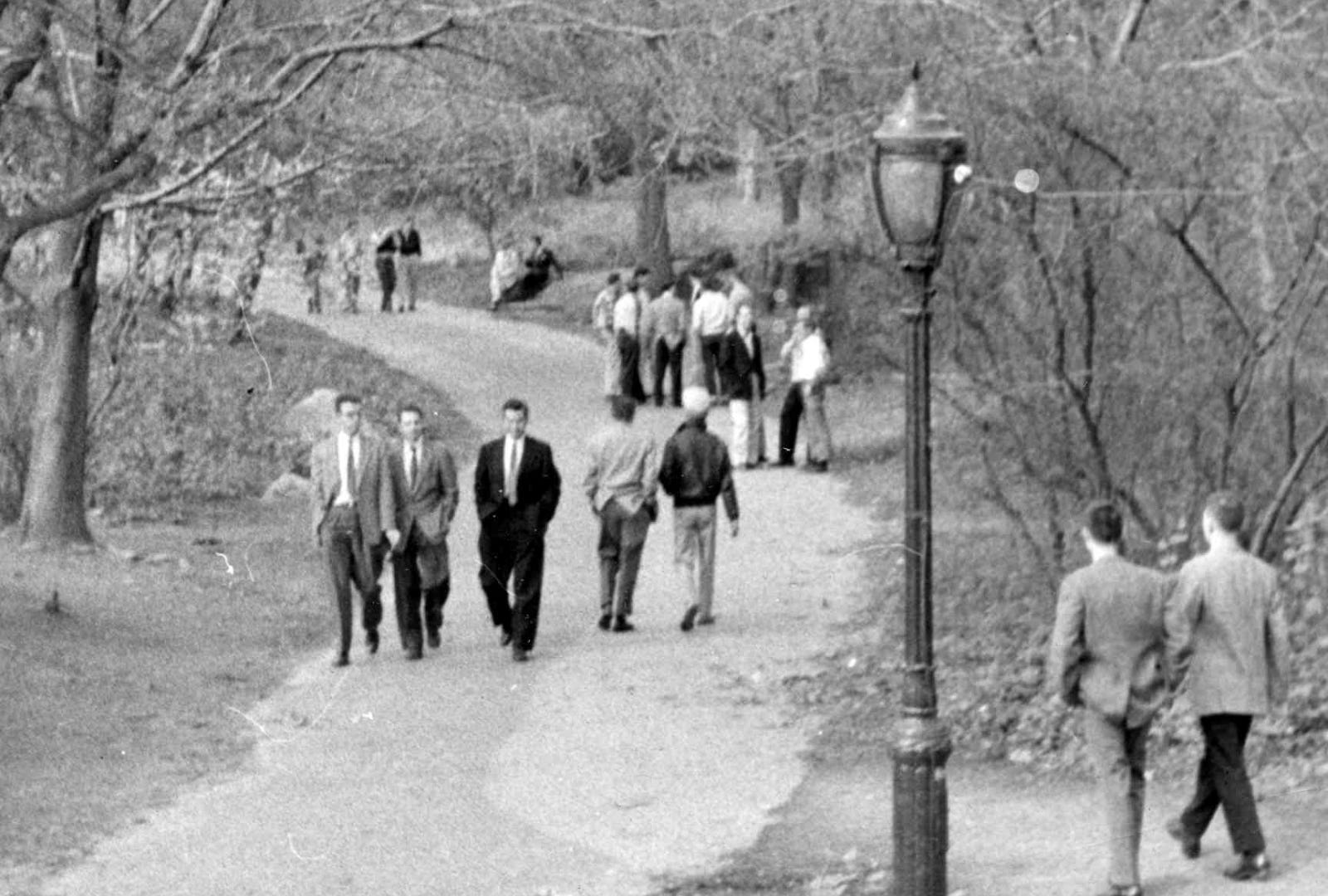
The lawn at the north end of the Ramble in Central Park becomes such a popular cruising spot that it is known as “The Fruited Plain.” According to historian George Chauncey:
“The enormous presence of gay men in the parks prompted a sharp response from the police. They regularly sent plainclothesmen to cruising areas to entrap men; in the grounds around the Central Park zoo in the first half of 1921 alone, they made thirty-three arrests.”
Mid-20th Century
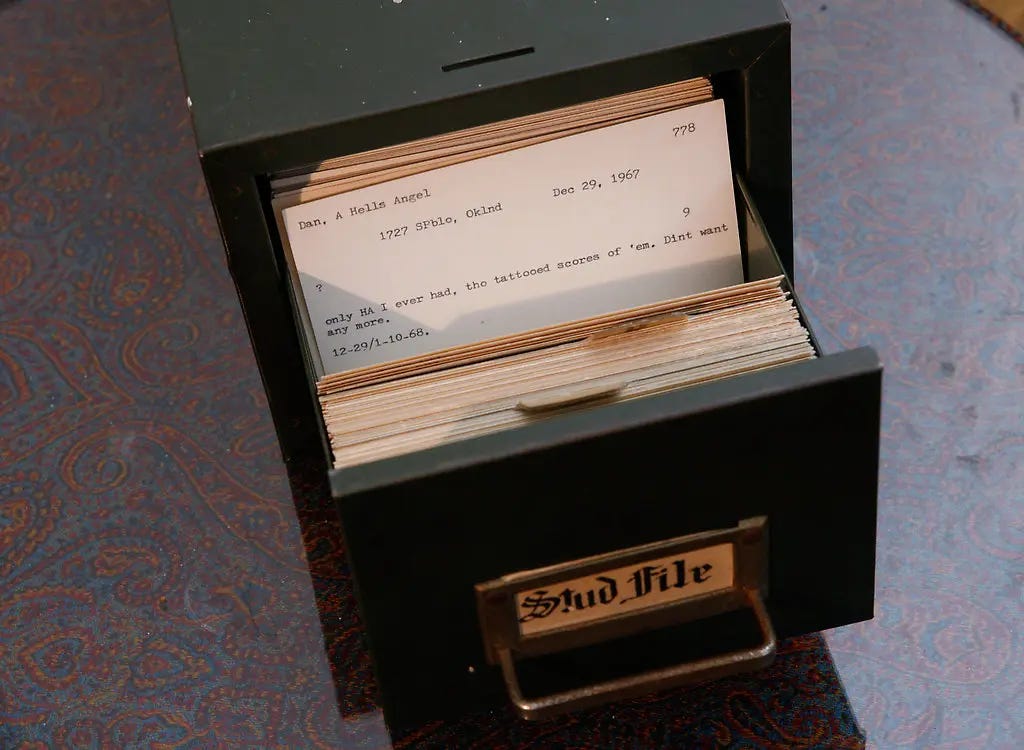
At the request of sexologist and biologist Alfred Kinsey, Samuel Steward documents his hookups in what he titles “Stud File.” The metal file box contains 746 index notecards—each one detailing a different hookup. The cards include partners’ physical details, meeting dates, sexual acts and a collection of donated pubic hair from 54 different men.
1950s
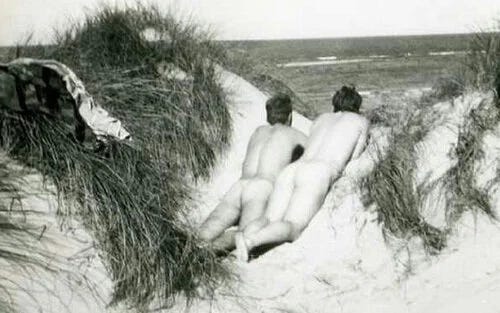
Fire Island Pines and Cherry Grove are established as gay enclaves on New York’s Fire Island. The spaces are connected by a cruising area also known as “the Meat Rack,” which becomes famous as a safe haven for repressed homosexuals to fully express and experience their sexuality.
The Brooklyn Heights Promenade becomes one of the most well-known gay cruising areas in New York City. According to an article in the Brooklyn Heights Press, “It is a well-known tacit fact that after nine o’clock on a mild evening many persons quit the Promenade and leave it to the homosexuals.”
1955
Boise, Idaho, becomes the center of a sex scandal as three men are arrested and accused of performing homosexual acts. The situation spirals into a gay hysteria, exposing an underground homosexual community in Boise that includes sex workers as well as family men in heterosexual marriages. Over 1,000 people are interrogated and 15 are convicted.
1962
Officers target popular cruising spots—including bathrooms, Alumni Halls and the Michigan Union—at the University of Michigan. They arrest 30 men on homosexual or accosting charges. Captain Walter E. Krasny tells The Ann Arbor News:
“While many arrests have occurred in University buildings our men will also be checking playground areas and public gathering spots where it is felt homosexuals might meet.”
1966
New York City Mayor John Lindsay begins to crackdown on “honky tonks, promenading perverts … homosexuals and prostitutes” in Times Square.
1968
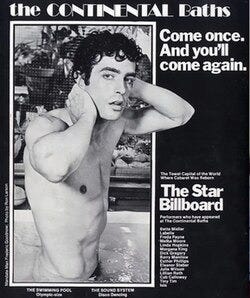
The Continental Baths opens in the basement of the Ansonia Hotel in New York City. Steve Ostrow, an icon of gay night life, transforms the dilapidated basement into a Roman-themed bathhouse, which eventually would include a disco room and a DJ booth. Continental Baths is one of many bathhouses thriving in the Post-Stonewall, Pre-AIDS years. The bathhouse combines sex, socializing and entertainment. It boasts an impressive list of attendees, including Andy Warhol, Mick Jagger and Alfred Hitchcock. The bathhouse would shut down in 1976.
1970s
The handkerchief code, which helps men discretely express their sexual interests, originates during the gold rush era at a time when San Francisco’s male population is growing dramatically. Since the vast majority of the population is male, men have to dance together at social events. Some men wear blue bandanas to signify they will take the male part of the dance, while others wear red to signify they will take the female part.
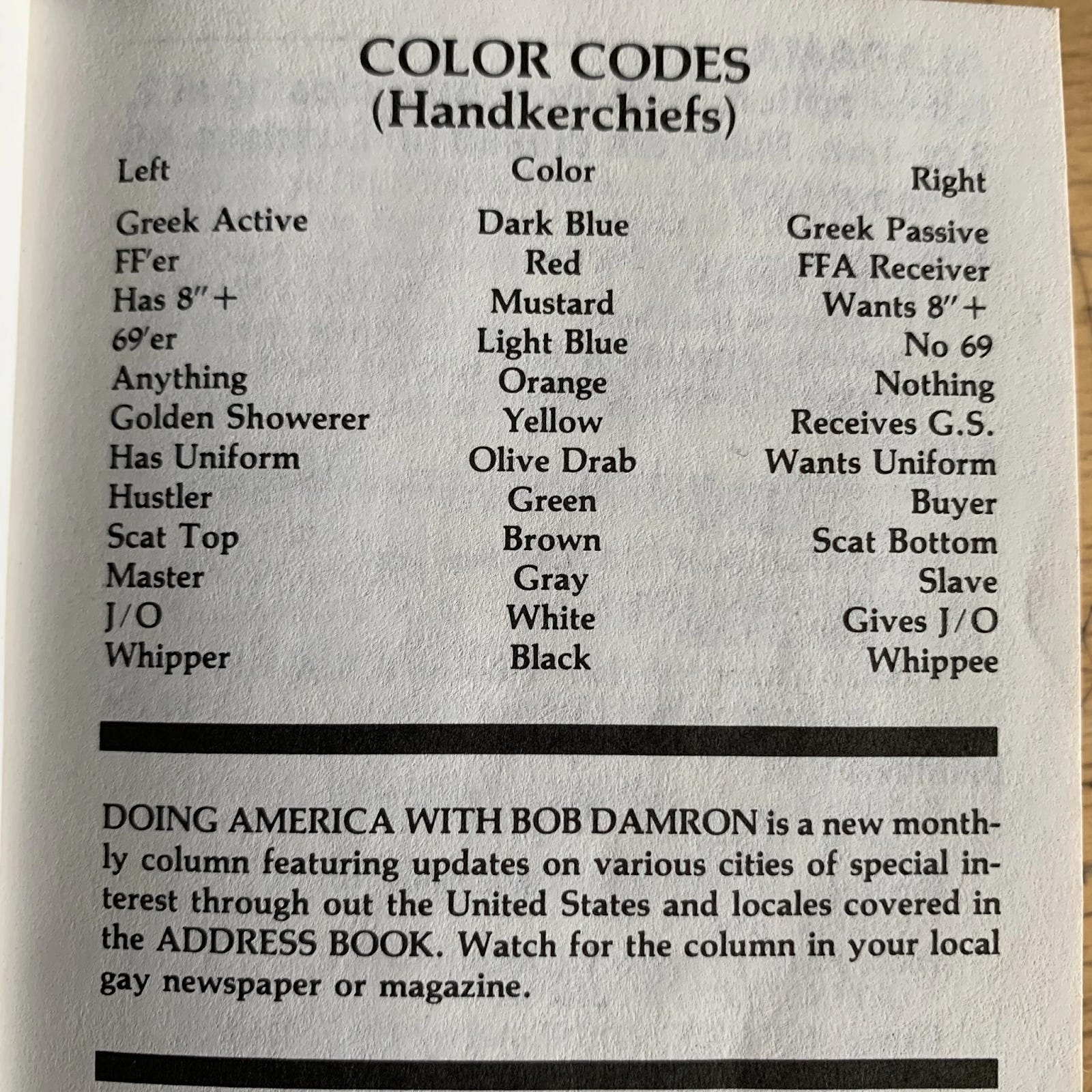
As years pass, the code takes on new life as a way to covertly signify sexual interests. In 1980, Bob Damron’s Address Book includes a section that details how a light blue handkerchief worn on the left means the individual wants a “69’er” and a mustard handkerchief worn on the right signifies “Wants 8″+.” This system helps revolutionize the cruising process by giving men the ability to nonverbally and discreetly communicate their sexual desires.
1971
For decades, gay men cruise by posting vague personal ads in select newspapers. They intentionally use language that does not out them, but that signifies their intentions to other gay men. For example, mentioning massages or being a masseuse is common. In 1971, The New York Times reports that there are internal divisions at The Village Voice about whether to keep running the ads.
1978
A gang of men with bats beat up men who they think are gay at the Ramble. Six men are seriously injured. Three men are convicted for the attacks.
1993
Gay.net, one of the first online chat systems, launches. The site—which would later merge with Gay.com—adds an online component to cruising and offers men the ability to seek out anonymous sexual encounters without some of the risks of in-person cruising. Users start in the main chat room sending flirty but innocuous messages and then often move into a private chat room.
1995
Craigslist is founded and eventually becomes a go-to site where people post ads for a variety of things, including hookups. Craigslist would shut down its personal section in 2018, following Congress’ passage of the Fight Online Sex Trafficking Act.
1999
Gay dating sites continue to grow. Gaydar is initially a desktop-only site designed to connect gay and bisexual men worldwide for relationships, hookups and friendships. An editor for Buzzfeed, Patrick Strudwick, tells the BBC: “It was the forerunner to Facebook. The idea [that] an individual would have their own page, it was entirely novel.”
2009
Grindr launches as one of the first geosocial apps for gay men. The site also allows users to filter by age, body type and so-called tribes that include twink, bear and jock. Since then, similar apps like SCRUFF and Jack’d have entered the space, but Grindr remains the largest and most popular.
2018
Equinox gym faces a lawsuit when a customer at New York City’s Flatiron location says that three men masturbated in front of him in the steam room. The customer reported the incident to the front desk, who allegedly did not take action nor revoke the men’s memberships. The case is still ongoing and the suit now includes 11 people who were allegedly “sexually assaulted, attacked [or subjected to] indecent exposure” in Equinox steam rooms.
Sniffies is founded as a web-based map showing nearby users looking to cruise. The site allows users to chat, view profiles and share explicit photos. In May 2025, Apple removes the app from the App Store. The removal is said to be temporary, but remains in place as of this article’s publication date.
2025
Since the summer of 2025, over 200 people are arrested at a Penn Station bathroom for “public lewdness.” New York State Senator Brad Hoylman-Sigal tells Out that these arrests “harken back to the dark days of trapping gay men and other members of the community in public spaces like restrooms.” These arrests indicate that while traditional cruising is still popular, it’s also still being monitored by law enforcement.
Additional reporting by Nico DiAlesandro
If objective, nonpartisan, rigorous, LGBTQ-focused journalism is important to you, please consider making a tax-deductible donation through our fiscal sponsor, Resource Impact, by clicking this button:
 | A guest post by
|
It’s not a history of cruising itself so much as a history of harassment and entrapment of gay men by law enforcement.
The objections are always ostensibly about public sex, but it is clear from the article that private spaces - even private residences - are not safe, as police would stake them out and raid them.
🏴🇬🇧 there was an infamous Meat Rack on the Piccadilly Circus and Regent Road junction. It was by the underground stairs down into Piccadilly underground station. It was a popular 'Rent Boy' hookup spot too. Soho was still a seedy area but a fun to be in for 🏳🌈 vibes. A lot of LGB folks of a certain age still fondly (?) remember and hark back to when 🏳🌈 life was underground and secretive. Cheers DougT