

1776-2026: The Moments That Defined Trans Rights in America
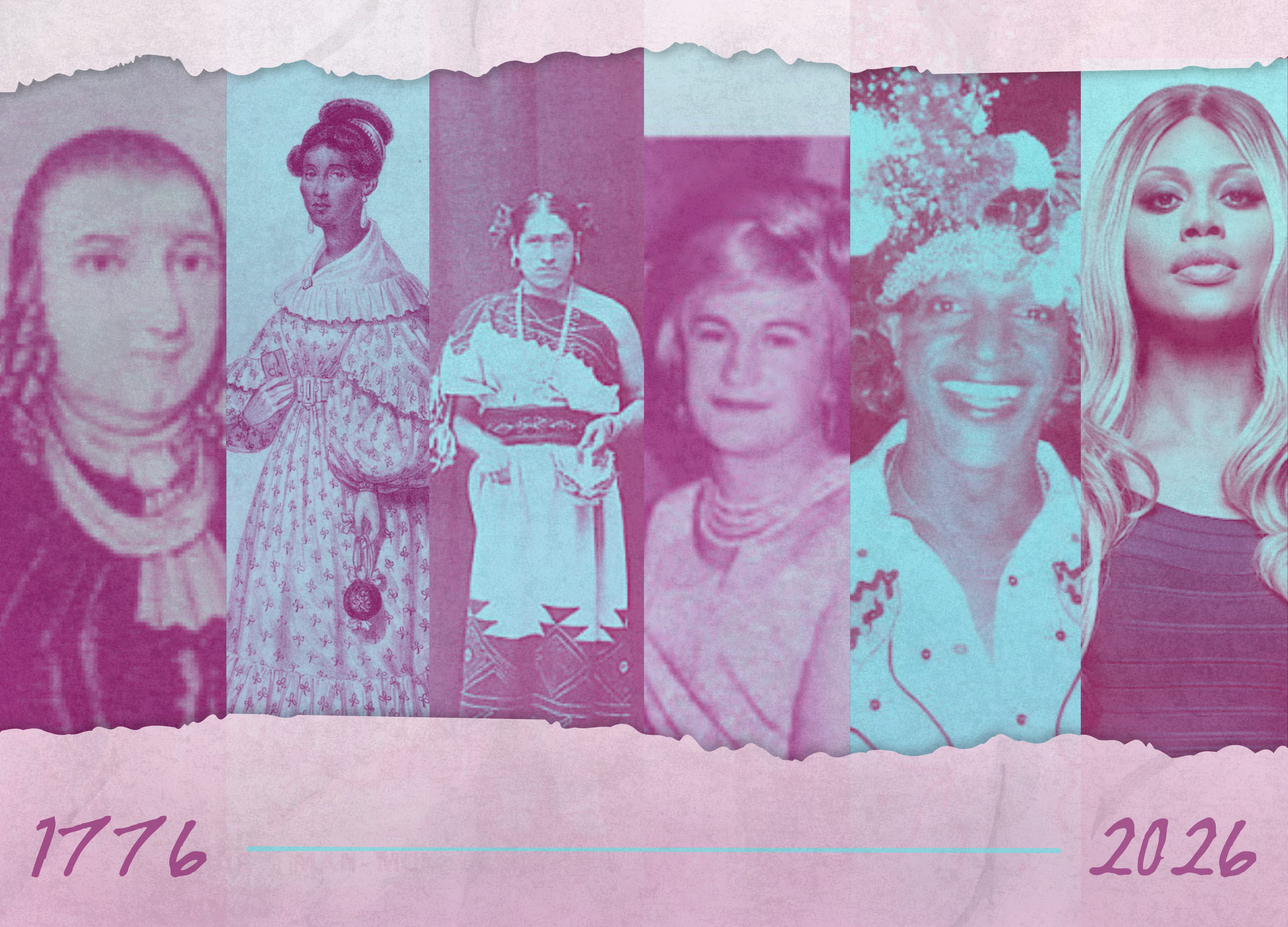
As America gets set to celebrate its 250th birthday on July 4, here’s a timeline of noteworthy events that have shaped trans and gender nonconforming rights.

This story was produced in partnership with hankycode, an LGBTQ+ history publication.
Related read: 1776-2026: The Moments That Defined Lesbian, Gay and Bisexual Rights in America.
Records of trans people date as far back as 218 C.E. with the Roman Empress Elagabalus. And all through U.S. history, transgender figures can be found: sometimes in the shadows, sometimes at the forefront of social change and always bravely living their lives, often through fear and danger.
It’s impossible to highlight every notable transgender person, organization or moment since the U.S. signed the Declaration of Independence in 1776. But as we mark America’s 250th birthday, here are key events that have shaped the trans and gender nonconforming experience over the last two and a half centuries.
1776
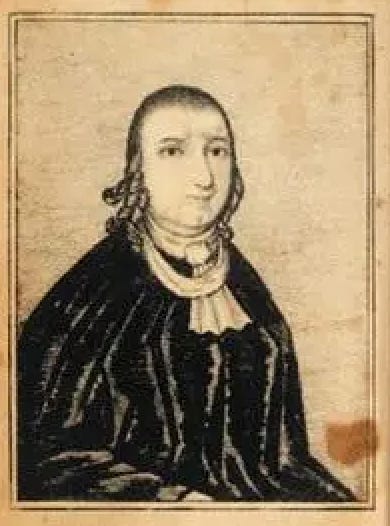
Following a fever, Jemima Wilkinson, a Quaker, takes on a new identity as the “Public Universal Friend.” “The Friend,” as they become known, presents as gender nonconforming and rejects she/her pronouns. According to the Friend, Wilkinson’s soul was in heaven, and God had rejuvenated their body with this new spirit, whose mission was to preach the Quaker gospel.
1829
Lucy Ann Lobdell is born. After teaching herself to shoot at the age of 10, she becomes known as the “female hunter.” In 1854, Lobdell moves to Bethany, Pennsylvania, begins using he/him pronouns and going by the name Joseph Israel Lobdell. Four years later, Joseph is arrested and put on trial for impersonating a man. However, because he could do men’s work, the judge finds him not guilty.
In 1880, Joseph is taken to Willard Asylum for the Insane following an arrest and being declared a lunatic. There, he continues to wear men’s clothes and insists that he is a man.
1836
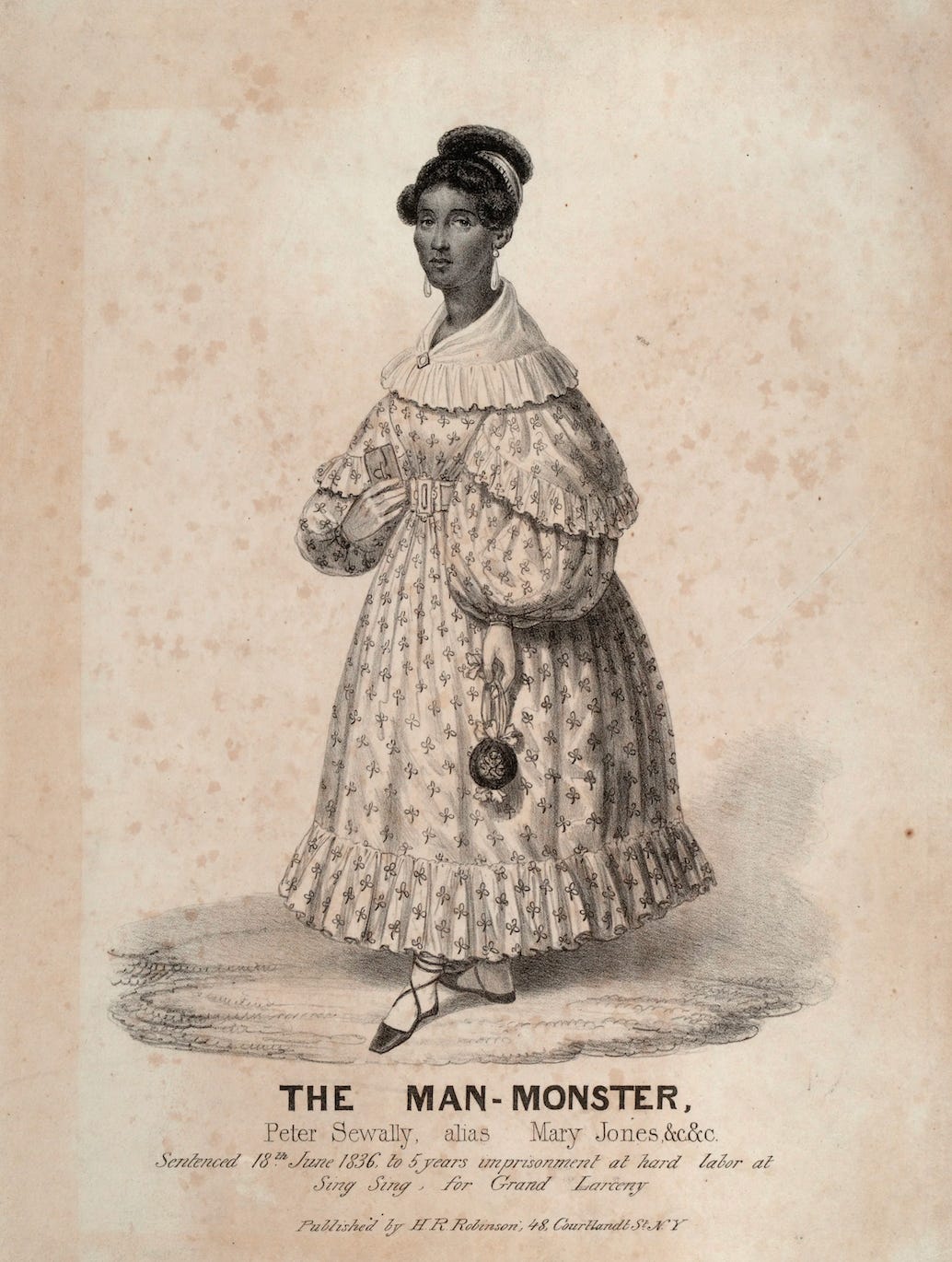
Sex worker Mary Jones is arrested in Manhattan’s Soho neighborhood after being accused of stealing a client’s wallet.
While searching for missing money, officers decide to conduct a physical exam, which reveals a leather prosthesis tied around Jones’ waist with a belt. The prosthesis is “bored open in imitation of a woman’s womb.”
Following the discovery, Jones is disparagingly referred to as a man masquerading in women’s clothing. While Jones does face grand larceny charges, the majority of the transcripts from her interviews in the criminal justice system focus on her gender identity. H.R. Robinson, a lithographer and publisher, salaciously refers to her as the “man-monster.”
1843
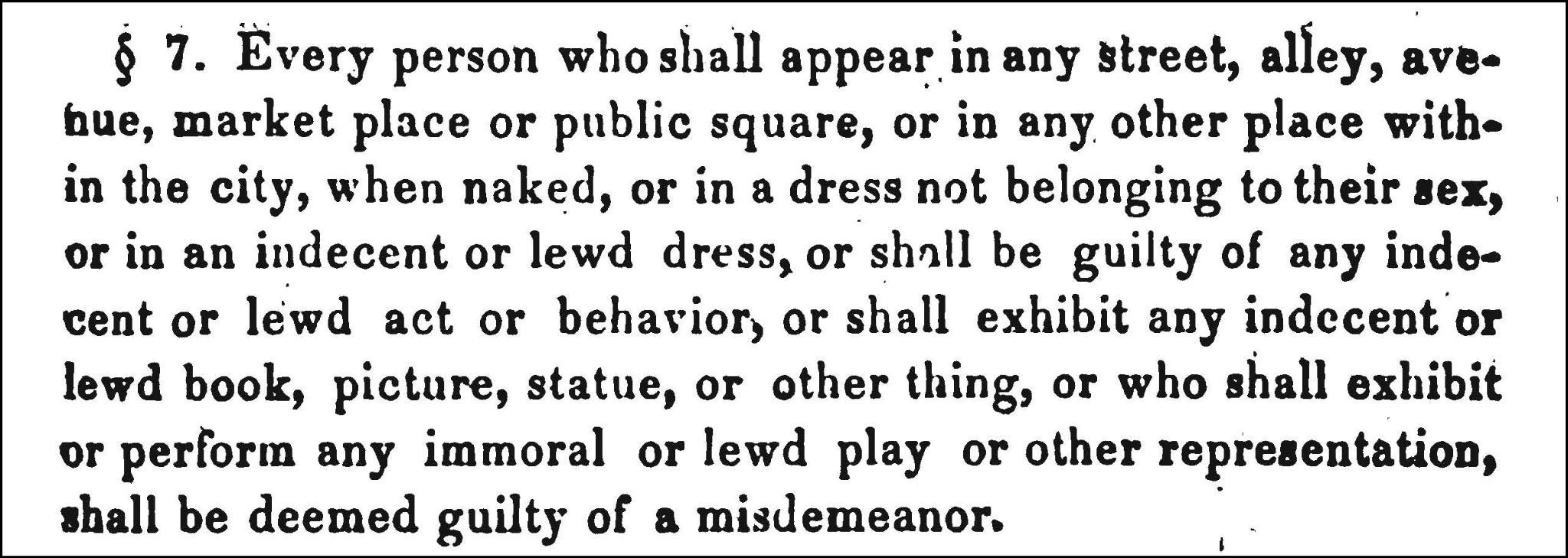
St. Louis, Missouri, becomes the first U.S. city to institute a cross-dressing law when it revises its ordinance:
“Every person who shall appear in any street, alley, avenue, market place or public square … in a dress not belonging to their sex … shall be deemed guilty of a misdemeanor.”
1849
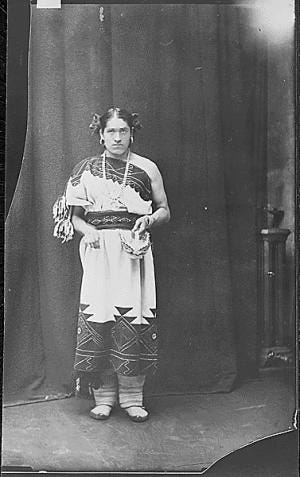
We’Wha, a lhamana, or Zuni Two-Spirit, individual is born. As early as 3 years old, We’Wha is recognized by their community as showing traits of being two-spirit, which in some indigenous cultures describes someone who is a third gender or holds mixed-gender roles. We’Wha takes on both male and female tasks, and they become a Zuni cultural ambassador in Washington, D.C., where they attend various high society events, meet with President Grover Cleveland and help identify and document Zuni artifacts.
1861-1865
At least 400 women disguise themselves as men to fight in the American Civil War. Many of these folks were likely not trans and simply wanted to serve. However, one soldier, Albert Cashier, maintains his identity as a man until his death in 1915.
1866
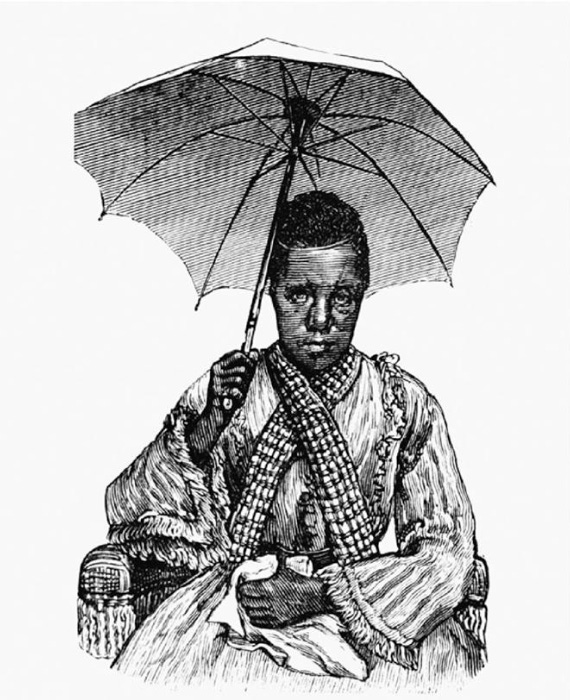
Frances Thompson becomes the first trans woman to testify before Congress when she shares her experience being assaulted at the Memphis massacre of 1866, where 40 people were killed over three days from violence that was ignited by political and social racism following the American Civil War. While Congress isn’t aware of her gender identity, her groundbreaking testimony is believed to be the first time a transgender woman testifies before the House. In her testimony, Thompson details the assault she experienced during the riot: “They drew their pistols and said they would shoot us and fire the house if we did not let them have their way with us.”
A decade later, Thompson is outed following rumors that she was “cross-dressing.” She is eventually arrested and fined $50 (roughly $1,000 today). Since she can’t pay, she is imprisoned and forced to work in an all-male chain gang as a way to pay off her fine. She is also publicly humiliated in the newspapers.
1886
Lucy Hicks Anderson is assigned male at birth. But as a young child in Kentucky, Anderson insists on wearing dresses to school. When her concerned mother takes her to the doctor, she is encouraged to allow Anderson to live as a girl.
Years later, in 1945, Anderson’s identity is outed, and her marriage to her husband is voided. Anderson is arrested for perjury, and the federal government tries her and her husband. She is placed on probation for 10 years as an alternative to prison. During the trial, she tells reporters, “I have lived, dressed, acted just what I am, a woman.”
1895
The Cercle Hermaphroditos, led by Roland Reeves, is the first known informal transgender advocacy group. The group is made up of New York City androgynes and meets at Paresis Hall, a brothel and gay bar. They are formed “to unite for defense against the world’s bitter persecution.”
1901
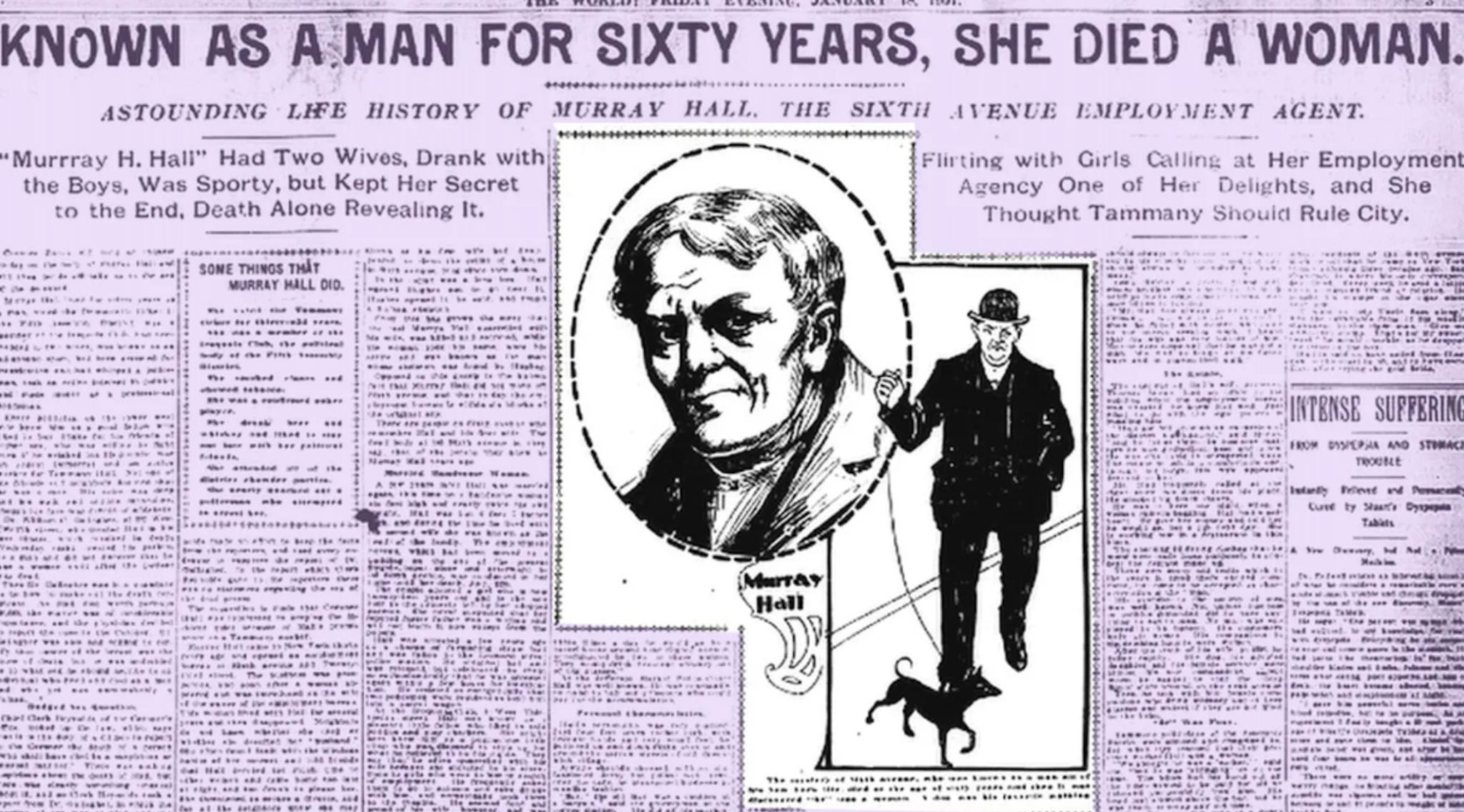
New York City politician Murray Hall dies. After his death, the coroner’s inquest reveals that he was a transgender man. Public backlash ensues from people who claim they’d been tricked, and The New York Times claims that he “masqueraded in male attire.” One of Hall’s colleagues tells The Times: “He’d line up to the bar and take his whisky like any veteran, and didn’t make faces over it, either. If he was a woman he ought to have been born a man, for he lived and looked like one.”
1917
Dr. Alan Hart, a trans man, undergoes a hysterectomy performed by Dr. Joshua Allen Gilbert. Dr. Gilbert writes in “Homosexuality and Its Treatment,” that “hysterectomy was performed, her hair was cut, a complete male outfit was secured and ... [Dr. Hart] started as a male with a new hold on life and ambitions worthy of her high degree of intellectuality.”
Dr. Gilbert is initially hesitant to perform the surgery, but eventually he finds that Dr. Hart is “extremely intelligent and not mentally ill, but afflicted with a mysterious disorder for which [Dr. Gilbert had] no explanation.” Dr. Gilbert later would write that “from a sociological and psychological standpoint [Hart] is a man.”
1952
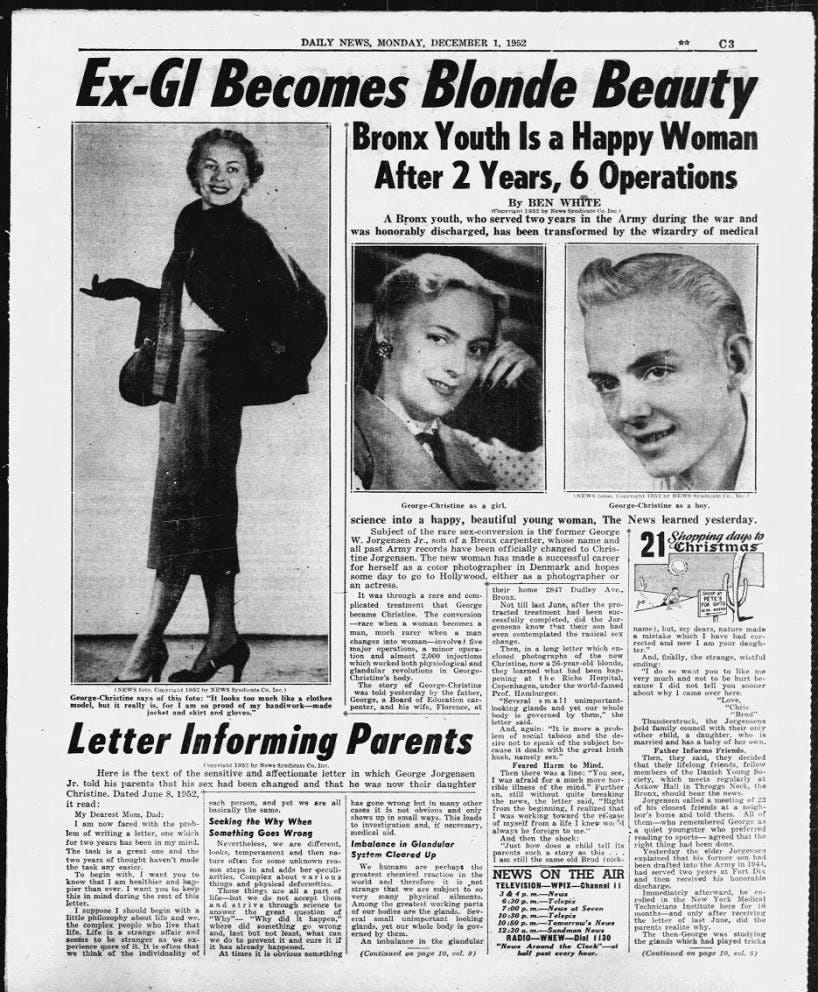
Christine Jorgensen is the first American transgender woman to become famous for having sex reassignment surgery. An article titled “Ex-GI Becomes Blonde Beauty” publishes in the New York Daily News and celebrates Jorgensen’s bravery in the war while also embracing her feminine qualities. “Bronx Youth Is a Happy Woman After 2 Years, 6 Operations,” the article states.
1960
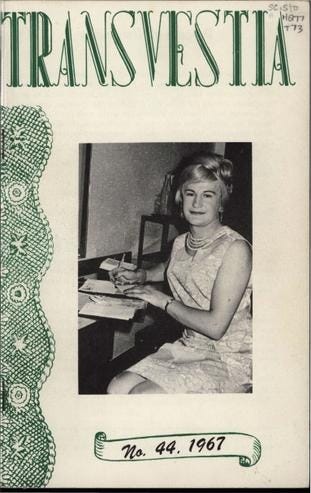
Virginia Prince launches “Transvestia,” the first widely distributed magazine focused on the cross-dressing community and later the transgender community at large. The magazine publishes six issues a year and is a lifeline for transgender readers who finally have a place to share their experiences. Article titles include “Psychological Test Results” and “The Soldier with Two Sexes.”
1964
Reed Erickson, a wealthy transgender man, launches the Erickson Educational Foundation.
The foundation becomes an incredible resource for transgender people. It offers counseling services, organizes conferences—including the first three International Symposiums on Gender Identity—and publishes newsletters.
1965
Psychiatrist John F. Oliven coins the term “transgender” in the second edition of “Sexual Hygiene and Pathology.”
1966
Johns Hopkins University creates the first Gender Identity Clinic in the U.S. A team of 10 physicians and psychologists provide gender-affirming care, including sex reassignment surgeries, to trans Americans.
1967
Conversion Our Goal (COG), later named Transsexual Counseling Unit, launches. The group is funded by Reed Erickson and is created in response to transgender prostitutes in San Francisco rioting against police harassment at a local cafeteria. COG provides a critical point of contact for transgender folks in need of medical care. Through collaboration with “Queens Magazine,” COG resources reach transgender people across the U.S.
1969
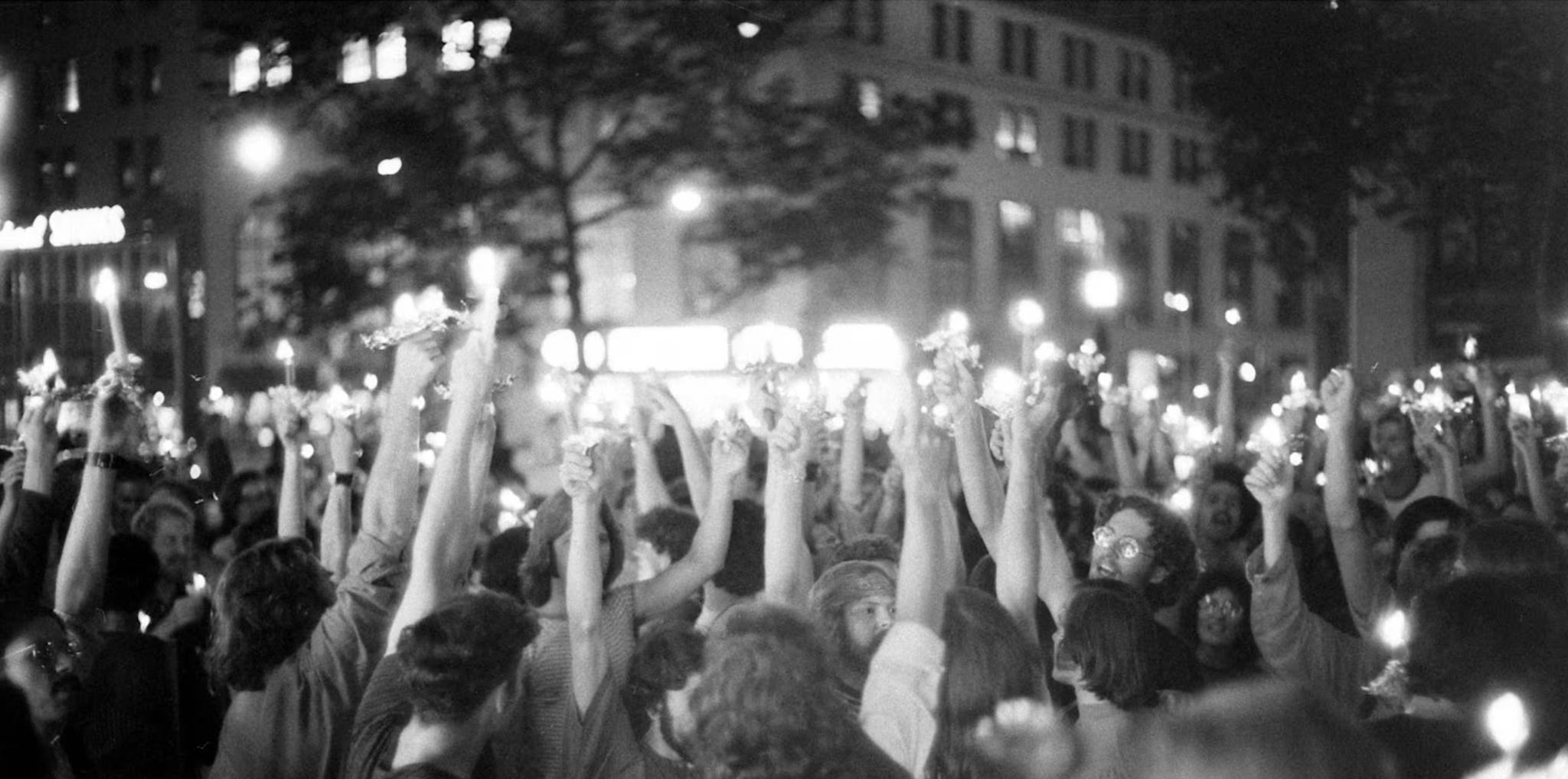
Police raid the Stonewall Inn, sparking a rebellion that lasts for six days as New York City’s LGBTQ community pushes back against police violence. Leaders of the uprising include trans activists Marsha P. Johnson and Sylvia Rivera.
1970
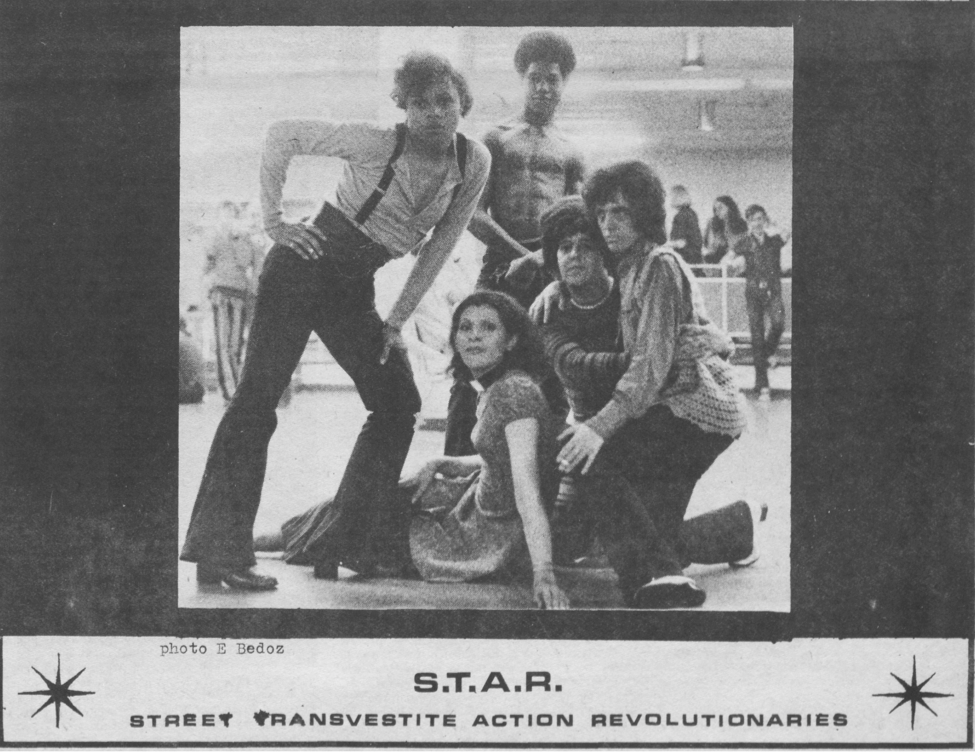
Street Transvestite Action Revolutionaries (STAR), a collective that helps transgender folks find shelter and support, is founded by Rivera and Johnson. Founding member Bubbles Rose Lee opens STAR House, a home that provides shelter for unhoused transgender people. Approximately eight months later, the organization is evicted and STAR House is forced to shut down because they’re unable to pay rent.
1980
Transgender individuals are classified by the American Psychiatric Association (APA) in the Diagnostic and Statistical Manual of Mental Disorders (DSM) as having one of three types of gender identity disorder: transsexualism, nontranssexualism and not otherwise specified.
1986
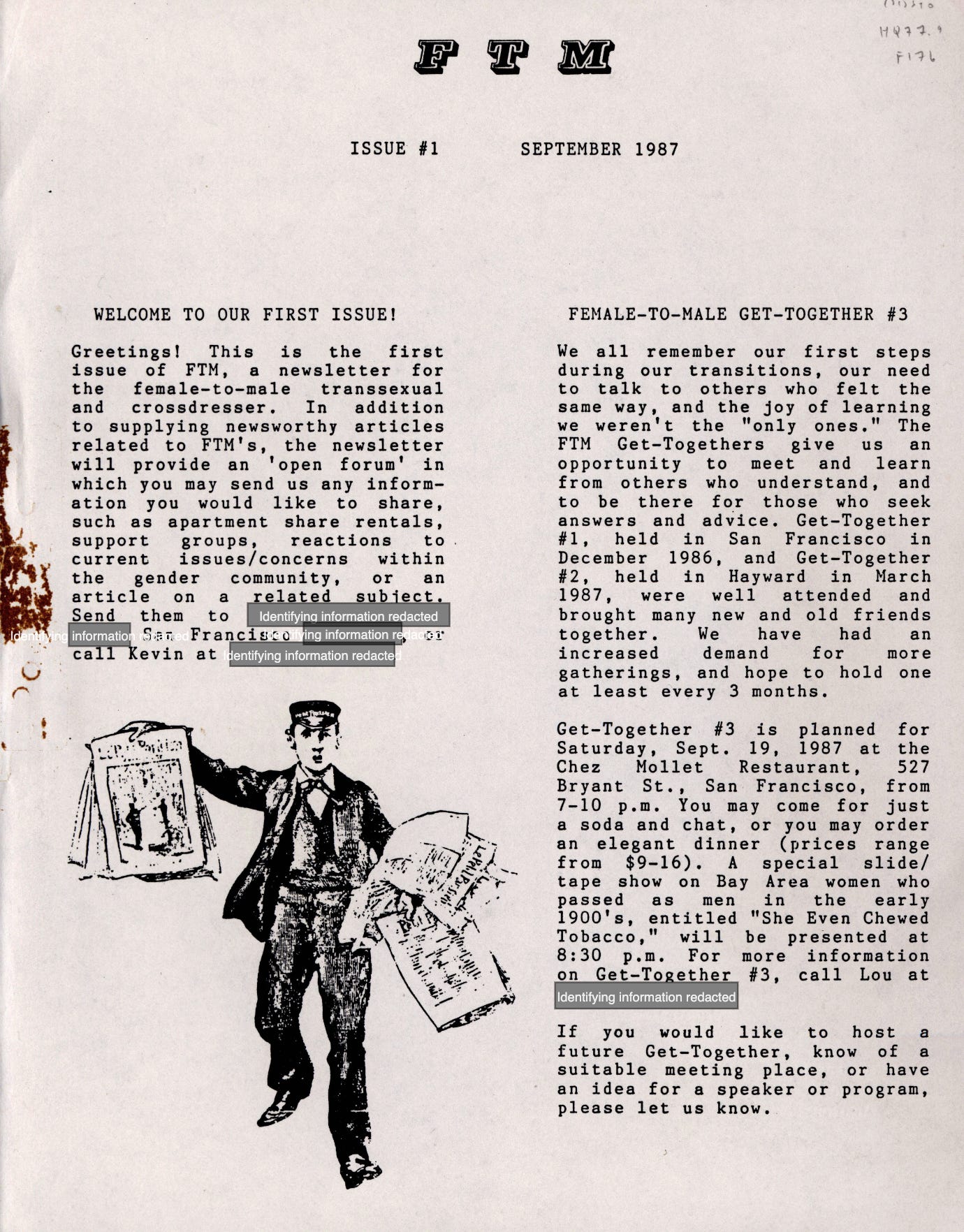
FTM International is founded by Lou Sullivan, making it the first organization for transgender men in the U.S. The organization provides peer support and networking. They also launch a newsletter, which includes medical and health articles, advice columns and classified ads seeking social connection. The first newsletter includes information about a “female-to-male” get together, another edition talks about support groups and another provides practical information on buying shoes.
1991
The Southern Comfort Conference, a major transgender conference, has its first annual gathering in Atlanta. Mariette Pathy Allen, who photographed the conference, explains, “It was the largest TG conference, attended by a great variety of people, including many locals for whom it was affordable. You could meet so many different people, go to or lead a variety of seminars, [and] dance at night.”
1995
GenderPAC is formed by Riki Wilchins. The association brings together national transgender organizations to form the first national political advocacy organization focused on the right to one’s gender identity. As reported by The New York Times, GenderPAC “is lobbying to have crimes against ‘transgendered people’ included in the Hate Crimes Statistics Act.”
Nov. 20, 1999
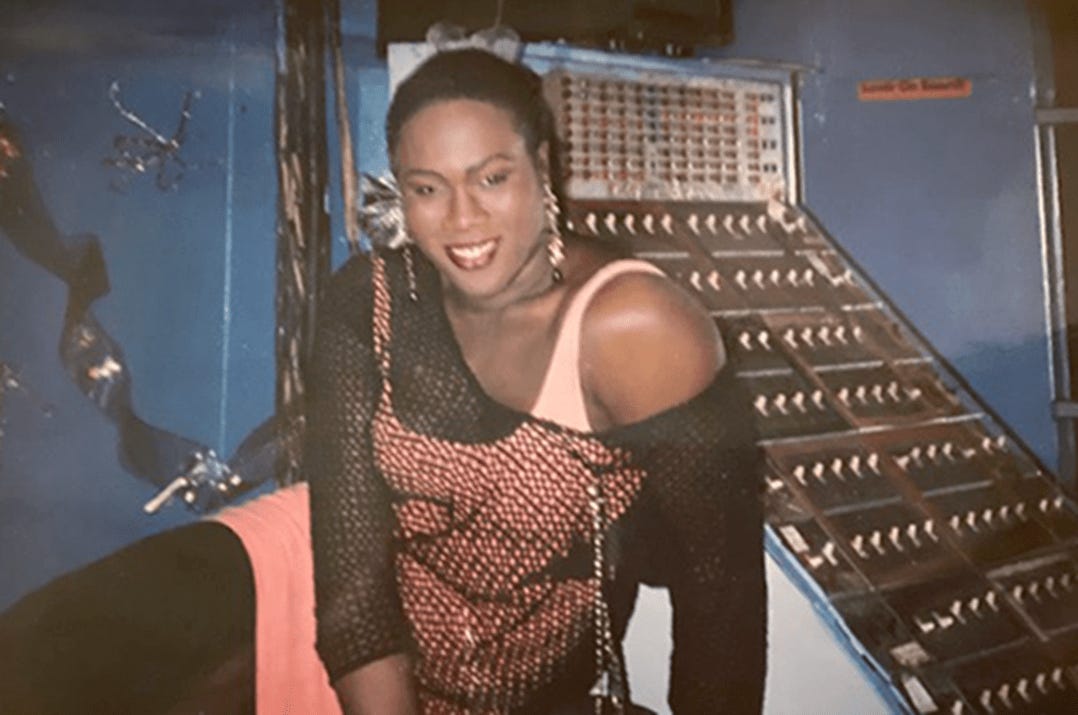
The first official Transgender Day of Remembrance takes place. The event, founded by Gwendolyn Ann Smith, begins as a vigil to remember Rita Hester, a transgender woman who was killed the previous year. The event spawns a yearly tradition of remembering all the transgender lives lost to violence.
1999
The National Transgender Advocacy Coalition is founded. The organization lobbies lawmakers on behalf of transgender Americans.
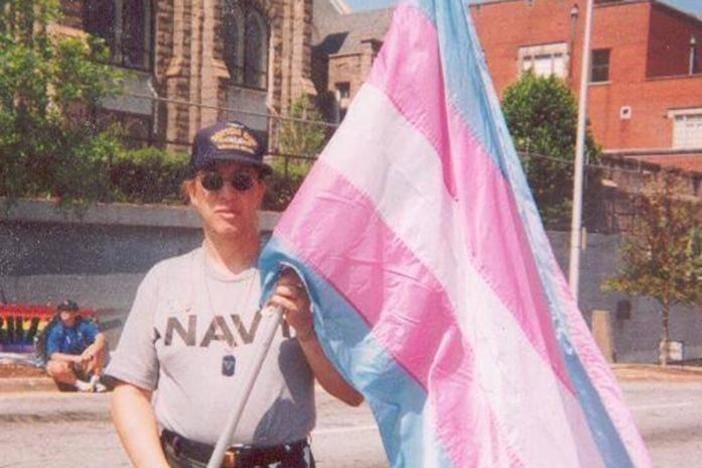
Monica Helms, an American transgender woman and veteran, creates the Transgender Pride Flag. She chooses pink and blue to symbolize the colors typically associated with girls and boys, while white symbolizes those who defy gender, are transitioning or are intersex.
2002
Gwen Araujo, a 17-year-old transgender girl, is murdered by multiple men in a hate crime. During the trial, the defense blames Araujo for her death by saying she deceived the men by not revealing that she is trans. This is compared to the “gay panic” defense. The trial ends in a hung jury, and a second trial finds the two men guilty of second-degree murder.
In 2006, California Gov. Arnold Schwarzenegger signs the Gwen Araujo Justice for Victims Act, which requires juries to be informed that they are forbidden from making decisions based on a victim’s gender or sexual orientation.
2009
Dylan Orr becomes the special assistant to Assistant Secretary Kathy Martinez in the Office of Disability Employment Policy at the U.S. Department of Labor. In this role, Orr becomes the first transgender person to serve in an appointed position in a presidential administration.
March 31, 2010
The first International Transgender Day of Visibility takes place. The day was founded by Rachel Crandall, the head of Transgender Michigan.
2010
Judge Victoria Kolakowski is elected in Alameda County, California, becoming the first openly transgender trial court judge of general jurisdiction.
2013
“Gender Identity Disorder” is removed from the DSM and replaced with “gender dysphoria.” As the APA notes, “This change further focused the diagnosis on the gender identity-related distress that some transgender people experience (and for which they may seek psychiatric, medical, and surgical treatments) rather than on transgender individuals or identities themselves.”
2014
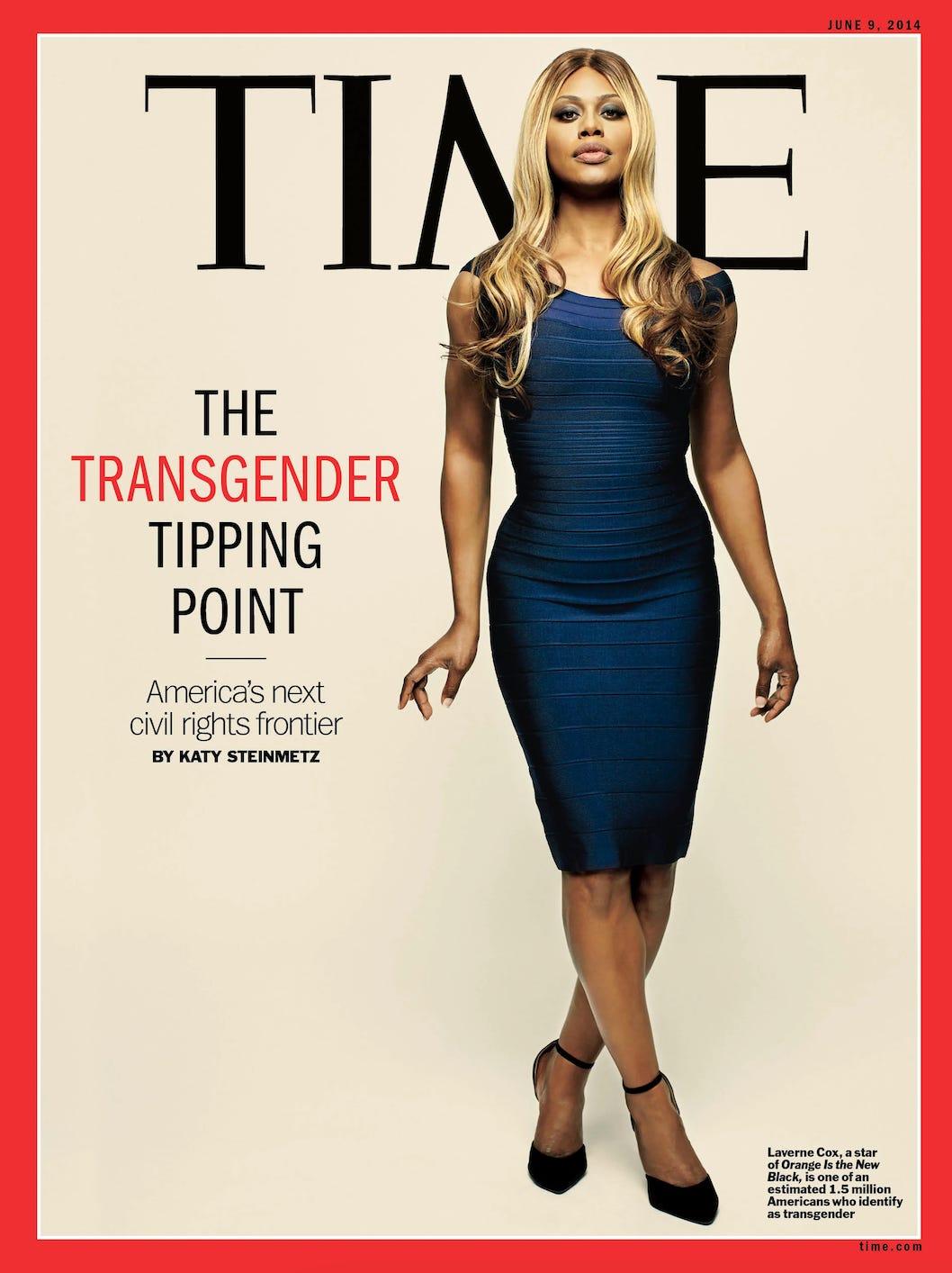
Laverne Cox is on the cover of TIME Magazine and is featured in the article “The Transgender Tipping Point.”
As Cox tells TIME, “We are in a place now where more and more trans people want to come forward and say, ‘This is who I am.’ And more trans people are willing to tell their stories. More of us are living visibly and pursuing our dreams visibly, so people can say, ‘Oh yeah, I know someone who is trans.’ When people have points of reference that are humanizing, that demystifies difference.”
2016
The first U.S. transgender bathroom ban passes in North Carolina. The law states that people must use the bathroom that matches the sex on their birth certificate. Boycotts erupt across the state and are projected to cost North Carolina $3.76 billion in lost business.
Defense Secretary Ashton Carter announces that “otherwise qualified service members can no longer be involuntarily separated, discharged or denied reenlistment or continuation of service just for being transgender.”
However, the following year, President Donald Trump announces in a series of tweets that transgender individuals are no longer permitted to serve in the military: “After consultation with my Generals and military experts, please be advised that the United States Government will not accept or allow … transgender individuals to serve in any capacity in the U.S. Military.”
2020
The Brooklyn Liberation March becomes the largest trans rights demonstration in the U.S. with an estimated 15,000 participants. The demonstration is sparked from the national outrage following George Floyd’s murder and focuses on the disproportionate amount of police violence against Black transgender people.
2024
During the 2024 presidential election, Republicans go all in on anti-trans attack ads, spending an astounding $215 million on them. Trump’s campaign spends more than twice as much on anti-trans ads than on ads about immigration and more than five times as much than on ads focused on the economy.
Sarah McBride becomes the first openly transgender person elected to Congress when she wins Delaware’s House seat.
2025
As Trump takes office for a second term, he begins an unrelenting attack on the trans community. He signs an executive order that changes the definition of sex, implements discriminatory passport policies and restricts healthcare for transgender youth.
2026
As of today, there are 804 anti-trans bills under consideration in 43 states. Since 2015, anti-trans legislation has been steadily increasing.
On May 6, Trump’s administration falsely links trans people to terrorism in its new Counterterrorism Strategy, writing: “In addition to cartels and Islamist terror groups, our national CT activities will also prioritize the rapid identification and neutralization of violent secular political groups whose ideology is anti-American, radically pro-transgender, and anarchist. … If you hurt Americans, or are planning to hurt Americans, ‘We Will Find You and We Will Kill You.’”
New Jersey passes a bill protecting transgender healthcare seekers as well as their medical providers. Additionally, the U.S. Court of Appeals for the District of Columbia Circuit found that Donald Trump’s 2025 executive order to exclude transgender troops from service likely violates their constitutional rights.
If objective, nonpartisan, rigorous, LGBTQ-focused journalism is important to you, please consider making a tax-deductible donation in the U.S. through our 501(c)(3) fiscal sponsor, Resource Impact, by clicking this button:

 | A guest post by
|
I was at the rallies in Nj. Being the first transgender person elected to a CWA local in Nj, it was a humbling event. Perhaps when the Governor is able to sign it into law, there will be another rally.
It makes me sick and angry that there's even that many anti-Trans laws and bills, and SCOTUS isn't helping either, especially after today's ruling against Trans athletes.