



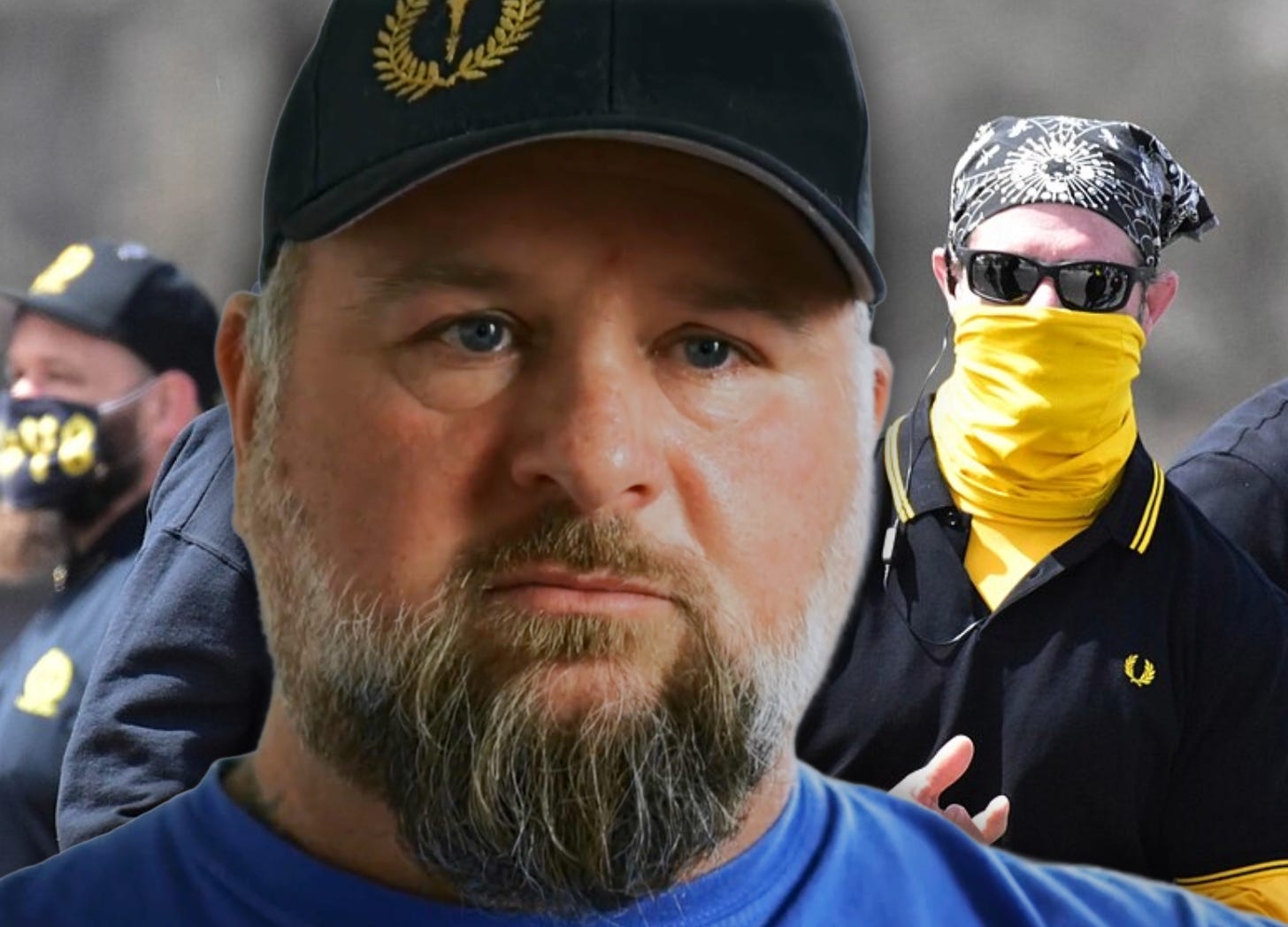
For my newsletter this week, I wanted to take a deeper look into Patriot Front, the white nationalist group that made headlines last weekend with huge rallies across Washington, D.C. One photo, taken by a Reuters journalist, displayed a Black woman on the subway surrounded by dozens of anonymous Patriot Front members.
As I read into what happened, it made me think of my years of reporting on far-right extremism. What are they thinking right now? And how has the landscape of far-right extremism and white supremacy changed in the last 10 years?
I opened my phone, searched through my contacts and found “Brien KKK.”
James says he joined the Ku Klux Klan (KKK) in his teens after attending a high school that was “80% Black.” According to the Southern Poverty Law Center, he then co-founded the Vinlanders Social Club, a coalition of regional skinhead groups known for racist violence. He also participated in numerous white nationalist rallies over his multiple decades in the far-right movement. And in the summer of 2011, the Vinlanders held a white power concert, entitled “Plunder and Pillage,” which reportedly drew more than 50 skinheads to Ohio from around the country.
While James no longer considers himself a white nationalist or a skinhead and has since left the KKK, he is still a member of the Proud Boys, a far-right militia group most infamous for being one of the biggest players in the Jan. 6 attacks on the U.S. Capitol.
James makes it clear that the Proud Boys and Patriot Front have different ideologies: The former denies that it is a white supremacist group, for example. Still, both groups have been known to organize and attend protests, often violent ones, against pride and drag events. In this interview with Uncloseted Media’s Editor in Chief Spencer Macnaughton, James offers insight into where far-right extremism in America is today and how those following the ideology view the LGBTQ community.
Press play to listen to Spencer’s interview with Proud Boy Brien James.
Listen to the full interview above or read the transcript here:
Spencer Macnaughton: When we met, you were, I believe, with the KKK, is that correct?
Brien James: No, I had been in my past, which is, I guess. I was in the KKK as a teenager, I’m 50 years old.
SM: Wow, 50 years old now. And how did you get in the KKK originally, and how do you see the Ku Klux Klan having morphed and where are they now? I feel like I haven’t heard of them that much these days.
BJ: I don’t think they’ve existed for quite some time, not that I know of.
SM: Because I remember 10 years ago, I attended like a 200 person cross and swastika burning with the KKK to document, but today, do you hear much about them?
BJ: No. The last guy I knew that was active was a guy named Jeff Berry here in Indiana. He was the one that would go to the courthouse and be on the talk shows and get a lot of publicity. I’m sure there’s like a few guys somewhere in some town, saying, “Yeah we’re the Ku Klux Klan,” but I haven’t heard or seen any of them any more than you do. When you interviewed me, I think I had just started American Guard, but I’m in Proud Boys now.
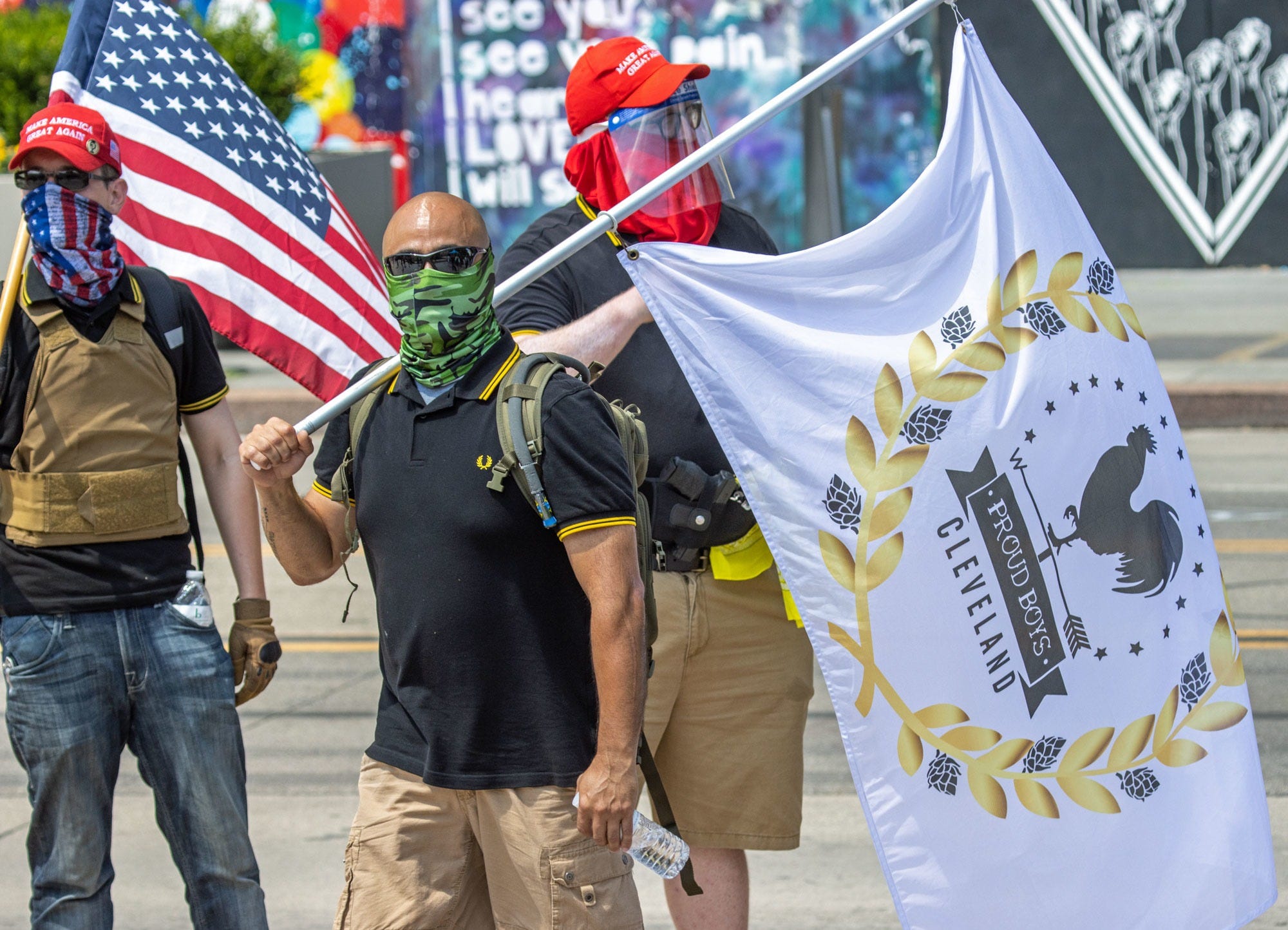
SM: Oh, you’re in Proud Boys. OK, cool. And how’s that going?
BJ: Oh, fine. I’ve been… let’s see, I’ve been in Proud Boys for like eight years.
SM: Eight years. OK, yeah, tell me a little about that.
BJ: Proud Boys is just kind of right wing. It’s multi-ethnic, so it’s not a racial group. And there’s been plenty in the news about Proud Boys and what’s going on the last several years. It was kind of a pro-Trump thing. It kind of started when Trump was running for president the first time. There were a lot of rallies and events and stuff that were being attacked by antifa on the left, and before I joined, those guys kind of decided to go out and start defending or showing up and being kind of a counterbalance at those events, and it just kind of grew out from there.
SM: Got it. And obviously there’s a lot of headlines of political violence and all that kind of stuff. Do you guys engage in that?
BJ: Yeah. I mean, we engage in it from a defensive position. But that’s the way it gets written up, sure.
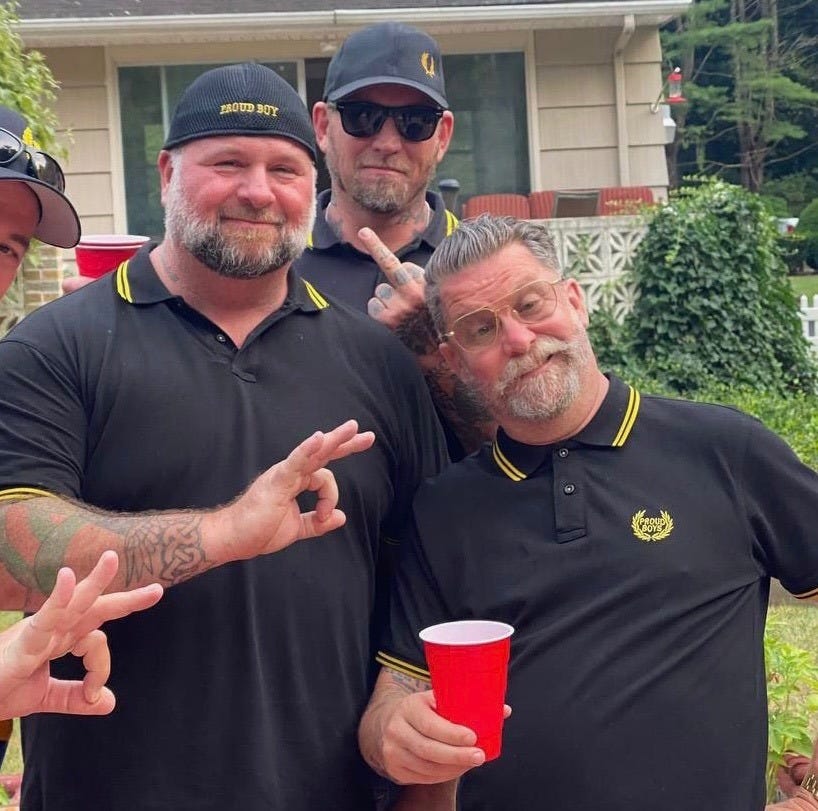
SM: Did you see everything that went down with Patriot Front this weekend in Washington, D.C., for Independence Day?
BJ: Just in the news, I just saw that they had a march and gave a speech.
SM: Got it. Yeah. What are your thoughts on them?
BJ: I don’t know them real well, or know a lot about them. I think I’m involved in some chats with them on Telegram that are centered around, like, working out or jiu jitsu or whatever. They’re not necessarily political, but that’s the only real interaction I’ve had with most of their members. It seems like a typical kind of white nationalist thing to me. I don’t know anything that particularly stands out about them. They do their marches, and they do their… I think they put up flyers and stickers and stuff, it all seems kind of innocuous, to be honest.
SM: And when I was with you 10 years ago, I remember, like, the KKK and the various other kind of white nationalist, white supremacist organizations, they had kind of fragmented where there was almost like beef between the groups. How would you describe it now?
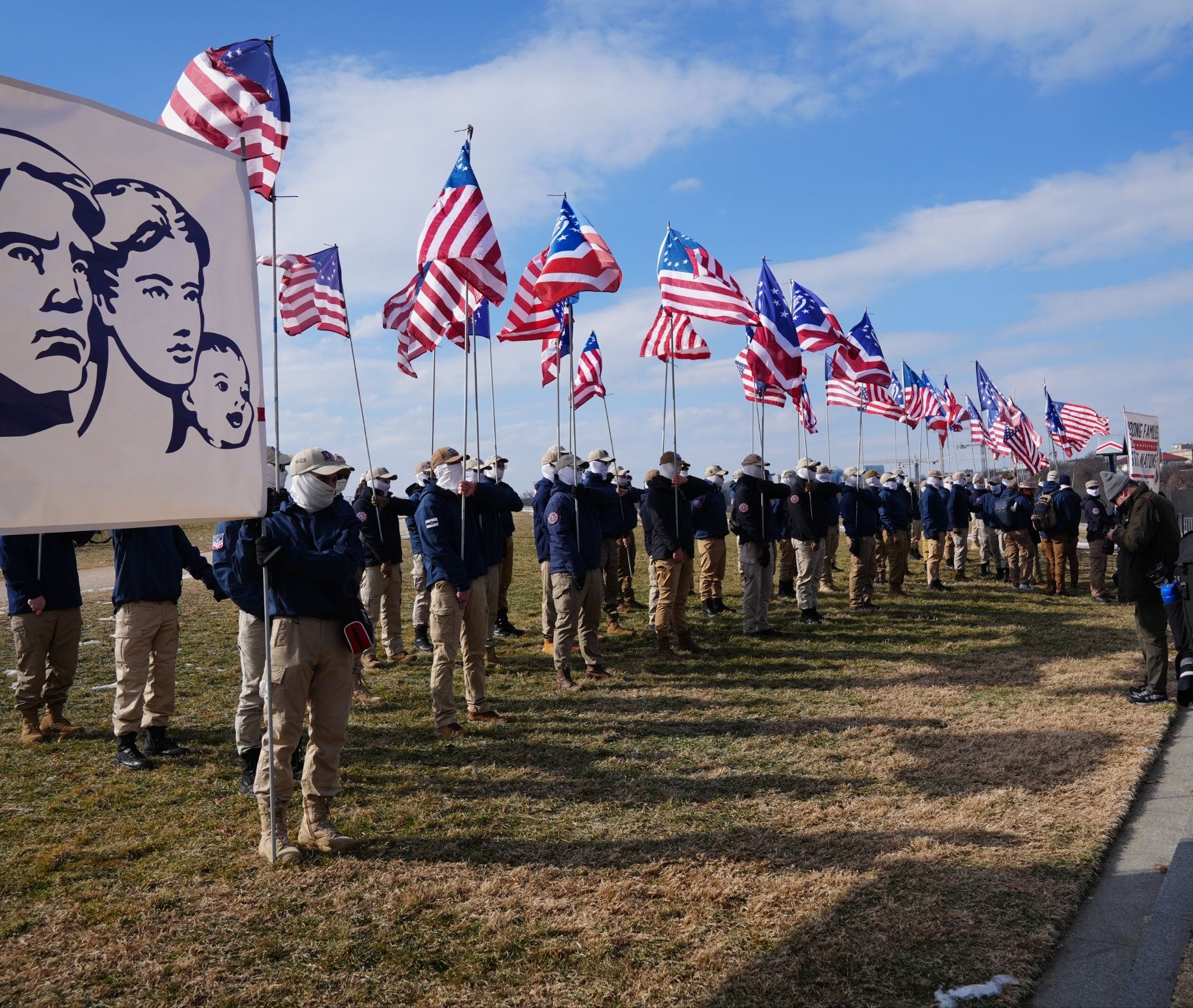
BJ: From what I understand, it’s a completely different movement now. The younger people have decided to kind of go in a different direction, so you’ve got Patriot Front and the active clubs that mainly go out and kind of just do their own thing. Like, Proud Boys went out to events and met the left in the streets and tried to be like a counterbalance or counterprotest or so and so forth. Or we did a lot of stuff where we went to drag queen story hour, so Patriot Front just goes out and on their own and says, “OK, we had this march, we showed up, we showed people who we are, we got in the news, and then we went home.” And then you’ve got these active clubs, which they did, they’re big into working out, boxing, jiu jitsu, all this stuff. So compared to what it was when I was doing it, 20, 30 years ago, it seems to be a completely different strategy. They’re more private, and they’re just delivering their message, and then kind of leaving it at that. They seem less confrontational than what we were. As far as fragmenting and infighting. I guess I don’t see as much of that. But I’m not as close to it as I would have been back then. But as far as what you can see as an outsider, it seems like they’ve got a better handle on that than people did 20, 30 years ago.
SM: And the thing that confuses me, I don’t understand the mix. Because you see these active clubs, or even Patriot Front, and they post these videos of them doing jiu jitsu or getting really involved in martial arts. How do you explain that? It feels kind of random, the connection between white nationalism and jiu jitsu.
BJ: You know, I have sons that are in that age group. I think there’s an overall feeling that if you’re making physical improvements on yourself, that you’re making improvements all around. At the same time [they’re] training, preparing, conditioning for whatever may come. I mean, I think wherever someone stands on the political spectrum, I think everybody has the sense that maybe things in the world aren’t going in the right direction, so their response to that is to get themselves as physically prepared as possible.
SM: Got it. What do you think is the fear that they have, like that so many folks are training for? Do you think there’s an overarching concern that “event X” could happen?
BJ: Like I said, I think everybody has a feeling that things are headed in a direction where there could be more hostility or more conflict of some type. I think that the general feeling in the world is that there’s more and more conflict, more and more division, more and more room for something to come about that would cause men to have to be more prepared and formidable.
SM: I don’t want to put words in your mouth, but are you implying these groups as white nationalist groups, are you thinking like a race war or not?
BJ: I have no idea how it would play out, to be honest. I think the biggest direct concern for everyone I know that would span, what we call the right or the far right that’s not racial, is called civic nationalists. So, from civic nationalists all the way to white nationalists, I think people are concerned with the direction our government’s going more than anything. And then, on a street level, I don’t know that there’s an increase in racial incidents, but there’s definitely an increase in the reporting of them. We have so much more access to information now that it does make people feel like it’s just more dangerous to be alive.
SM: And what do you guys think about Trump? Because Trump released a new counterterrorism strategy and Biden said that white supremacism was the number one terrorism threat, right? And then Trump released a new terrorism strategy but didn’t even mention white supremacism or far-right extremism, so he doesn’t seem to think it’s as big of a deal. What are your thoughts on all that? How do you feel about what Trump’s doing?
BJ: From my perspective, obviously, I don’t see how the numbers would bear out that white supremacy is anywhere near the threat that the left makes it out to be. I think it’s pretty easy to dig into statistics and see that that’s not the case. So I think that was just something that Biden and the left does to get their voters fired up.
Note: According to a study in Criminology, Criminal Justice, Law & Society: “since 1990, far-right extremists have committed far more ideologically motivated homicides than far-left or radical Islamist extremists, including 227 events that took more than 520 lives.”
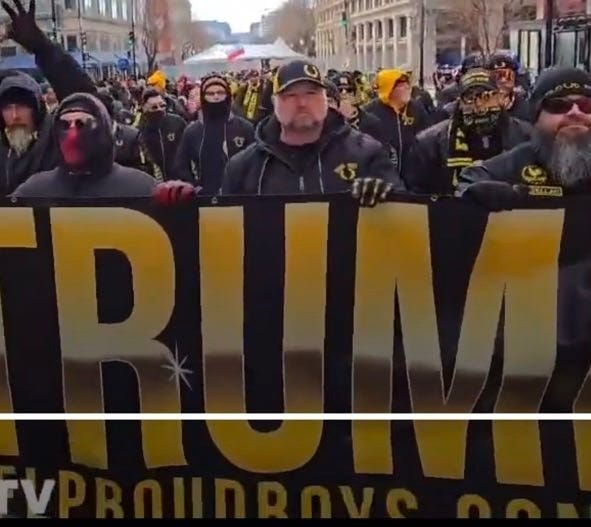
SM: Got it. I think I mentioned to you before, obviously we’ll have differences here, but we do an LGBTQ publication, right? So you mentioned that you, as a Proud Boy, you guys would show up at drag queen story hours and that kind of thing. What’s the point of that from your perspective? Like, what are you trying to get out of that when you guys head to a drag queen story hour?
BJ: Well, we only have a problem with the ones where they invite kids. We don’t really care—matter of fact, Proud Boys has members that are gay. But we don’t really care that they’re having the events, as long as there’s not children there. It just became a thing where it was really tied in with, and it still is. We just had one that we got canceled in Florida. Florida made a law that you can’t have a drag show—not a Pride event, but an actual drag show—with children there. So they’re so determined to bring children to these events that they were trying to get around it and hold one on private land at a ranch down there called the 2K Ranch. So when we find out these things are going on, we basically call them up and let them know, “Hey, make it all adults, we got no problem with it. Otherwise, we’re going to be there. You’re going to be in the news, we’re going to make it out in person, protest, you’re going to have problems.” We got a yearly event shut down from a group called NARSOL—National Association Reforming for Reforming Sex Offender Laws. And this is all kind of under the LGBTQ umbrella. They try to remove the laws, they try to remove the sex offender registry. They try to remove the laws that keep sex offenders from living by schools and parks. They try to go after the law that makes you have to show ID if an adult wants to take a kid on an airplane and take him out of the country, so for us it’s all one big thing that’s kind of tied together, but hidden under this LGBTQ umbrella.
Note: The group James is referencing is National Assoc. for Rational Sexual Offense Laws (NARSOL).
SM: But that’s where I get confused, to me there’s zero link between sex offenders and LGBTQ people. Do you agree with that, or do you feel like there’s a link between LGBTQ people and sex offenders?
BJ: No, I don’t agree with that. To me, it’s the entire LGBTQ movement is always creeping towards trying to normalize pedophilia, in my opinion.
SM: Wow, OK. I mean, I would strongly disagree with that. I find there’s a lack of evidence for that, but definitely curious why you think that. Why do you think it’s creeping towards pedophilia, the LGBTQ movement?
BJ: A good example is the fact with these grooming shows, we call them, the drag queen shows, they refuse to leave children out of it. They’re not going to old folks’ homes or anywhere else to try to cheer people up.
SM: No, no. They do. There are examples.
BJ: They’re obsessed with doing this for children.
SM: But I guess I’m missing, not trying to be confrontational, but I don’t understand.
BJ: It’s obviously very personal by the tone of your voice, but that’s OK.
SM: Well…
BJ: I don’t mind telling someone what I think.
SM: I appreciate you talking to me, but I don’t understand. I guess I’m genuinely, taking the emotion out of it, confused. If a drag queen is coming to read a storybook to a set of kids and it’s innocuous and they’re reading a children’s book, I mean, I just don’t really see the problem, right? And Proud Boys, for example, in California, showed up and a lot of the parents there were concerned. They said that you guys totally freaked out the kids and were extremely aggressive. So I’m wondering, like, is there an argument that maybe you guys are scaring the kids more than the drag queen reading the storybook.
BJ: Well, let me ask you this: If I showed you video clips that we’ve accumulated of drag queens where there are children dancing suggestively, partially or fully nude, if I showed you gay Pride parades where there are adults nude in front of children, would you just accept the point at that, would that be enough, or would you just continue to fucking twist it and argue?
SM: Well, I guess I’m wondering—
BJ: Because I can produce those videos.
SM: I guess I’m wondering, when you’re totally freaking out the kids from the parents?
BJ: What if I produce those videos? Would that be the end of the argument that this is innocuous, or?
SM: Send me them, definitely. I think they’re anomalous, but I don’t want to get in a tit for tat. I guess my question is: Is showing up with more intimidation tactics the right move? Is that genuinely, do you think that’s the… this is obviously something you believe is a problem. Do you think that tactic is the right tactic?
BJ: Well, for every time that you’ve heard that we’ve shown up, that’s not our preferred outcome or preferred tactic. For every time that it’s made the news that we’ve showed up, there’s been 10, 20, 50 times that we’ve simply made a phone call and said, “Hey, keep this adults only, and you won’t see us or hear from us.” And then they do, so that’s our preferred outcome.
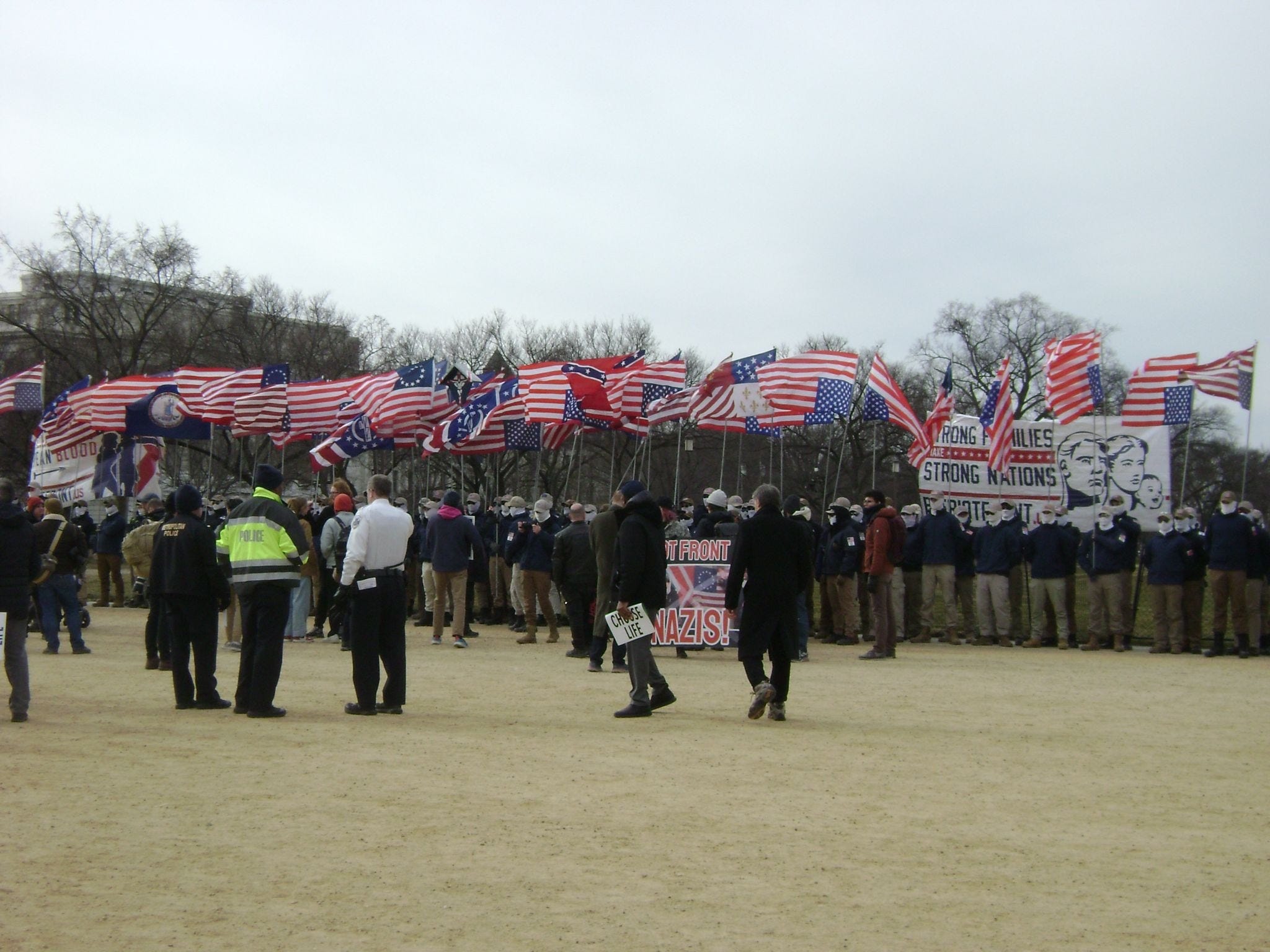
SM: Got it. And then, which groups would you say in 2026 are the most prolific? Which are the most popular and have the most status in this movement? Would it be Patriot Front? Would it be Proud Boys? Who are the leaders these days?
BJ: Well, Proud Boys and Patriot Front are two different movements. They don’t really accept each other or approve of each other, associate with each other very much. But I would say in the white nationalist movement, it’s definitely Patriot Front, and then the individual, probably Nick Fuentes would be the closest thing to the white nationalist movement that it has to a leader.
SM: And it’s so interesting that, you don’t think through history that presidents have really kind of aligned themselves at all with, or at least they haven’t tried to publicly align themselves with white nationalists. But Trump, obviously, I believe invited him to Mar-a-Lago and this kind of thing. What’s your take on that? Is Trump signaling, “I’m down for this, I’m OK with this sort of thing,” or “I stand with this,” even? What are your thoughts there?
BJ: There have been all sorts of presidents that were aligned with white nationalism in one degree or another. I think some of them were members of the Ku Klux Klan, so I’m not sure what your preface there was.—
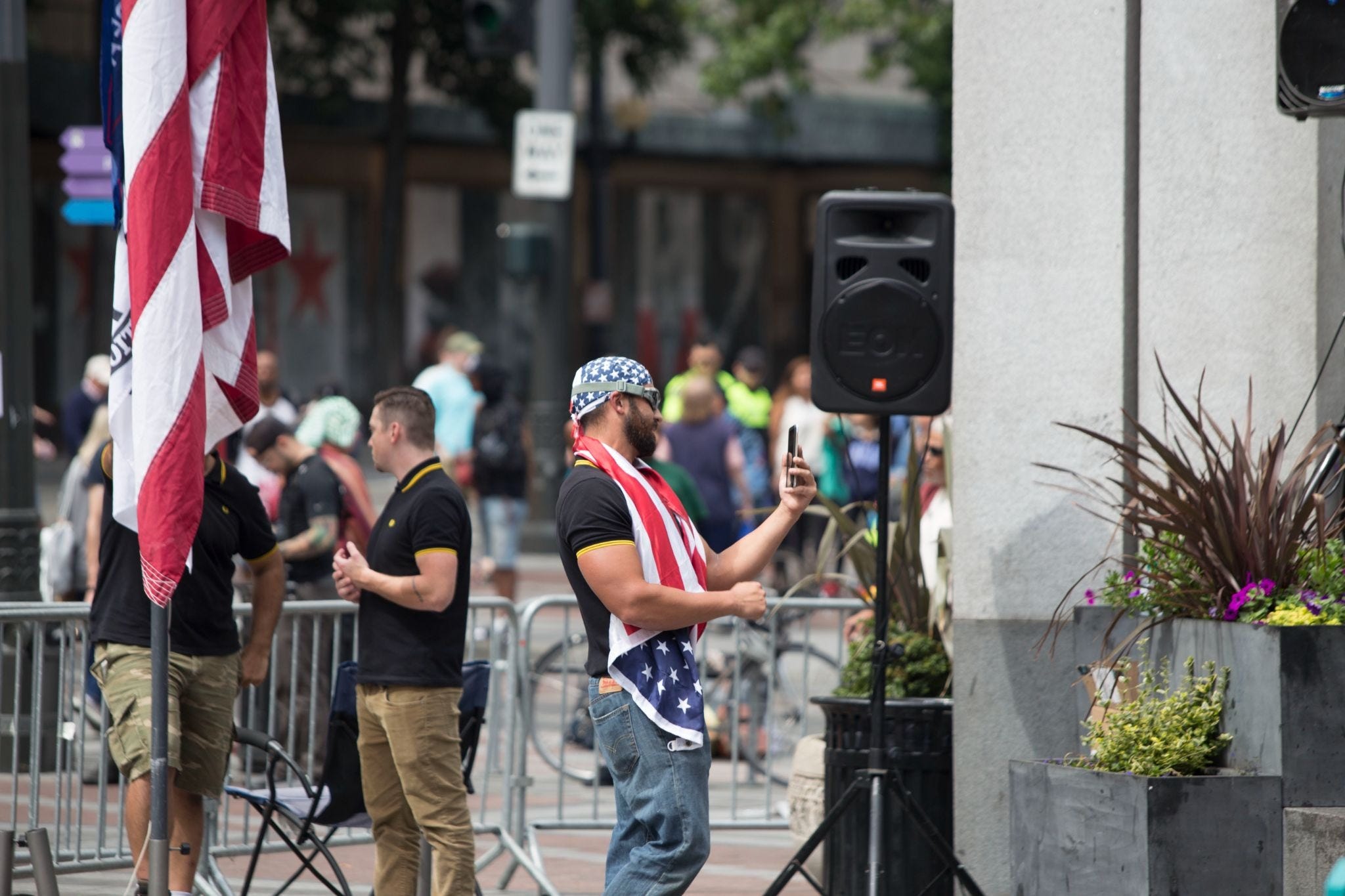
SM: Yeah, no, fair, fair. But I guess in 2026 to align that closely, you know, if you look at recent history, people at least explicitly publicly wouldn’t align themselves that closely. So I don’t know, maybe you have nothing to say, but I’m just curious, if there’s any takeaways you have from that public showing of support? He’s obviously said, and I believe closer to 2020, “Proud Boys, [stand back and] stand by,” like all of that messaging, is there any kind of thoughts you have on all of that?
BJ: Yeah, I think given the relationship that we had with politicians on the right in 2016, I think the Proud Boys… a lot of those were Republican politicians genuinely had a good opinion of us and they wouldn’t have any reason not to. I mean, we’re basically just coming to events and keeping their attendees from being attacked. Now, as more and more pressure came down on them, the more mainstream people, the Fox News crowd, and even Trump, to some extent, denounced Proud Boys. He did come through and pardon all of the J6 people when he got reelected, which was something that he had promised people behind the scenes. And I’ll be honest, I don’t think people thought it was really going to come through, but it did, you know? I’m not real happy with his policies and his relationship with Israel or this new war with Iran, and I think that’s the general feeling, probably of like Proud Boys and civic nationalists as well as white nationalists. I think you know it’s just— I don’t know, I don’t know what it’s like to be him or be in his shoes, but he’s probably in a really rough place, support-wise, at this stage.
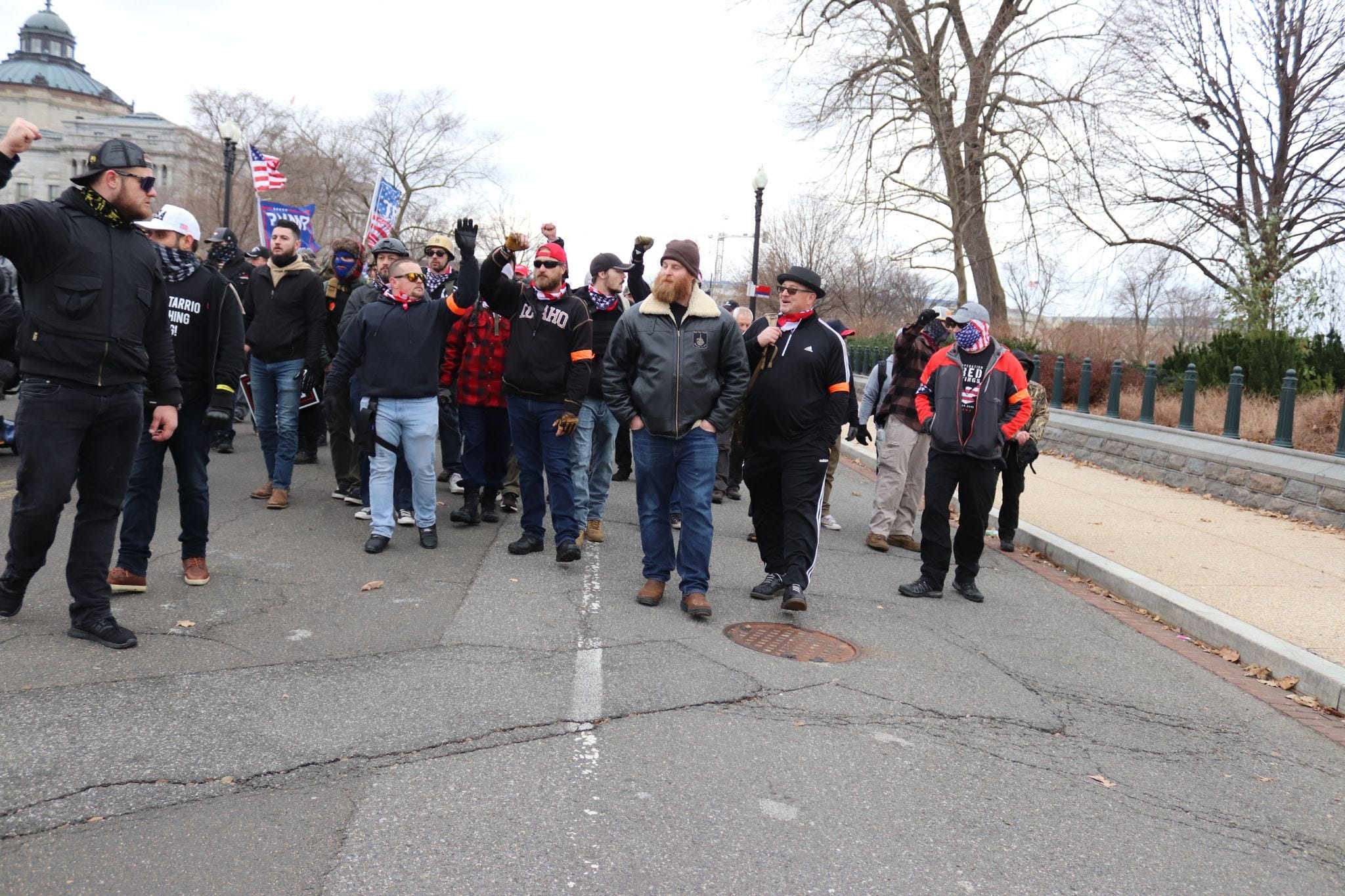
SM: And obviously, you know, your leader, the Proud Boys’ leader, Enrique Tarrio, was pardoned by President Trump after he received the 22-year prison sentence in 2023 for seditious conspiracy related to the January 6 Capitol attacks. People were really upset about that. They thought he was leading the charge. What are your thoughts on that? That Trump pardoned the leader, Enrique Tarrio?
BJ: Personally, I don’t have a good relationship with Enrique, because prior to January 6, it was discovered that he had been a federal informant himself on a criminal case before Proud Boys was created. So on a personal level, I don’t deal with anyone who has that type of history, or basically he had got himself in criminal trouble a long time ago and told on every random person he could find to try to get a lesser—or to successfully get a sentence reduction. So we had parted ways then, and he hasn’t officially been the leader of the Proud Boys since all that happened, but I do feel like for the most part, most of those people that were there, I feel like they were overcharged or overzealously prosecuted, and I am glad they are pardoned.
SM: Mhm, then just back to the LGBTQ thing a little bit. Obviously, you know I run an LGBTQ publication here, right? I’m gay myself, right? What are your thoughts on us? And I won’t take it personally. Do you see us as committing a sin? Do you see us as bleeding toward pedophilia? What are your thoughts on gay people and LGBTQ people?
BJ: So, we have a handful of gay guys in Proud Boys. I look at it as a personal decision, as long as it’s kept between consenting adults. I think the vast majority of straight males, if they were honest, don’t really understand it, or on some level, find it gross or unnatural. But the bottom line is people can do whatever they want. Someone might have some other sexual fetish or preference or something that I don’t agree with, that you know, that can’t become their entire identity. The problem is, in my opinion, and in the opinion of most people on the right, and that would include, like, gay Proud Boys, [is] the LGBTQ movement in general is very heavily connected to the left, and it does become their identity, their politics, their religion. Where it crosses from annoying into a place where we feel like it’s a threat, again, is when it starts coming on to children. You know, the trans thing. We have a huge problem with the trans thing. I think if someone’s going through issues in their teenage years and they’re not sure about their identity. Now we’re in this place where we’re putting people on hormones and recommending them for surgery, basically doing permanent life-altering things to fix what might be a temporary teenage problem that every human being goes through. When I look at that, it makes so little sense and seems so irresponsible that I can’t help but see sinister motives behind it. Because all you hear from the left or from the LGBTQ community, is that “Oh, we’re saving their lives. If we don’t do this. They’re going to kill themselves.” You wouldn’t deal with any other manifestation of teenage angst in that way. So everything to me involved in the left wing larger part of the movement, I definitely see evidence that it’s geared towards pedophilia, and I find it disgusting,
Note: While research is developing and exact statistics vary, the vast majority of trans people do not cease their transition, with detransition rates in more recent studies usually being 10% or less.
SM: But I guess when you look at the actual data and the number of LGBTQ people that are engaged in pedophilia, there’s zero connection to the fact that they’re disproportionately likely to do that. Actually, if you look at conservative Christian denominations in the evangelical church, they’re far, far more likely—pastors, priests, church leaders—to commit acts of child rape and of pedophilia. So I guess I’m confused why you would focus on LGBTQ communities when the belly of the beast seems to be in these church communities in the United States.
BJ: Yeah, I don’t have that information in front of me. If I saw churches saying, “Hey, you know, we’re all straight and we, we want to make sure that—”
SM: But you’re not seeing countless headlines coming out about pedophilia and the church among Church leaders?
BJ: I’ve seen the Catholic stuff, you know. I haven’t looked into it recently.
SM: Evangelical, Southern Baptist, non-denominational, I mean, it’s omnipresent, no?
BJ: No. I’m not a church guy, and that’s nothing that’s come up in front of me. But, like I said, if there were events at church talking about, “Hey, we’re going to sexualize children,” or “We need to explain to them, man, we should explain to young girls how to give a good BJ.” You know, if I saw anything like that, I would be just [as] against it as I am this. But this is what comes up in the news. This is what, you know, Indianapolis has a huge gay population, and it’s, you know, when it was going hot and heavy before we kind of got things worked out to where they know where we stand—
SM: What news sources are you looking at? Because I mean, you’d honestly have to be blind not to see the headlines about the Church.
BJ: Like, molestation?
SM: Yeah, molestation, child rape, like, you know, priests, pastors.
BJ: What’s the last big story of… I’ve seen the Catholic things, they’re almost like a meme, but I haven’t seen anything lately from anyone. What’s the last major story of the Baptist Church raping some kids?
SM: There’s a lot. There’s the one from the Houston Chronicle. They did about a 20-year investigation into it, and then there’s a lot of kind of one-offs. I can send you some articles after this, but it’s definitely a big, big problem. Yeah, I’m just surprised you haven’t seen it.
BJ: Like I am aware that exists, but I’m not aware of anything currently ongoing where they’re still doing it, they’re still proud of it in a way where I could go out and take action against it. Anybody ask me, I’ll be like, “Hey, don’t send your kids to Catholic Church.”
SM: Yeah, yeah, got it. OK, OK. And then this is all interesting. And then—
BJ: I could pull up the NUVO, like I could pull up the alternative paper in my town on a weekly basis and see a drag brunch at a bar where they’re saying, “Bring your kids out.”
SM: Yeah, but a drag brunch at a bar is different than a headline about a pastor raping a child.
BJ: Sure.
SM: That’s completely different. I mean, it’s a drag queen reading a story to kids versus a pastor raping a child.
BJ: And for the record, I work against NARSOL, which is a group that is specifically trying to change the laws to hide sex offenders, but I also work with a local group here, which is ran by a young Black dude that sets these predators up and catches them. I work with other local groups that basically find predators who have failed to register and puts that information on Facebook so people know where they’re at. So, I mean, of everything I could be involved in politically, that’s the one that I think does the most good.
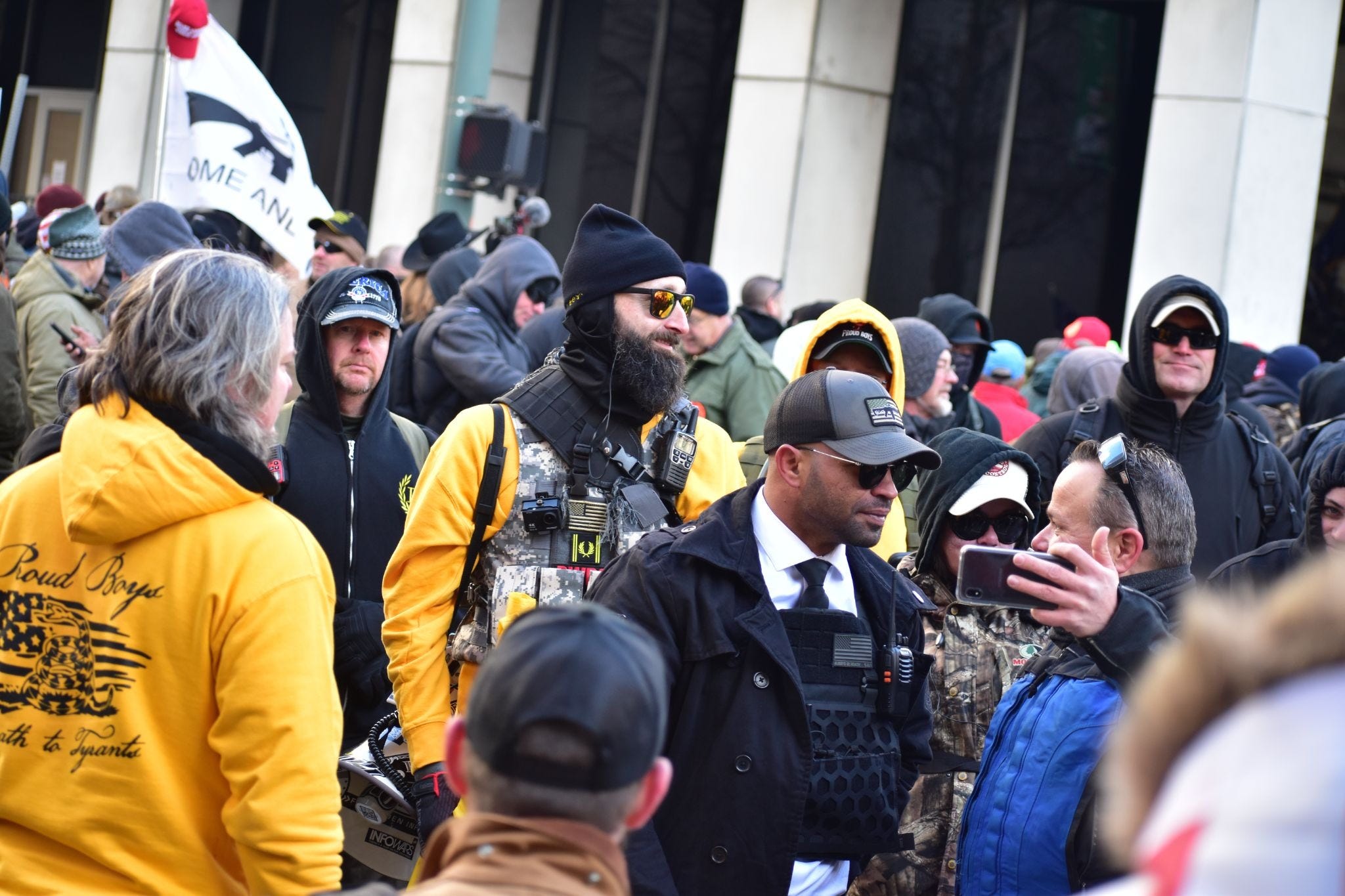
SM: Got it. And you mentioned earlier that you think a lot of the politicians might not mind it, because you all come out, the Proud Boys come out and try and keep everyone safe, especially from the other side. Who are you guys looking for? Who are the, I guess I don’t know if you call them enemies, but the other people when you go to these rallies and you want to keep people safe?
BJ: This kind of died out, like once Biden became president. I think these things are tied to funding. Well, I know they are, because I’ve seen the massive buses that bring people in like 2020, but it was antifa, mostly. The guys that wore all black and go up and [unintelligible], but that’s kind of… you don’t see them anymore. If you go to the No King’s Protest now, it’s like white boomers, you know? I think the antifa comes out when it’s being paid to come out, and that seems so dried up.
SM: What’s next for Proud Boys? What do you guys have cooking? What’s the next thing and are there any kind of current mission-focused goals you guys have for the rest of 2026? As we’re getting close to the midterms, obviously, that’ll be big.
BJ: Well, we’re disenfranchised with politics, like almost everybody is right now on the right and left, to be honest. But we’re engaged fully with working against this NARSOL organization. They’ve got some lawsuits against us and going forward, we’re trying to monitor and possibly shut down their events.
SM: OK, interesting. And you mentioned you’re not related to Patriot Front, is there beef between Patriot Front? Like, do you disagree with some of the things they do?
BJ: Yeah, obviously we have members that aren’t white, so they’re not real happy with that.
SM: Mhm. How do you guys view race? How do you see race?
BJ: I mean, that would be up to each individual person, but obviously in my mind, America has been a multi-racial country, well, from the beginning, since its founding. And you know, there are things that point to, OK it was founded with this European culture or this or that. But the bottom line, the problem I run into when I left the racial movement, the problem I run into with racial is currently, because I’ve had a discussion with the leader of Patriot Front from before, many, many years ago.
SM: Thomas Rousseau, yeah.
BJ: Yeah, they have a platform that says, basically, you know, no non-white person is a quote-unquote “real American.” Well, I mean, the first guy killed in the Revolutionary War was Black, so at every point our white ancestors had the opportunity to probably make this a whiter or an all-white country, and they failed to do so. When they took land from the Indians, they didn’t expel them all the way out. They carved out a place for them. When we took five or six states from Mexico, we didn’t expel them. They carved out a place for them. When they wanted the railroads built, they brought in Chinese. When they wanted cotton, they brought in Africans, so on and so forth. And that continues to this day. So, there are a lot of racial issues in this country, I think some of them are legitimate, especially between the fact that the culturally Blacks and whites just can’t seem to align, no matter how much time goes by and how much money gets spent on it, but at the same time, whatever’s going to come about, whatever solution’s going to come about, I mean, we have to have to play the hand we’re dealt, and the more people that want to help, the better. I think the racial movements are isolating themselves entirely too much, not only by pitting all the other races against them, but the amount of white people who will also never support them when they have that platform is pretty staggering.
SM: You were obviously once a member of the Ku Klux Klan, you mentioned you joined in the, in your late teens, now you’re 50 years old. Do you still believe we’re in a white supremacist nation?
BJ: No, quite the opposite.
SM: What changed you? What made you change?
BJ: Well, when I was in the Ku Klux Klan, I wouldn’t believe that we’re in a white supremacist nation. I believed that the nation was the opposite, and that we had to defend ourselves. Like, if it was a white supremacist nation, no one’s gonna join a white supremacist group, they wouldn’t have to.
SM: Right. But, like, I guess if you’re a member of the KKK, I presume you don’t love Black people.
BJ: Yeah, at that time I did not. I was taken from a small rural all-white community and put into a high school that was 80% Black, and it was… I did not like what I saw, so I was very desperate to try to find a way to stand against what I saw, but as I got older, I learned that the answers weren’t nearly as simple as you think they are as a teenager.
SM: How did you get recruited to the KKK in the first place?
BJ: I don’t remember. I think someone must have handed me a business card, or I saw a flyer or something.
SM: How long were you a member there for?
BJ: Oh, probably about five years.
SM: And what would you guys do when you were a member there?
BJ: They mostly got together and just had their little meetings in private. Like I said then there was a guy named Jeff Berry that came along that was holding public rallies everywhere to get, you know, media attention and more membership, and so on and so forth. And I tried that for a while, and when he was holding those rallies, you can look him up. There was a lot of riots and fighting and violence and stuff, and at that age of my life, I found that kind of exciting.
SM: You said as you got older, you realized it was more complicated. Was there a turning point or was there someone you met that made you think differently?
BJ: No, nothing specific. There were just… After that, I had founded and ran a couple skinhead groups, and I had risen to kind of an overall leadership position in the white nationalist movement. You can kind of look all that up online, but when going through the process of trying to figure out what exactly our platform would be and our foundation would be, I started asking a lot of questions about race that the other people there just didn’t really want to come up for answers with. It was a long time ago, but we were on the verge of DNA testing becoming accessible to everybody, and I said, “Hey, if you’re gonna base this all on race, like, we need to figure out what white is, how much white is acceptable,” and they’d say, “Oh, it gotta be 100%.” So, I got bad news for you. I was born with blonde hair and blue eyes, and I’ve got some Native American in my family, you know, 100 years ago, that I know about through a weird inheritance escrow. There’s a lot of you in this room that are much darker than me, that are not 100% white, so just things over the years that made me realize, as far as like making the country better or make things better for my family, like that was not going to be the road to go down, and there were a lot of people in it for the wrong reasons and there were a lot of people in it who were just looking for a place to be accepted. And you know, I continued to be disturbed by the direction I saw things going in the world, and I realized that that was not the group of people that was going to bring about any change.
SM: Got it? OK, I know you got to go, so let me just get a few questions, so I have clarifying. So, you’re 50 years old, five zero, now?
BJ: Mhm.
SM: And you’re based in Indianapolis, did you say?
BJ: Mhm.
SM: And what is… if I want to look up your other stuff through the years, it’s Brien. What’s your last name?
BJ: James. I got my own dedicated page on the SPLC, the ADL, all that stuff. It’s all on there.
SM: Oh, you do, OK. So, what would I look… let me actually look it up while I have you here. So, Brien James, SPLC, KKK. Oh, Brien James got it. Racist skinhead, OK.
BJ: You love that KKK thing, don’t you?
SM: No, I just… it’s how we met, I remember. I think we were together when you were part of that, I thought, but I guess if you weren’t 10 years ago, then OK. So, this is you, and Brien if we did want to do a longer video interview, would you be open to that?
BJ: Probably not.
SM: OK. Well, let’s stay in touch. This is my number, and I appreciate your time.
Additional reporting by Hope Pisoni.
If objective, nonpartisan, rigorous, LGBTQ-focused journalism is important to you, please consider making a tax-deductible donation in the U.S. through our 501(c)(3) fiscal sponsor, Resource Impact, by clicking this button:


.jpg)

.jpg)
.jpg)
.jpg)
_-_49415700288.jpg)
Super ineffective interview. Should've shown up with facts, stats, names, dates, to disprove his points that the lgbtq community is in any way linked to pesos, unlike straight men who are committing most of these vile offenses and also press him on whether "narsa" or whatever he's referring to is an lgbtq group. Why allow him to conflate the two and not call him on it. And why let him invoke the boogeyman of "antifa" without presenting the solid facts. I dont understand the point of this interview. We already know what their positions are. I thought i might hear an insightful conversation, and this was definitely not.