

White Supremacists Are Absent From Trump’s Counterterrorism Strategy. Why? [WATCH]
The president’s new counterterrorism strategy falsely links transgender people to extremism and ignores the threat of far-right terrorists.


Design by Soph Holland. Photo by The White House.
“UNCLOSETED, with Spencer Macnaughton” is a new podcast by Uncloseted Media, an investigative LGBTQ-focused nonprofit news publication. Follow and subscribe wherever you get your podcasts. YouTube // Spotify // Apple
On May 6, the Trump administration released their new counterterrorism strategy. It delineated three “major types of terror groups,” including “narcoterrorists and transnational gangs,” “legacy Islamist terrorists” and “violent left-wing extremists, including anarchists and anti-fascists.” In a glaring departure from the Biden administration’s strategy focused on far-right extremists and white supremacists, the Trump administration is cracking down on ideology that they call “anti-American, radically pro-transgender, and anarchist.”
In this episode of “UNCLOSETED, with Spencer Macnaughton,” Spencer talks with Jon Lewis, a researcher at the Program on Extremism at George Washington University, as well as University of Maryland distinguished psychology professor Arie Kruglanski, to learn about what this new characterization of terrorism means for the safety of LGBTQ people and the security of all Americans.
Watch the video or read the full transcript below.
Spencer Macnaughton: Hi, everyone. Welcome back to UNCLOSETED with me, Spencer Macnaughton. Last week, the Trump administration unveiled its new counterterrorism strategy, which states that the government will crack down on “violent left-wing extremists,” who are “radically pro-transgender and anarchist.” Today, I’m here with Jon Lewis, a research fellow at the program of extremism at George Washington University and University of Maryland psychology professor, Arie Kruglanski. Jon and Arie, thanks so much for speaking with me and Uncloseted Media today.
Arie Kruglanski: It’s a pleasure.
Jon Lewis: Thank you for having us.
SM: Fabulous, so let’s get right into it. Last week, Trump and the Trump administration released a new counterterrorism strategy. This made quite a few headlines, but for those listeners who might not fully be aware of it, Jon, can you just give us some top line descriptors on what this strategy is and how it differs from prior strategies perhaps under the Biden administration?
JL: Absolutely. So, these documents are largely policy prescriptions. So they will lay out in generally broad details the main areas, the core ideologies, the threats that this particular administration views as the primary issues that it intends to tackle. When we look at previous administrations, both Biden and the first Trump administration, what you saw was a generally serious-toned, apolitical document. It generally looked at threats across the ideological spectrum, devoting pages to far-right, to jihadists, to Iranian actors. And I think with this document in particular, what the 16-page memo focuses in on most significantly is the threat from narcoterrorists and transnational gangs, the threat of what they call “legacy Islamist terrorists” and this sort of catch-all bucket of what what they describe as “violent left-wing extremists,” which they don’t define all that clearly but based on the the memo what they attempt to articulate is a set of individuals that they believe have anarchist, anti-fascist or radical transgender ideologies. And so I think from that what we see are these three core areas that the administration through this policy document is trying to paint as really the most serious elements of the domestic terrorism threat that it intends to tackle.
SM: But you mentioned the document didn’t used to be ideological. What, in your opinion, makes this document now ideological?
JL: Even starting with the tone—the number of references to the failures of the Biden administration, the efforts to paint with broad swaths anyone who they perceive to be political opponents as the preeminent domestic terrorism threat. And I think more than anything, it’s what’s lacking from the document that makes a lot of researchers stand back and raise these questions. We’ve seen, even in the first Trump administration, nearly 100 people killed by far-right extremists, namely white supremacists, antisemites. Far-right Extremism is not mentioned in this counterterrorism strategy, which is a massive oversight. So, too, missing is the threat from Iranian-backed actors. We’ve heard a lot of commentary in the media about Iranian sleeper cells, the threat of Hezbollah, homegrown extremists. Those areas are also missing from this counterterrorism document. And so it is certainly an ideological screed more than a balanced and thoughtful document.
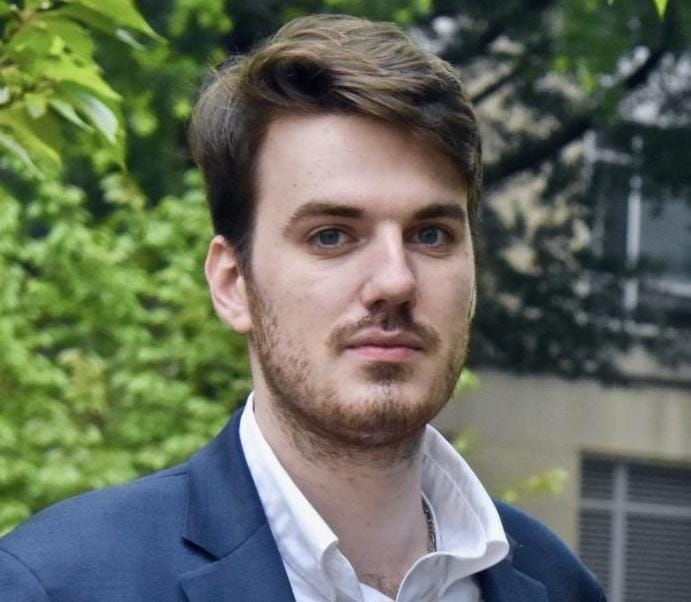
SM: So interesting, and Arie, I find it interesting that Jon points out there’s no reference to far-right extremism. There’s also not one mention of white supremacists as a threat in the document, which Joe Biden’s administration said was the number one threat for domestic terrorism in the United States. What does that do for the psychology of terrorists or extremists when they see the president of the United States releasing a document like this and seeing, “oh, they’re not even worried about me. They’re not targeting me. They’re not even mentioning me.”
AK: Well, first of all, it’s a tremendous oversight, because in the recent decades, there’s been a huge surge in white supremacist terrorism to the tune of about 400% in the last 20 years. Most of it was on the far-right side. It was more prevalent and also more lethal, simply no comparison. So, to omit that wave of white supremacist terrorism from a document is a huge oversight. And it illustrates the idea that one man’s terrorist is another person’s freedom fighter. And to label somebody as a terrorist is influenced very much about one’s own politics, one’s own motivation. And of course, the left terrorists, it exists to some extent, but it pales into insignificance in comparison to the far-right terrorism that is sweeping the United States, but also the world at large. Now, you ask what it does to be labeled as terrorist. It’s a very serious accusation, especially when you feel it’s totally unfounded. You feel that you are targeted unjustly. You are traumatized by that label. The fact that your own country, your own government, is turning against you for no good reason, it can affect your self-concept. It can affect your sense of security and sense of identification with your country. It’s a very serious thing to feel that you’re marginalized within your own country.
SM: Reading this document, which I did this morning for the first time, was breathtaking in many ways, that the government of the United States say they’re going to crack down on radically pro-transgender folks from the lens of terrorism. And in the presidential foreword, Trump writes, “if you hurt Americans or are planning to hurt Americans, we will find you and we will kill you.” Looking at a marginalized group where there’s no evidence that suggests that they’re disproportionately likely to commit acts of terrorism, how unprecedented is this for a U.S. Presidential administration to target a marginalized group like transgender folks in this way? Everything seems crazy when you look at the news, but how crazy is this?
AK: It’s very crazy. It creates a political atmosphere. The words and the ideas of the president of the United States have a lot of resonance.And that puts a target on the back of people who really do not deserve to be targeted at all. And we know what happened in Nazi Germany, that an anti-Jewish ideology created a situation where the entire country became rabidly antisemitic. And I think that it’s a similar situation here when an anti-LGBTQ ideology is becoming part of the establishment narrative. That is extremely scary, and it brings back memories of the 1930s, the kind of things that we thought would never happen again. And here we are at the brink of it possibly happening.
JL: It’s important to recognize that these things don’t happen in a vacuum. When we start to look even a couple of years back, in the aftermath of Jan. 6, during the Biden administration, what you saw were efforts to mainstream and normalize anti-LGBTQ hatred. You saw dozens of far-right extremist groups, elected officials, politicians at the state, local and federal level, encouraging individuals to go to drag shows, to go to libraries that were hosting drag queen story hours. There were concerted efforts to demonize, to dehumanize, to otherize groups of people based on, again, not their violence, not their tangible threat, but based purely on their gender, their gender identity. And I think that we have to look at a lot of what’s happening now as a continuation of those very trends. I think that when we look at it today, really what you see is a success of those efforts to normalize and to really poison that well against individuals who are perceived as the other or as un-American. And I think that, again, as Arie said, that has very significant effects downstream.
SM: And before I ran Uncloseted Media, I did a lot of work in far-right extremism. So I embedded with the Ku Klux Klan, with the Michigan Militia, with neo-Nazi terrorist entities like Atomwaffen. And what I learned was these groups are horrifically racist and antisemitic. They’re also really homophobic and transphobic.
AK: Absolutely, yes.
SM: So to me, when I look at this counterterrorism strategy and realize there’s no mention of these groups as a threat, and then you’re also saying the threat is transgender folks and perhaps other LGBTQ folks, what do you guys imagine from all your research, these groups, like the far-right Proud Boys, the Boogaloo Boys, the KKK, what are they thinking right now when they see this messaging coming from the most powerful people in the United States?
AK: I think it gives them tremendous legitimacy. They used to be the margins. There was a cultural consensus that they are the bad guys, that they’re the danger to society, and now they are becoming legitimate. And that’s the huge danger, that these attitudes will sweep into the center stage of American politics. As Jon said, it’s the normalization of extremism. That is the extreme danger. We have seen it happen time and time again in history. Human nature hasn’t changed much. And the same thing can happen again here. The well is poisoned by the most influential figures in our political environment. And those groups are gaining strength. We see all over Europe that groups that were once at the margins—for example, the neo-Nazi group in Germany, Alternative für Deutschland, is now the largest opposition party. They’re taking over. They’re becoming the normative attitude that prevails in society. And I think that’s extremely dangerous, extremely conflictual, it’s extremely unfair.
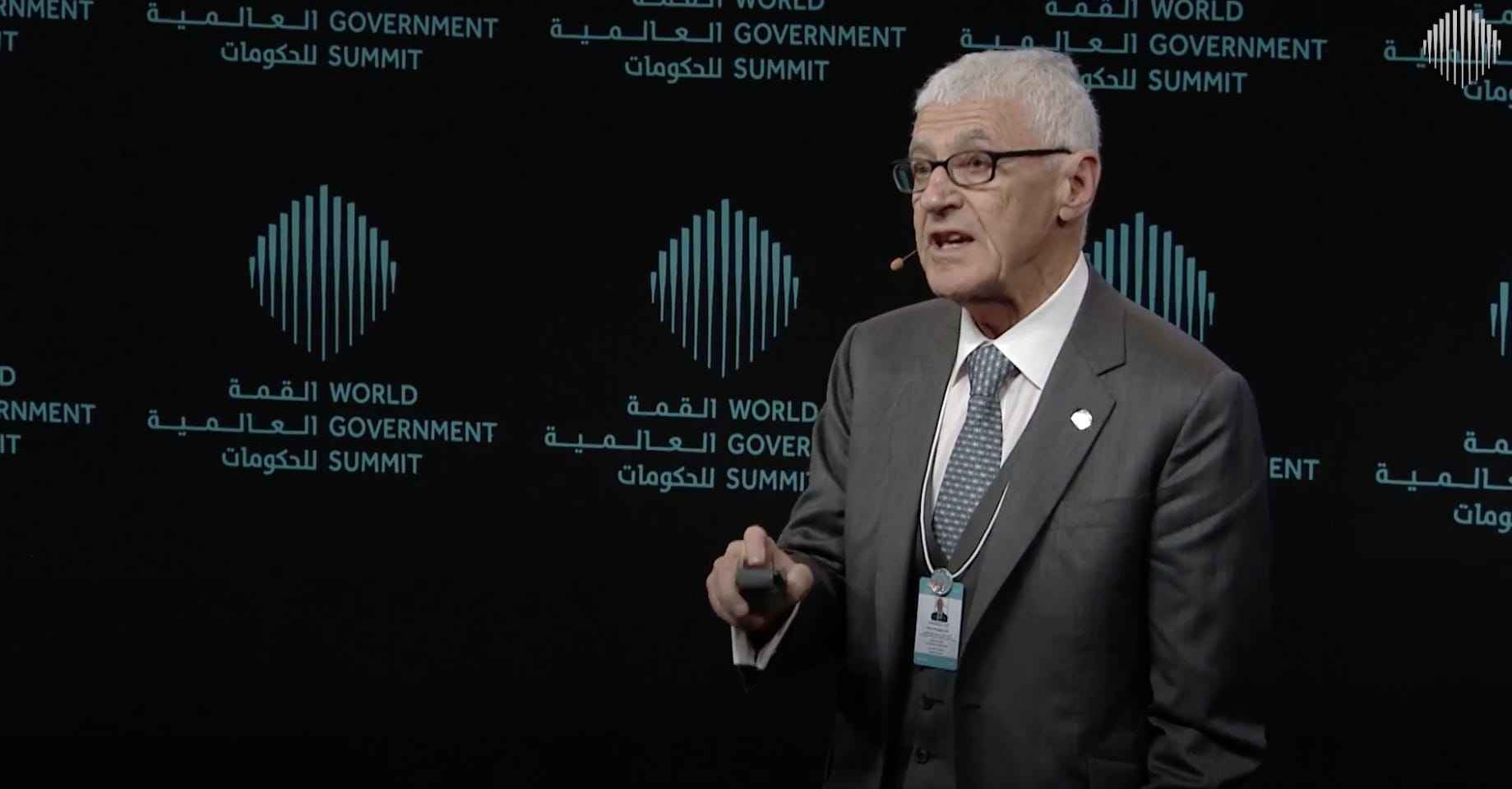
SM: We have folks in the administration, I’m thinking of Kash Patel, who leads the FBI, who has very little experience with national security, essentially none. And there’s reports coming out from the Atlantic that he’s an alcoholic. Of course, he’s denied those claims, but there are a lot of people in this administration who, beyond what this document says ideologically, just don’t have the chops to be there. What are your concerns from a domestic terrorist lens when not only is the information coming out inaccurate to the real threat, but the people in charge don’t have the credentials to really do a good job? Jon?
JL: Yeah, I think it certainly sends all the wrong messages. Especially, going back to the previous point, when you see the official DHS Twitter account putting out overt neo-Nazi propaganda. When you have, as you said, reporting around, whether it’s FBI, DHS, other federal agencies that are either hiring former Jan. 6 participants, downplaying the seriousness of far-right extremism, these things all send a message. And especially when you see very public failures by domestic law enforcement, whether it’s around the Charlie Kirk shooting, the shooting at, I think it was Brown University, where there was a subsequent manhunt for a couple days—groups that feel emboldened, that feel that they can get away with these actions. But even just for the lone individual, the lone actor, someone who is not in one of these groups but who is terminally online, who harbors some personal grievance, some bias, some insecurity, who is looking for justification to commit violence, who is looking for that trigger.
SM: Independent terror cells.
JL: Yeah, exactly. That self-motivated lone actor who is on the verge of either potentially harming themselves, harming others, and they go online and they see that, of their congressperson’s last 50 tweets, 45 of them are about transgender people or about LGBTQ issues. That paints a very clear target and gives people who, again, are maybe not deeply ideological, but who are disturbed, who are looking for a justification to go harm other people. The zone is flooded with those messages right now. And I think that really lowers the barrier to entry, which is deeply challenging. And also, again, as we know, it’s a lot harder for domestic law enforcement, for the FBI, to stop one individual if it’s not a group that they can put an informant into or round up that whole network. There’s a reason that the lone actor terror threat has been so prominent in recent years.
SM: And it’s not only the neo-Nazi propaganda that you mentioned, even the racist posts that Trump has put out on Truth Social, depicting the Obamas as apes, that type of messaging from the government, it’s speaking to the Ku Klux Klan, isn’t it? It sends a message.
JL: Yeah, there’s another researcher who described these not as dogwhistles at this point, but just as normal whistles. We have to call them what they are. These are so overt, so in-your-face, day after day after day. And I think the broader challenge that we have here seems to be that nothing matters, there are no consequences for this. There is great investigative journalism done that uncovers that this neo-Nazi anonymous Twitter account is actually an ICE attorney or a member of DHS. And you think in a previous time that that would have been a news cycle, that would’ve led to some tangible changes. And today it’s just another Tuesday. And so I think living in this sort of post-truth world where we are so siloed, where there are just no consequences for things that, again, in a previous time, these norms would have demanded, I think also does set the table and really allow for that normalizing of racism, of misogyny, of anti-LGBTQ to continue.
AK: I just wanted to mention another aspect of it, and that is the undermining of the citizens’ confidence that the government is there to protect them rather than to attack them. And of course, right now it’s the far-left or the transgender people that are being targeted, but insofar as it’s clear that they are not terrorists, that this is a made-up, trumped-up accusation, any group can be targeted like that. And therefore, now they are after a given group, they can, with equal justification or no justification, go after everybody else. So this kind of thing for bystanders who understand that this is unfair and this is trumped-up, introduces a great deal of insecurity and distrust in the government. It basically means the fraying of society, feeling that the government is out to get you rather than to protect you.
SM: What is, if you look—say we had a robot look at all the data. Dare I say AI? No. All the methodologically sound evidence-based research, what does that tell us, Jon, about what the actual threats are in terms of terrorism in the United States today?
JL: Yeah, it’s still predominantly the far-right. I think what you’ve seen in recent years is an evolution of what a lot of government and researchers are calling nihilistic violent extremism—definitionally, individuals who are motivated not by racism, by misogyny, by really any ideology, it’s more of just suffering of other people. That’s where you see a lot of these online networks in these places like Roblox, like Discord, that are really searching out young, disaffected, damaged individuals. And that’s really where you get a lot of the child sexual abuse content, the encouraging of self-harm, of animal abuse, really just the worst of the worst. And it’s something that the FBI has recently started to put a lot of effort into tracking and cracking down on. They’ve been touting in nearly every press release, every public testimony, their spike in these cases. And so it is very surprising to see that not included at all in the counterterrorism strategy.
SM: And are there, because I know 10 years ago it was more groups, and then it evolved into these lone wolf actors a little bit more, at least from when I was doing more reporting in this realm. Are there specific groups or people or even regions of the country you’re most concerned about that maybe aren’t being spotlighted by the current administration?
JL: It’s devolved so much in the last 10 years to the point where you do see these networks and movements pop up, like the Boogaloo, like you said earlier, these Hawaiian shirt-wearing guys that popped up in 2020. And again, no leadership, no hierarchy, no central geographic nexus. It’s one guy in Texas, one guy in New Jersey, one in California. They’ve never met, but they’re in a signal chat together. I think that that’s really been the evolution of a lot of these networks is they realize that, again, if there’s no headquarters, if there’s no hierarchy, if there’s no membership list, it makes it a lot harder for law enforcement to arrest their way out of those problems. And so what you are seeing today is increasingly younger, increasingly more online, and because of that, inherently transnational. Certainly, when you look at those trends, it is global far-right extremism. It’s individuals who want to commit violence at synagogues, at majority-black grocery stores, to target individuals who are not them. And I think that, yeah, it’s shocking that those are not reflected in the strategy either.
AK: There is a general uncertainty in the world today because of developments like globalization, the financial crisis, the pandemic, the immigration crisis, all the galloping technology that is not understood by masses of people. And that feeling of uncertainty, uncertainty about one’s own place in society, creates a vulnerability to ideology that identify a given target group as responsible for their suffering and that recommends violence against that group. It’s a very appealing idea that you can find the culprit, whoever is responsible for your suffering, be it immigrants, be it Muslims, being transgender, being the Jews, whoever, and encouraging people to aggress against them and therefore prove their own significance, feeling great again as it were. And of course, the danger is that politicians who sense that vulnerability would provide just the kind of populist ideologies that find the culprits and encourage people to aggress against them, and that creates waves of terrorism, of white right-wing terrorism, all over Europe and in this country as well. So it’s not just a bunch of damaged individuals, but it’s a general unease, malaise, that pervades on the planet these days that renders people vulnerable to very pernicious ideology.
SM: Well, and I’m looking at a part of the counterterrorism strategy. To name transgender, Arie, to your point, is essentially putting the target on a silver platter for Americans to read about. Like I said, it’s unbelievable.
AK: Exactly. And it legitimizes the idea that transgender is really a violent group in society, which is, of course, nothing could be further from the truth. Associating them with Islamic terrorists or other groups that are truly aggressive is just an untruth that is snuck into the public awareness, public consciousness. And the people will begin to identify transgender and left-oriented individuals as being anti-American. It’s a huge danger that signals the fraying of our society, it deepens the polarization, introduces conflict and insecurity on part of everybody. Today it’s transgender, tomorrow is me, academics or whoever it may be.
SM: What has struck you that hasn’t been reported on enough about Trump and the administration’s counterterrorism strategy at large, its messaging?
JL: The first thing that comes to mind is the chilling effect that this has on speech and assembly. Even if it is not rising to the level of criminal prosecutions or designations, just the threat of these things has a chilling effect. If you’re a local community member, organizer, someone who has gone to libraries or drag shows to show support for your community, for people you know, there’s a very real fear that these people surely now have that they will be labeled a terrorist, that they will be debanked, that they will have records seized by the government, that they will be followed home by law enforcement agents, that they will get a knock on their door and questioned about, again, protected political or some other kind of speech. And I don’t think we can overstate how insidious that is, to try and paint with an overly broad brush anything that goes against this specific worldview as inherently anti-American and therefore terrorist. I think it sends all the wrong messages, obviously.
AK: On the deep level, it undermines the trust that Americans will have in their government. That you cannot have an assembly, you cannot express an opinion. Everything gravitates toward the label of terrorist. And if you are a terrorist, then you are worthy of being killed and persecuted by the government. It introduces an atmosphere of fear of government rather than trust in government. And that is an extreme danger for society that we will become an authoritarian state where the government can label anybody as anything and go after them without any legal justification, any grounding in the constitution or the law of the land. It’s basically the end of law and order.
SM: What can LGBTQ people, allies, what can they do? What should they be looking for before, God forbid, it’s too late? How can people be watching as it’s clear that the threat is ramping up to some degree?
AK: I think political action, I think convincing the powers that be, the opposition, Democrats, that it’s a fight that needs to be undertaken, that this is a very clear and present danger to society and we’ve got to ally all the different factions that would oppose it into concerted political action that would change things.
JL: I think local nonviolent action, protesting, making your voices heard as much as possible. And again, for those who are allies, who are in positions of authority or who do have that platform, I think it’s even more incumbent upon them, especially in times like this, to stand with those who are marginalized, who may feel understandably uncomfortable or unable to speak on those issues.
SM: And you see on the New York City subway “see something, say something.” I think a lot of people might not know what seeing something looks like as it relates to terrorism. What does that look like? What should people be on the lookout for?
JL: I think especially in the aftermath of Jan. 6, I think what we saw a lot of Americans struggle to conceptualize is the fact that increasingly the call is coming from inside the house, that these are our neighbors. It’s the guy who mows your lawn or drove your mom to the doctor’s office. These are the same people who, while again maybe not being explicitly terrorists, are so willing to use violence, use force, use the threat of force against individuals who they see as not being part of their in-group. I think with a lot of the discrimination that we’ve seen, either racial or against transgender individuals, it’s not exactly quiet. It’s very in your face. And I think especially when we see the number of neo-Nazi groups that feel comfortable going to cities like Columbus, Ohio and protesting, standing outside, with swastikas, of either synagogues or libraries, making clear to those people that they’re not welcome in your city, in your town, I think is a really good jumping off point. These are not mastermind terrorists. These are losers. These are guys who have nothing but the fear and the loathing to drive them. And I think increasingly, what we see is that at the first sign of pushback, these guys get back in their U-Haul and go home.
AK: I would like to add to this two things. One is that there are obvious signs of hate speech against whatever group. And I think that we need to inoculate members of our society against hate speech for whatever reason, whether it’s against the left, against transgender, against immigrants, against Muslims, against Jews. Hate speech is hate speech, and it has to be recognized as such and delegitimized. And the second thing is that you should not feel that just because you are not targeted now, you are safe. If we allow law and order to be dissolved, and the government do whatever they want in targeting groups, there is a danger that it will come to you, whoever you are. So I think it’s not just these targeted groups right now, but come the day that they will be after you. And so it’s not an esoteric, marginal cause, it’s a cause at the very heart of our society and our democracy.
SM: I think that’s a really important note to finish on. This has been a great and really rich conversation. Arie Kruglanski and Jon Lewis, thank you so much for speaking with me andUncloseted Media today, this has been great.
AK: Thank you for having us.
JL: Appreciate it.
If objective, nonpartisan, rigorous, LGBTQ-focused journalism is important to you, please consider making a tax-deductible donation through our fiscal sponsor, Resource Impact, by clicking this button:
If you’re in Canada and would like to contribute, you can make a charitable tax-receipted donation here:

 |
|
I'll tell you why, it's because he supports White Supremacy while everyone else who isn't white, straight, cis-gendered man is the enemy to him and his gaggle of bootlickers.