

Canada Has Everything It Needs to End HIV. So Why Are Rates Rising Among Young Gay Men?
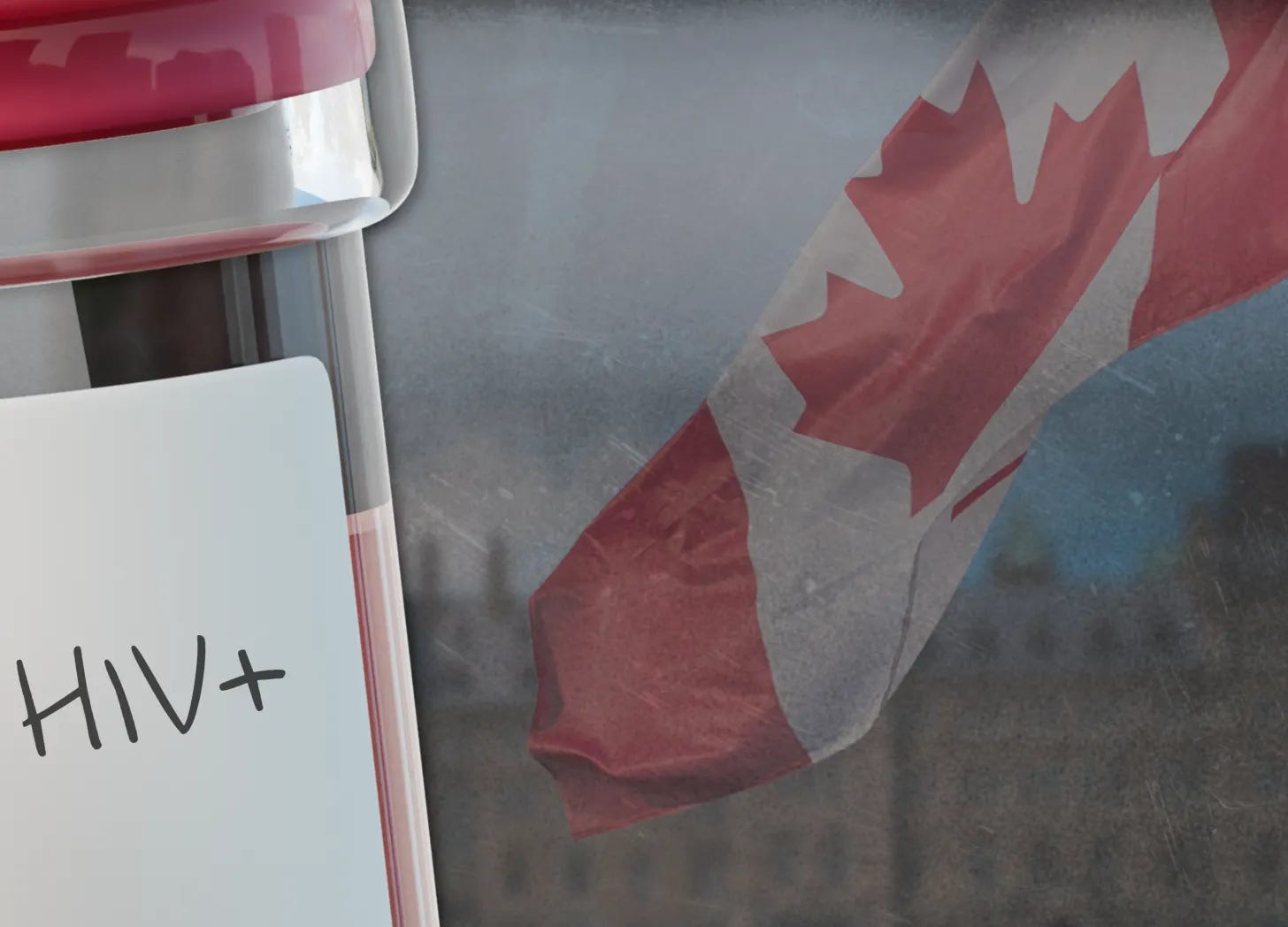
Last week, the Canadian government shared that HIV infections rose by 23% between 2022 and 2024. Still, more federal funding cuts may be looming.

This story was produced with the support of MISTR, a telehealth platform offering free online access to PrEP, DoxyPEP, STI testing, Hepatitis C testing and treatment and long-term HIV care across the U.S. MISTR did not have any editorial input into the content of this story.

In 2019, when Marcus was 22 years old, he asked his family doctor for PrEP—a medication that prevents HIV from transmitting through sex.
“My friends and I heard about PrEP during Pride, and all the ads said ‘talk to your family doctor,’” Marcus told Uncloseted Media. “So that’s what I did.”
PrEP has been approved for HIV prevention in Canada since 2016—and America’s Food and Drug Administration did so in 2012. However, Marcus says his doctor had never heard of the medication.
“He basically told me to be patient while he did some research and said I should use condoms,” he says.
Just months later, though, Marcus was sexually assaulted. After developing all the early flu-like symptoms of HIV, he asked for a test from the same doctor. Instead, he says he left with a flu shot recommendation. It was only after demanding an HIV test a month later that he learned he was positive.
“I felt like another statistic—a gay man who moves to the city, gets sexually assaulted, gets HIV,” says Marcus, who asked to use a pseudonym because of HIV stigma.
Marcus’ doctor’s lack of knowledge surrounding PrEP is one of many factors that may explain a new surge in HIV among young gay Canadian men. Last week, Canada’s federal government released new estimates that there was a 23% increase in HIV infections between 2022 and 2024. And per the most recent public health data from 2024, gay, bisexual and other men who have sex with men make up more than a third of new transmissions, with 25- to 29-year-old men having the highest rate of HIV diagnoses.
“Canada has all the tools it needs to end the HIV epidemic,” says Brook Biggin, director of policy and education at the Community-Based Research Centre (CBRC)—a nonprofit dedicated to improving the health of LGBTQ Canadians. “Despite this, Canada’s government has failed to turn the tide on HIV.”
Insufficient Federal Funds
Biggin says the biggest factor fueling this new surge is a lack of funding. CBRC told Uncloseted Media that the federal government—which oversees the Public Health Agency of Canada (PHAC) and is responsible for the nation’s HIV response—has kept HIV funding at about $75 million CAD since 2004, not adjusting for inflation. This is a mere 5% of PHAC’s roughly $1.5 billion 2024-25 budget.
This has resulted in fewer services to combat the virus. Earlier this year, Canada’s oldest HIV organization, the AIDS Committee of Toronto, permanently closed its doors. They cited government funds being frozen at $3 million for more than six years, despite rising costs, as part of the reason for the closure.
And Biggin is concerned that additional funds will be taken away.
“It’s no secret that the current government is looking for ways to save the Canadian taxpayer money, that includes reviewing different grants and contributions,” he says. “We’ve heard whispers from a variety of sources that community-based HIV funding is on that list.”
Biggin says multiple public service officials from within PHAC have told him that the two major HIV funding streams—the HIV and Hepatitis C Community Action Fund and the Harm Reduction Fund—are on the chopping block, with the government looking to merge and lower the streams from their collective sum.
To preempt such a move, Biggin’s organization launched a letter-writing campaign in July to dissuade politicians from allowing money for HIV to be allocated elsewhere. “Canada has all the tools it needs to end the HIV epidemic. … Despite this, [it] has failed to turn the tide on HIV,” the organization wrote in a post about the campaign. “Cutting community-based HIV funding puts decades of progress at risk.”
A spokesperson from PHAC told Uncloseted Media that the government is “implementing operational efficiencies and a targeted recalibration of its grants and contributions programs” which includes “consolidating existing programs into broader funding streams to improve efficiency and impact.” They would not confirm nor deny that the streams would be merged or reduced, saying instead that “the future of PHAC funding programs will be shared as decisions are finalized.”
While Biggin supports reducing inefficiencies, he says, “This is achieved through careful collaboration, not a wholesale reduction, dilution or merging of HIV funding.”
Instead, Biggin wants the government to meet the moment.
“We have all the tools, but it requires investment. And if Canada was serious about ending the HIV epidemic, it would leverage this opportunity by doubling down, investing more and going the extra mile,” he says.
Why the Lack of Funds May Be Fueling Higher HIV Rates
Amid funding challenges, there has also been a rollback of HIV-related education in some Canadian schools.
For example, last year Alberta’s conservative government mandated that teachers get all sexual education lessons, worksheets and learning materials approved by the education ministry. Only three of roughly 200 pre-approved sexual health materials explicitly deal with HIV, and they are from 2011 and 2019.
“It’s actually become a challenge to access sex ed resources in real life,” says Shamin Mohamed Jr., founder of LetsStopAIDS, a national organization dedicated to engaging young people in the struggle to end HIV. “Political efforts that try to prevent discussions on gender identity and sexual orientation can make it very difficult for teachers to step in and teach something that could change a student’s life.”
This erosion of sex ed may be contributing to a decrease in safe sex practices.
A 2023 study found that nearly 70% of queer and trans men who would benefit from PrEP have never taken it. And a 2026 study commissioned by LetsStopAIDS found that consistent condom use among young Canadians has collapsed from 53% in 2020 to 24% in 2025—and that about half of all sexually-active 18- to 24-year-olds have never had an HIV or other STI test.
Mohamed says that while there are dozens of online resources about HIV, the young people he talks to want to spend less time on the internet, not more.
“We’re dealing with a generation that grew up for most of their lives online,” he says. “Some may have gone through their entire high school or postsecondary through COVID, so you now have a generation that’s thriving for in-person experiences.”
In addition, young people can’t always trust what they come across online: A 2021 study found that 90.5% of health misinformation during the COVID-19 pandemic came from the internet.
That’s why LetsStopAIDS goes into schools and conducts in-person workshops with students—including role play that directly reflects what young people are telling them about their social and sexual lives.
Unfortunately, Mohamed and his team don’t have the finances to reach as many students as they once did. “A lack of government funding, along with a challenging grassroots environment, has made it difficult to sustain some of our programming.”
He uses the example of subsidized travel and accommodation for young people from the Prairies or Northern Ontario to attend their annual conference in Toronto, which trains youth on how to go back into their communities and educate their peers on HIV. This year, they won’t be able to offer any such support.
“Because of that, there will be less diverse voices in the room,” says Mohamed. “This is how you suffocate youth leadership.”
International Students
Even if organizations like Mohamed’s could reach all high school students, migrants and temporary residents—which include many international students—represented two-thirds of the new HIV diagnoses in Canada in 2023.
“We’re not providing them with any support when they get here, especially not culturally competent support,” says David, the program lead at HYPE, an Ontario-based support and education program for and led by HIV-positive people ages 18 to 29.
David, who asked Uncloseted Media not to use his last name due to the ongoing criminalization of HIV nondisclosure, sees international students come through his programs all the time.
“For Canada in particular, we have a very international student body who are coming almost exclusively from backgrounds that are much more culturally conservative and often have access to fewer sexual health assets,” he says. By the end of the 2025 academic year, Canada hosted nearly 700,000 international students—nearly half of whom came from India or China, countries where open discussions of sexuality are often considered taboo and where gay marriage is illegal.
“There’s still a lot of stigma on the gay community back home,” says Yunyi Gu, a Chinese immigrant who helps Mandarin-speaking international students in Toronto understand their HIV risk. “And when you try to find information on Chinese social media, it’s always negative, or taken down.” Gu estimates as many as 40% of the LGBTQ students he’s worked with in the last three years are not out in their home country.
Think of a newcomer’s first time in Toronto’s gay village: In a 3-block radius, there are two bathhouses and a dozen clubs, some of which feature glory holes or darkrooms. The novelty of these experiences, coupled with a lack of prior sex ed, may lead to rash decisions like condomless sex without PrEP with anonymous partners—prime conditions for contracting HIV.
Reaching Newcomer Communities
Cultural differences can exacerbate HIV risk even after one’s education is finished, says Ower Alexander Oberto—a care manager at the Toronto People With AIDS Foundation (PWA Toronto).
Oberto, an HIV-positive immigrant from Venezuela, helps newcomers navigate the health and immigration systems. He says young professionals may come to Canada for work, but soon discover the abundance of dating and hookup apps like Grindr, Sniffies and Scruff. “We don’t have these back home—and suddenly to have sex is as easy as making an order on Uber Eats,” Oberto told Uncloseted Media.
Some of the HIV-positive people he works with—many from regions where gay apps are blocked, like China and parts of the Middle East—didn’t use a condom simply because they were asked not to.

Oscar Aldana—a fellow Venezuelan immigrant Oberto met through his work with PWA Toronto—felt he was doing everything right as a young gay man in Toronto.
“I come from a small town, so seeing myself in a big city … at only 22—I thought I was too young to be in a relationship and I wanted to explore,” says Aldana.
He says he took pride in taking care of his sexual health, getting tested for STIs every three months. He always wore a condom, unless his partner was on PrEP or was undetectable, meaning the amount of the virus in their blood was so low that they couldn’t pass it on. He even kept a running list of every hookup he had in case he tested positive for common STIs like chlamydia or gonorrhea and needed to notify them.

So in the fall of 2021, when Aldana went in for a routine STI test, he was shocked to hear he was HIV positive. At 27 years old, he remembers standing in the clinic he’d been to dozens of times, coming to this alarming realization.
“I was pissed, but I take responsibility for not being on PrEP and not using condoms.”
Part of Oberto’s work is helping newcomers, who may not be fluent in conversational English, understand the importance of the medicines as well as medical distinctions—such as the difference between PrEP and DoxyPEP, a medication that can reduce the risk of transmitting some STIs like syphilis, chlamydia and gonorrhea but not HIV. It’s why community organizations like PWA Toronto are trying to offer more HIV resources in different languages. Oberto himself speaks four, a helpful tool for engaging people on their own terms.
But at the end of the day, it comes back to money.
“It’s all about the investment in the sector—when you don’t provide resources, we have to shut down programs,” says Oberto, referencing a PWA Toronto initiative where he and his colleagues would go into bathhouses to hand out condoms and sexual health information being shut down. “When those funds disappear, it makes it more difficult to fight back.”
Marcus agrees that ending the spread of HIV in Canada is about the money. He references community organizations that do webinars and go into clinics to provide toolkits about PrEP and other interventions, the likes of which may have educated Marcus’ doctor sooner. But the work of on-the-ground organizations relies on public funding.
“Everything HIV-related, it needs government support,” says Marcus. “No more cuts.”
If objective, nonpartisan, rigorous, LGBTQ-focused journalism is important to you, please consider making a tax-deductible donation in the U.S. through our 501(c)(3) fiscal sponsor, Resource Impact, by clicking this button:

 | A guest post by
|