

Canadian Porn Star Milo Miles Was Banned From the US for 10 Years. Now, He’s Speaking Out [WATCH]
In his first on-camera interview, Miles speaks about how a U.S. Customs Officer subjected him to “derogatory comments” and placed an “unsettling focus” on his sexual orientation.


“UNCLOSETED, with Spencer Macnaughton” is a new podcast by Uncloseted Media, an investigative LGBTQ-focused nonprofit news publication. Follow and subscribe wherever you get your podcasts. YouTube // Spotify // Apple
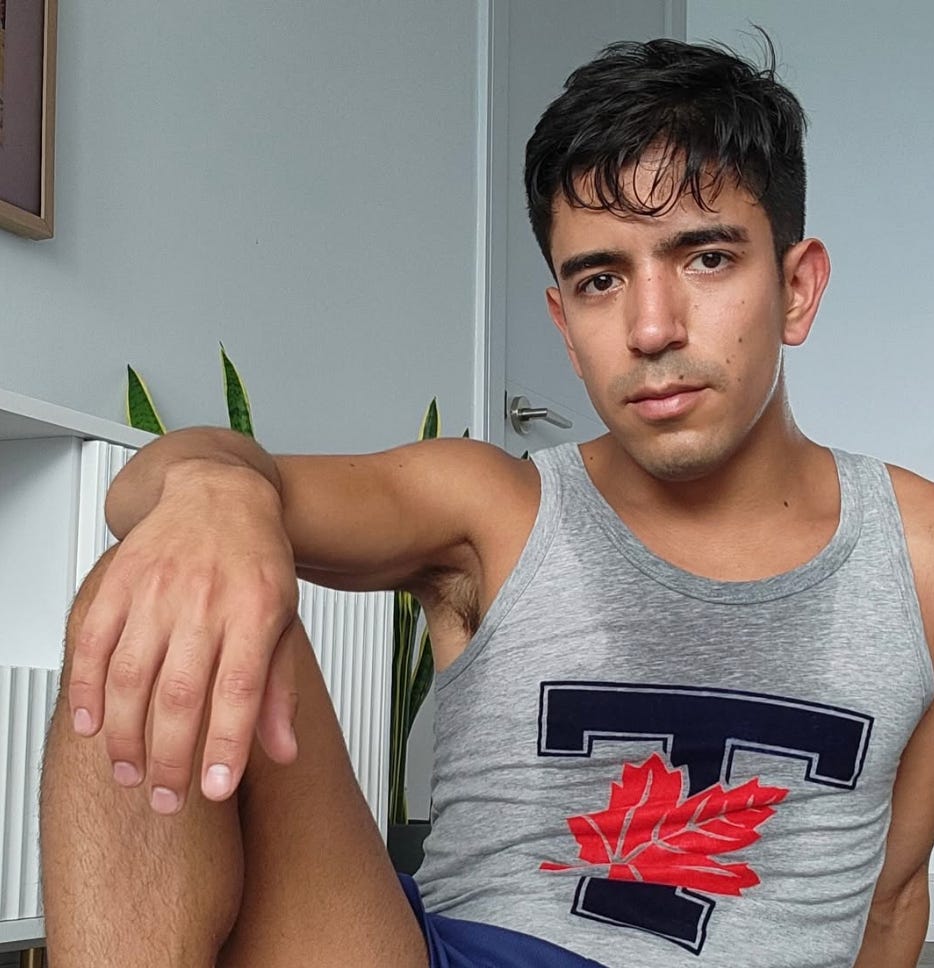
Milo Miles, a Toronto-based adult film actor, was recently banned from entering the United States for the next 10 years after he says he was detained and questioned by Customs and Border Protection agents over the course of two days.
Miles, who was trying to fly to Las Vegas from Toronto’s Pearson International Airport, says he had never faced significant issues at the border ahead of this instance.
While U.S. Customs does have the right to deny entry to people they believe have engaged in sex work, Miles says he was questioned for upwards of eight hours, often about his sexual orientation. He says one agent asked him why he has so many “gay clothes” and if he was “sick” upon seeing his PrEP medication and his fiber pills.
In this episode of “UNCLOSETED, with Spencer Macnaughton,” Miles sits down for his first on-camera interview to explain his experience, what he thinks Prime Minister Mark Carney should do in response to this treatment and why he believes all LGBTQ travelers should avoid the U.S. right now.
Watch the video or read the full transcript below.
Spencer Macnaughton: Hi everyone, welcome back to UNCLOSETED with me, Spencer Macnaughton. Today I’m here with Milo Miles, a Toronto-based adult film actor who was recently banned from entering the United States for 10 years after being detained and questioned by U.S. Customs and Border Patrol for nearly eight hours when trying to fly from Toronto to Las Vegas. Milo, a Canadian citizen with no criminal record, describes the experience as the worst and most painful day of his life. Milo, thanks so much for speaking with me and Uncloseted Media today.
Milo Miles: Thanks for having me, Spencer.
SM: Yeah, and for folks hearing that intro, obviously it sounds like a horrific day. For people who haven’t read your story yet, do you wanna just walk us through that day when you were trying to fly to Las Vegas? What happened?
MM: Yeah, so it all happened in January of this year. I was banned from entering the United States for 10 years while I was trying to fly to Las Vegas to attend the GayVN Awards, which in the adult industry are like the porn Oscars. I was scheduled to present at the event. I had six nominations and I ultimately won one of those awards. But instead, on my way down from Toronto where we have preclearance with customs at Pearson Airport, I was detained and questioned by U.S. Customs for eight hours. My luggage and my phones were searched, my privacy was violated, and I was subject to derogatory comments with an unsettling focus on my sexual orientation and sex life. It was as if my own gayness was working against me at customs. I felt coerced, manipulated and powerless. It was a completely devastating experience because I feel like I was being punished for doing what I love, for showing up as myself and for existing openly in my work and identity.
SM: Wow, yeah, that sounds like a horrible experience and I’m sorry that you went through that. When you say being targeted for your gay identity, can you give us specifics, like exactly what were they saying to you? How were they treating you? How were they acting towards you?
MM: Yeah, so the whole thing actually happened over two days. My original flight to Vegas was on a Tuesday night. At the time I had NEXUS, which is like the Canadian equivalent to global entry. So typically when I cross the border, I don’t usually have an issue. And this trip was an important one because it wasn’t just the award show that I was going to. As soon as my trip in Vegas ended a few days later, I was gonna rendezvous with my boyfriend in Florida, where he lives. But anyways, when I went through customs the first night, it wasn’t very busy. I think my flight was the last flight that was leaving from Toronto to the U.S., and the border agent that saw me was—he wasn’t the nicest border agent, let’s put it that way. He was scanning my fingerprints and he says, “I need to take you to the back.” He didn’t tell me why. He just said that I was going into secondary questioning. So the border agent takes me to the back and he has me fill out this form. He tells me to take a seat while we wait for my checked luggage to come back. And as soon as my luggage got there, the officer immediately started searching through it. And he calls me over. And he’s completely fixated on why I have so much luggage. He asks me if I’m an erotic dancer, because he opens it up and he sees that I have “gay clothing” in my luggage.
SM: Did he refer to them as gay clothing?
MM: He did, actually, yeah. He said, “Why do you have so much gay clothes?” And I was like, what do you mean? I’m going on a cruise, I’m going to Vegas with friends. I’ve never been asked that question before and I really wasn’t prepared for that series of questions. It was as if being gay in and of itself was a crime and I was expected to somehow defend my gayness. So I was, the entire time I’m trying to figure out why is he asking these questions? What’s the angle? What’s he trying to get at? What’s the problem? But he would ask them in such a way that I think he was trying to get me to stumble on my answers or trying to find this “I got you” moment with why I had so much gay clothing. He even asked why I have a Sniffies sticker on my luggage. Sniffies, the popular meetup app.
SM: Gay hookup app, yeah.
MM: Yeah, yeah, and he’s like, “What’s Sniffies?” It was as if he was trying to figure out if I was part of some gang or something, or if it meant that I was involved in gang activity, but with the gays, you know? What does Sniffies mean, why is it on my luggage? And he goes through my backpack. He sees that I have medication that I’m bringing down with me. I mean, I had my PrEP, my fiber pills, my Doxy, and he asks me why I have so much medication. He says, am I sick? Like, he just looks at me and says that, and I’m like, no, no.
But I’m happy to go through each one and tell you what it’s for and why I have it and why there’s a prescription for it. And he doesn’t really acknowledge my answers. He’s just going on to the next thing and going through everything. And eventually he says, “I’m going to search your phone.” And I was like, okay, yeah. I mean, we Canadians have been hearing about the phone searches since Trump took office and how they’ve increased and how everyone’s privacy is being violated. So it’s something that I was kind of prepared for mentally or I’ve been preparing for mentally for a while. So I was like, okay, this is my time. They’re gonna search my phone. So I give him my phone and he disappears to the back room. And it’s important to keep in mind that it’s just him and me at secondary screening at this point. It’s so late in the night that there’s no other officer on duty. There’s no other passengers being questioned. It’s just me and this one agent. And I’m sitting there like, wow, this is super weird. Like I’m definitely gonna miss my flight, But what’s happening? Why am I even back here? Like, what is the reason that there was, I guess, a flag on my account? And while the officer has my phone, he comes back 20 minutes later and he says, “I looked at your phone, you’re a prostitute.” And I’m like, “What?” Like, first of all, furthest thing that I expected him to say. And he’s like, “Yeah, I took a look at your phone, I saw messages.” And I know for a fact that there was none of that on my phone that indicated that I, or would have suggested I was a prostitute. There might be nude photos of me and friends when we go to the nude beach in Mexico, but he’s like, “Yeah, I saw your messages.” And then he says, “Wait, I thought you had a boyfriend. Why do you have so many pictures with other men?” And then I suddenly had to explain that I’m in an open relationship with my boyfriend, that it’s very normal in the gay community to have sex with other men outside of your relationship. But again, it was just like the weirdness of it all that just felt very odd and uncomfortable. And you know, when I pushed back on the whole prostitution thing, he kind of like growled and then went back and continued looking and then eventually came out again and said, “I couldn’t find anything. You’re free to go but you missed your flight, so we’ll do it all again tomorrow.” And I was like, what does that mean? He escorted me out of there, brought me back through Canadian customs. And I was kind of just left speechless and kind of frozen because I’d never experienced something like that in my life. I had no idea what to do. And then to do it again tomorrow? It just sounded so ominous. So I didn’t get home until probably, I think 1 o’clock in the morning. I’m at home and I’m talking to my boyfriend, I’m talking to my friend who’s a lawyer, and I’m like, “That was the craziest thing ever. What do I do?” You know part of me was thinking of just flat out canceling the trip to Vegas because I think the reality of being a sex worker as a content creator is that I’m not the first person who’s been banned from entering the United States. Since my ban, I know of at least five people from Toronto who have been banned from entering the United States. So at the back of my mind, I always kind of knew that it was a risk. And the reality is that Customs and Border Patrol agents see content creators as the same category as prostitutes. So I also was trying to avoid them finding out that I do porn because I didn’t want to be treated like a prostitute, because porn star equals prostitute in their eyes.
SM: Well, and that’s what we were trying to figure out when we were researching this too is, do they legally have a right to deny you entry into the U.S. because you do porn, right? And we looked it up and it was a little muddy, but according to a Canadian sex worker support agency, Maggie’s, they say that customs has the right to deny entry to people they believe have engaged in sex work, even if they have never been convicted of prostitution and or are not traveling for work. In your eyes, what is the rule around porn? It feels like there’s been a gray area, because there’s all these international porn conferences. I assume tons of global porn actors, adult entertainers, are coming to the U.S. all the time. So was it a gray area for you, or how do you interpret all of that?
MM: You know, you’re right. It really is a gray area. And there’s a few schools of thought. One of the biggest challenges I’ve had doing content in the United States is finding a legal way to do it. A few years ago, I hired an immigration lawyer and I said, “Hey, you know, I wanna start doing porn. I want to start working for studios in the United States.” But the problem is, you know, I don’t wanna feel like I’m sneaking into the country every time I have a porn shoot. And you know we looked at all the options, at all of these options, I spent all this money. And at the end of the day, the lawyer said, “Look, there’s really no visa option for someone who wants to film adult content in the United States. In fact, it’s better if you don’t say anything, because if they do end up, if you do apply for a visa and they do a background check and then see that you do porn, they’re going to put a permanent red flag on your account” because, again, porn equals sex work and sex work equals prostitution in the eyes of the U.S. government. So that kind of scared me a little bit. In other words, my only option was to marry an American and start the application process for a green card to do what I love in the United States. I should mention that Canada is a lot more liberal here, to the point that even prostitution is decriminalized. It’s not something that you can be charged for, it’s not against the law to be a prostitute in Canada. So that’s one school of thought. When I would participate in content collab houses in the U.S. and over the years got to meet so many amazing content creators and knowing that at the end of the day, this could all end for me simply because I don’t have a green card or a U.S. passport. So it’s been something that’s kind of dawned on me for many, many years as a possibility and here we are, it’s actually happening.
SM: And just so I’m clear, because I know the GayVN Awards happen in Las Vegas and there’s other international porn awards. So there’s actually like explicit events that would try and bring in adult entertainers from around the world. Has there been an understanding in the industry for the last few years, many years that the Customs and Border kind of turn a blind eye to adult entertainers? And, do you think your situation represents that maybe now people have to be more careful?
MM: I don’t know if they’ve ever turned a blind eye. I think it’s that they now are putting more emphasis on targeting members of the LGBT community and people who are identified as sex workers. One theory is that the increase in funding to Homeland Security has now resulted in increased enforcement at border controls. Yeah, I mean, at the end of the day, it’s all speculation on my part.
SM: No, yeah. This is all—it’s all interesting. I just think it’s important for people to understand the rules around it, you know? So you come back the next day, assuming off of very little sleep, what happens then when you come back?
MM: Yeah, that was the worst night of my life. I’ve never experienced such anxiety. Like I had maybe two hours of sleep before having to wake up early for my flight that morning. And my heart was just racing and beating. It felt like it was gonna explode the entire time because I’m trying to problem solve what happens. So I kind of thought we made it OK the first night. The worst-case scenario in my head was the same exact outcome, right? Where they give me a hard time, I miss my flight, but, you know, it’s an early flight, so maybe I’ll be able to go down in the afternoon. I get to the airport three and a half hours before my flight just as customs had opened, and it was a lot busier this time. But it felt like déjà vu. I did the exact same thing the night before. I scanned my picture, went to the agent. The agent looked at my passport. This was a younger agent. He kind of sighed. He’s like, “Ah, man, I got to take you to the back.” And I said, “Why?” And he said, “There’s a flag on your account.”
SM: So then you’re taken to secondary screening again.
MM: I’m taken to secondary screening, the same spot as the night before and the agent gives my passport to a different agent behind one of the counters and says, “Hey, he was here the night before, blah, blah blah. Can you take care of it?” “Sure.” So the agent calls the agent that was giving me a hard time the night before. And apparently that agent told him that he never even searched my phone. He just took it for an hour, behind closed doors and pretended to search it. But I guess because we were the last two the night before, he kind of just wanted to go home, didn’t do his job, whatever, whatever, let me go.
SM: And the other agent divulged that to you?
MM: Correct. So the agent the next morning said, “Hey, last night didn’t count. He didn’t even search your phone.” And I’m like, wait, so what was that whole thing about prostitution? He clearly did because he saw photos of me and other men. But anyways, he didn’t even search my phone so we’re gonna do it all again today, is what he said. I’m like, OK, so I waited for my luggage to pop back out again. And he does the whole search again. He’s going through everything. He asked me if I have cannabis, if I have drugs, you know? He’s looking for excuses to give me a hard time. He goes through my luggage and he’s being super thorough and… Look, as a sex worker, I have two different phones. There’s my personal phone, which is the one that was searched the night before. And then there’s my work phone that I use for editing videos and stuff like that. Or, you know, messaging other content creators. Anyways, he finds my work phone, my second phone, which is completely dead by the way. It was like at the bottom of my backpack. He finds it and he says, “All right, we’re going to search both phones. We’re going to search everything again,” and the whole process started over. And over the next two hours, he’s asking me the same type of questions. He’s being just as accusatory and aggressive.
SM: Were there examples where he targeted you because of your sexual orientation, like there were with the first officer?
MM: I think the first officer was definitely a lot more anti-gay, it was very obvious. The second one was just, I think, more convinced that he wanted to find something. So two hours into it, he still didn’t find anything, he searched through my personal phone and he found a message on WhatsApp that a friend had sent in a group chat like six months earlier. And this was like 120 messages down in the group chat that was saying, I guess, he went to a hookup and at the hookups place, my porn was playing in the background. And they just sent a picture saying, “Hey, your porn’s playing in the background.” So the agent was like, “Do you do porn?” And I was like “Yeah, I sometimes do porn.” And I think that was all he needed to hear to realize, yeah, we’re gonna find something on this guy. Eventually he charged my dead work phone, plugged it in. And then eventually saw that I had messages on there that I do porn, that I’m a sex worker, and then found messages with past clients that I’ve seen in the past. The reality of being a sex worker, of doing adult film, is that you need to pay the bills. And especially for newer content creators, sometimes escorting is required. Now, there is a big difference between escorting and prostitution. I only participate, or have participated, in escorting, which is an exchange of time for goods or services, and my specialty has always been the boyfriend experience. So sometimes I’ll go out for dinner with a client and we’ll spend time together. If sex were to happen, it would always be consensual. But the agent found those messages on my phone and that was all he needed to move ahead with the ban. So on day two, I was back there for a total of six hours. The first two hours were more questioning and searching, intimidation. The next two hours was evidence gathering. So that’s when the agent took his time to have me answer a statement where I’m basically… He wanted me to confess to things I hadn’t done. So he’s asked me these questions. He’s like, “Are you a prostitute?” I’m like, “No.” And he would get upset if I didn’t say yes, that I am a prostitute. And he was coercing me into answering questions appropriately. He even threatened me with charging me with fraud if I didn’t conform to the responses that he wanted on this topic. And yeah, I mean, the whole thing was just like the most dehumanizing thing. They took my fingerprints like six different times, agents, different agents would only speak Spanish to me. I think they assumed that I only spoke Spanish while they were taking my fingerprints, while giving me instructions. And knowing that the ban was happening halfway through, I think was one of the more painful moments because I couldn’t do anything about it.
SM: Yeah, how did they deliver the news to you? They just said you’re gonna be banned for 10 years?
MM: Yeah, pretty much. His supervisor was supposed to come out and speak to me at one point. That didn’t happen. I think he just needed his approval, got the go-ahead, and it was just like a bunch of administrative things that were happening behind the scenes. But the unfortunate thing is that my partner and I were planning to build a future together in California. And the hardest day of my life was that day because having to stay there for so long and then finally being released and then just immediately calling my partner and you know, both of us—like delivering the news and having to deal with the shock and just crying and crying for days on end. Yeah, it wasn’t a fun time, and as someone who came to Canada as a refugee from Colombia when I was 7 and I, you know, I lived through some very challenging things. You know I’ve had several family members be the victims of gun violence. I’ve witnessed a few shootings. And then on top of that, you know, the whole immigration experience, you know? There were some challenges and I thought that I was strong and then to have to relive some of—a lot of—trauma again hasn’t been the easiest thing.
SM: No, and to be clear, essentially, the ban is in effect for 10 years, meaning you are not allowed to go to the United States for the next decade.
MM: Correct.
SM: Wow. I’m so sorry that happened to you. And I mean, you know, we talked a little bit about the gray area of the law around, you know porn and crossing the border, which, you know, is obviously cause for concern for other people going to the U.S. right now. But I think back to what you said about the first customs agent, right? How he’s saying, “Why do you have so many gay clothes?” How he’s sifting through your HIV prevention medication and interrogating you about it. And how he is asking you why you have some swag about a gay dating hookup app, right? All of these things to me sound irrelevant to whether or not you should be able to cross the border and explicitly discriminatory based on your sexual orientation. Am I missing something? Is that how you perceive the interaction with him?
MM: Oh, for sure. As a person of color, I faced a lot of racism growing up, and it literally felt like all that all over again, except this time the focus was on my sexual orientation. I remember when I came out as gay, this was literally my mom’s fear and this was my fear, it was like, oh man, yet another category to be marginalized by. But I think the privilege of growing up in Canada has made me a little naive to the realities I think that our community is still facing out there, especially now more than ever. And you hear about it on the news, or you hear about it happening to other people, but you think it’s never going to happen to you. And then when it finally does, I don’t know, I guess I was just completely unprepared, which is really unfortunate.
SM: And you said in another interview that your advice to queer travelers is to, quote, “avoid the United States at all costs. It’s not worth it, it’s not worth it to put your life at risk.” That’s a bold statement to tell all queer travelers. Why do you feel so strongly there?
MM: You know, and it’s a very difficult thing to say too, because I would say at least half of my chosen family lives in the United States. I’ve had the privilege of doing a lot of traveling and making some really amazing friends and building some really strong friendships with people who live across the United States. And I thought that it was safe until I realized that it wasn’t. And after speaking with other people who have had similar experiences crossing the border into the United States, I’m realizing now that it’s not just people of color that they’re targeting. It’s literally the entire LGBT community. And they will want to find something on you. It took them a total of four hours of me being detained and questioned before they found anything that they could use against me. They were so determined to give me a hard time and to find something on me. One of the questions is why was I flagged in the first place? And I still don’t know to this day. There’s so many theories. You know, people say that they’re using facial recognition software. Others are alleging that maybe I was reported by another content creator.
Personally, for me, I think the increase in travel activity to the United States to see my partner may have had something to do with it as well, or maybe just flat out racism or anti-LGBT sentiment.
SM: Mm-hmm, mm-hmm. I guess there’s only so much you can do with the law itself that exists, as we know, where they can technically flag folks who engage in sex work and that just is what it is. But for the kind of things that the first agent did, you know, targeting you clearly because you’re gay, right, which should be irrelevant to the border crossing situation, what do you want to come out of this? Because Canada… Our values are completely antithetical to homophobia, right? And we kind of pride ourselves on being a bastion for LGBTQ equality. I mean, do you think Mark Carney should be making a statement saying, “I denounce what happened to Milo Miles?” Because, I mean I worry it sets a precedent for all LGBTQ Canadians going into the United States.
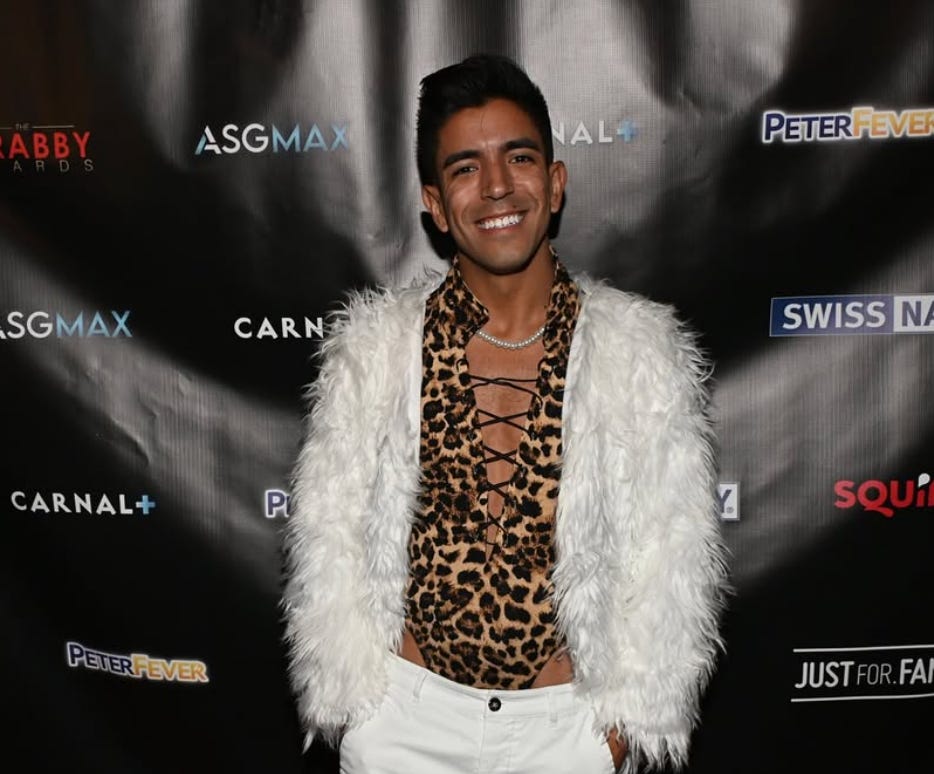
MM: I think the scary thing is, is that it’s not hard to find articles about other Canadians that have currently been detained by ICE, for example, who have no criminal record. As unfortunate as it sounds, I know that it could have been a lot worse. But you’re right, there are many, many more Canadians who are being targeted right now. And so in the same way that I think Trump is going after Canada for not, you know, preventing the flow of drugs into the United States and using that as an excuse to impose tariffs on our country. I think you’re right. I think our prime minister and our Canadian government can do a better job at protecting Canadians from the type of mistreatment that they’re facing when they cross the border.
SM: If you could ask our prime minister, Mark Carney, to say something publicly about this situation, about the targeting of queer people trying to come into the United States, what would you want him to say?
MM: I think, first, I would want to acknowledge the pain that our community is facing and suffering, and then to address the policy issues. I think there’s a more holistic approach that can be taken, and I think a statement from the prime minister that says that he would want to prioritize working with marginalized communities would be helpful.
SM: And would you want him to respond to the clear queer profiling you were subjected to at customs?
MM: Sure. Yeah, I think so.
SM: Obviously, you’ve explained everything that happened. A spokesperson for Customs and Border Patrol told The Independent outlet that you were, quote, “admitted to a Border Patrol officer and discovered that you received payment for engaging in prostitution in the United States, which is a crime, and that you did it while you were in the United States and that’s why you were denied entry into America.” The agency also denies that you were interrogated for eight hours. Do you want to respond?
MM: Yeah, there’s a few things. In terms of the six versus the eight hour delay, I think the media spokesperson was probably just looking at notes on the computer and didn’t realize that I was detained over the span of two days. Two hours on the first day and then six hours on the next day would total up eight hours. So her information was wrong on that front. But then it goes back to what I was talking about earlier where there never has been any evidence on my phone that I engaged in prostitution. I’ve never taken money for sex, or I’ve never exchanged sex for money. I have done escorting in the past, which is again a very different definition in exchange of money for time spent with an individual. Quality time spent, going to the movies, going to go see a show, giving them that boyfriend experience because people are lonely. Similar to how massage therapists, you know, will rub someone’s back to make them feel better. But to your point, sex work is a very broad umbrella term and the way the agent coerced me into saying “yes, I participate in prostitution,” even though I hadn’t, otherwise I was going to be charged with fraud because I wasn’t saying what the agent wanted me to say on the confession statement. It’s just really unfortunate, but it’s not surprising that they gave out that statement.
SM: What’s your message to other adult entertainers and sex workers? Do you think, especially as the U.S. is using more facial recognition, there’s a possible policy that could go into place where you have to submit social media links and handles to Customs before you travel for certain travelers in various countries. Do you think all adult entertainers for the time being should stay away from the United States to be safe?
MM: Oh, 100%. One hundred percent or even just people of the LGBT community. The studio that I work for, Carnal, has moved all of their intellectual property rights over to Amsterdam, over to the Netherlands. Because it’s no secret that one of the goals in Project 2025 is to ban porn, is to go after the LGBT community. Specifically gay porn, to go after the gays. We’re the first on the chopping block in terms of being targeted, and I’m just one of the first examples of it. This is just the beginning, and you know the studio that I work for saw that coming so they decided to pack up and move everything over to Europe where their rights are protected. Looking ahead, I think a lot of content creators are realizing that, you know, the center of the universe is not in the United States, that the world’s a big place and that there’s many more opportunities, especially in Europe and South America. But at the end of the day, I’m hoping that this is temporary, that there can be some changes to the laws. I’m still reaching out to lawyers and trying to figure out a way to navigate this, but for the time being... We’re trying.
SM: What’s the lawyers’ responses been like? Do they think you have a case? What do they have to say?
MM: It’s different from lawyer to lawyer. One lawyer I spoke to said, quote unquote, “I’m fucked,” that there’s nothing that can happen. Another lawyer is more optimistic and he says that no, we could still submit a few waivers and appeals and see how that goes.
SM: Well, and I don’t think in their policies it is explicitly allowed to discriminate against people based on their sexual orientation, and that’s exactly what it sounds like happened to you. What do you think should be the recourse for that first border agent who clearly was, you know, stigmatizing you and coming after you because you’re gay?
MM: I think they should all be fired, quite frankly, you know? We should have no tolerance for this kind of behavior. People will argue that more training is better, but the fact that we’ve been rolling back or the fact the U.S. government has been rolling back a lot of the equity, diversity and inclusion programming, it’s no surprise that we’re now going to be facing a lot more racism across the board, a lot more homophobia. It’s just the reality of the government that’s in power.
SM: Okay, well, a stark sentiment that may be an appropriate place to end. Milo, thanks so much for coming on the podcast and speaking with me and Uncloseted Media today.
MM: Thanks for having me, Spencer. I appreciate it.
SM: And for listeners who want to watch all of our podcast episodes, subscribe to Uncloseted Media on YouTube or listen wherever you get your podcast.
If objective, nonpartisan, rigorous, LGBTQ-focused journalism is important to you, please consider making a tax-deductible donation in the U.S. through our 501(c)(3) fiscal sponsor, Resource Impact, by clicking this button:

 | A guest post by
|
Great interview !
Love articles like these, this is a rare and unique perspective that deserves to be heard