

Demoted and Doxed: What Happened When a Texas Librarian Fought to Keep LGBTQ Books on Her Shelves
Since 2021, there have been efforts across the U.S. to ban books about marginalized groups from libraries and schools. Amanda Hunt refused to stay silent.


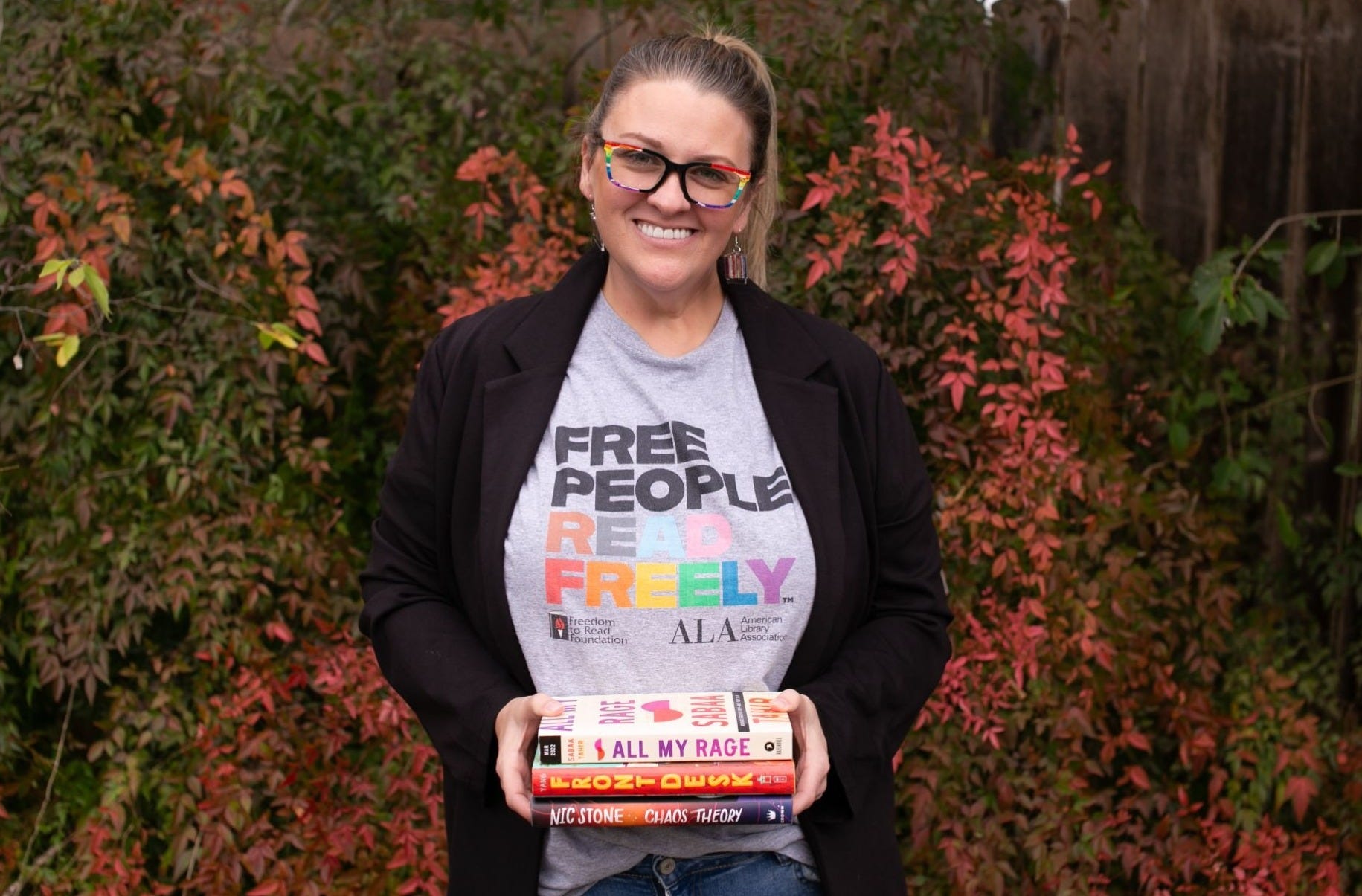
In October 2025, Amanda Hunt remembers watching as countless books at Oak Run Middle School in New Braunfels, Texas, were removed from her library. Students walked in and saw more empty shelves and fewer stories they had once been able to check out.
“Every day, they’re like, ‘More boxes? More books to get rid of? More books to pull?’” Hunt, who was the lead librarian at the time, told Uncloseted Media.
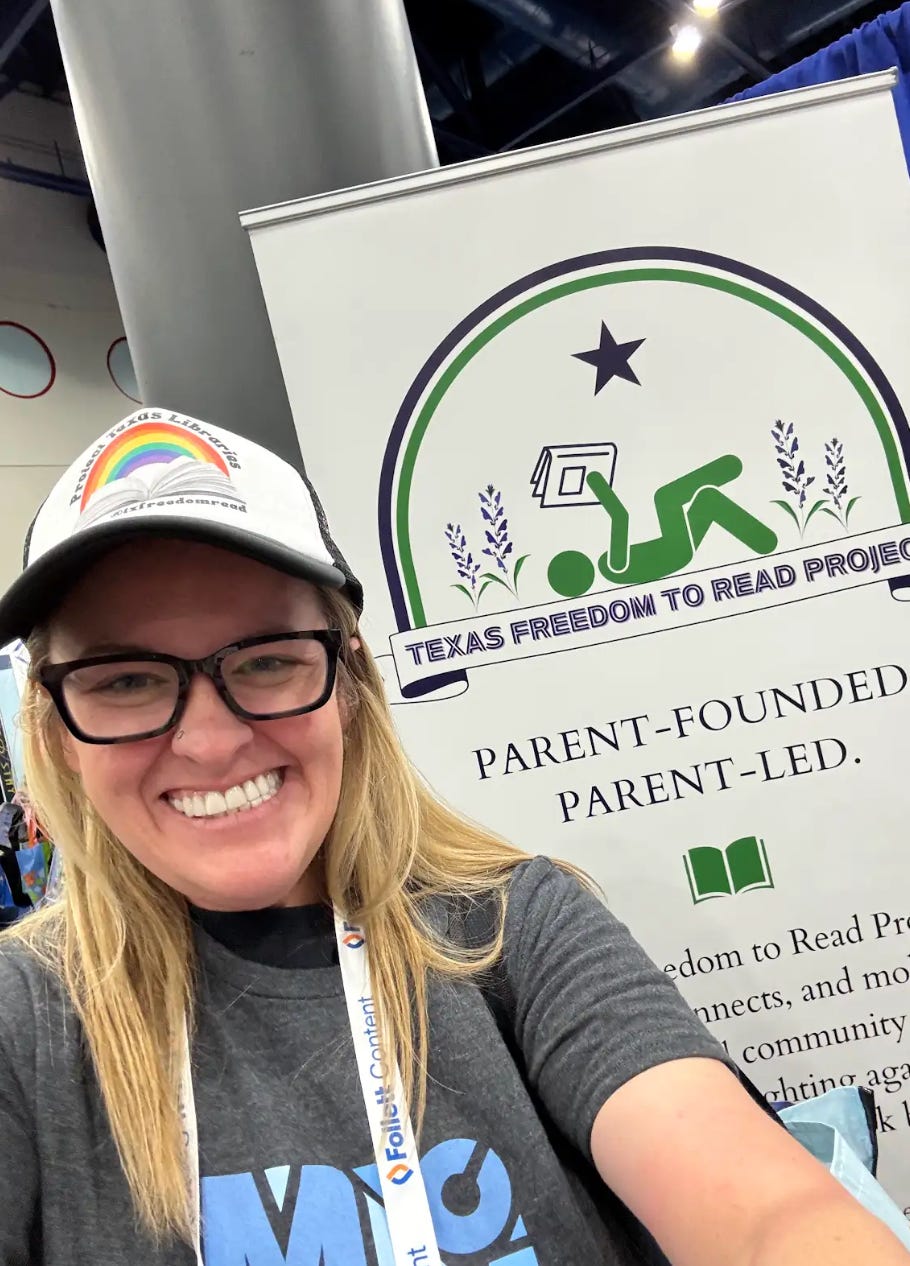
That month, Hunt says the New Braunfels Independent School District (ISD) had temporarily closed all four of its secondary-school libraries to audit its collections and assess whether they were in accordance with Senate Bill 13 (SB13), a Texas censorship law that took effect in September 2025. Thousands of books were moved, restricted or removed.
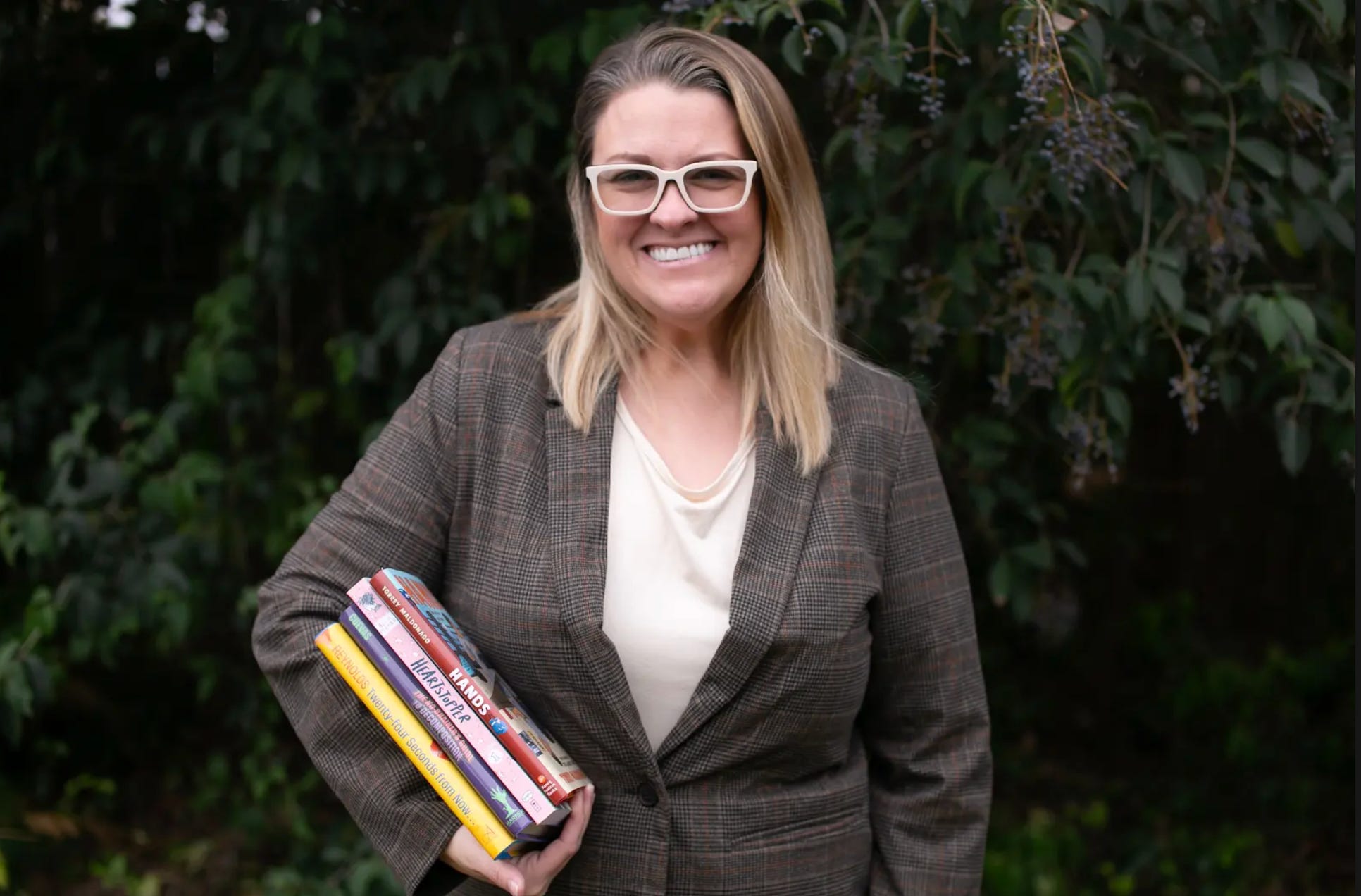
For Hunt, who had spent more than 14 years helping students find books, the assignment felt like a betrayal of everything a librarian was supposed to do. “What kind of librarian takes books out of kids’ hands?” says Hunt, who attended Oak Run Middle School as a student and whose dad worked there as a sixth-grade reading teacher.
SB13 prohibits “indecent content” and content that portrays “sexual or excretory organs or activities in a way that is patently offensive.” But the vagueness of the bill’s language, according to advocates, has led to the banning of many LGBTQ books, including “Boy Erased,” which is about a gay man’s challenges in conversion therapy, “Juneteenth” and “The Art of Drag,” a picture book about the history of drag. As of February 2026, New Braunfels ISD has removed over 600 books from its high schools and aged up over 800 books from middle schools, according to public information requests obtained from the Texas Freedom to Read Project.
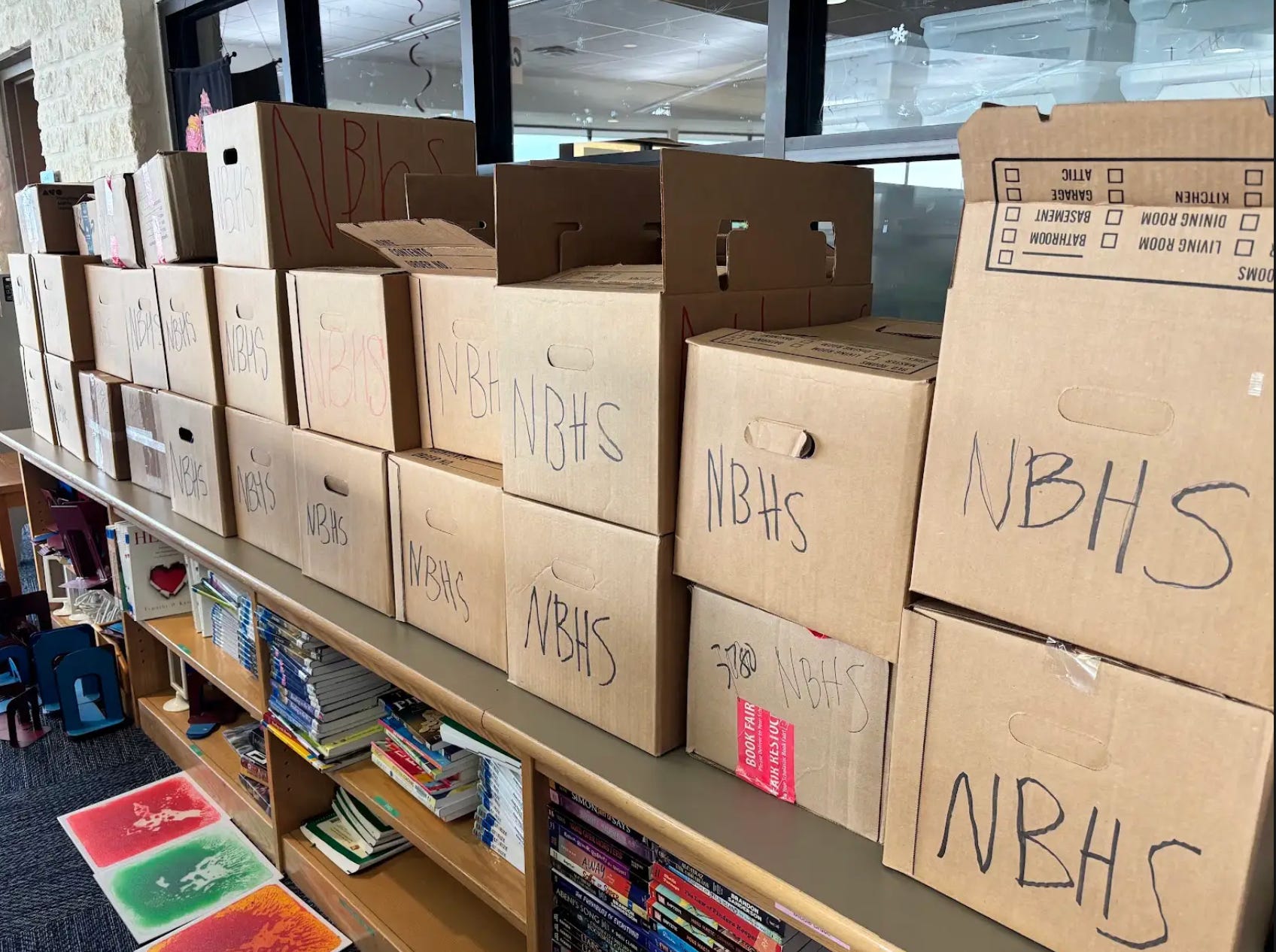
Jennifer Cousins, co-founder of the Florida Freedom to Read Project, a parent-led nonprofit dedicated to defending students’ access to information and fighting education censorship, says removing inclusive books tells already marginalized children that their experiences do not belong in school.
“Being able to read these books in school is a way for them to feel seen, to feel community, even if it’s just through pages,” Cousins told Uncloseted Media. “When you take that away from them, that further isolates them. … You’re making an already marginalized community more unsafe.”
How Texas Libraries Became Political Battlegrounds
The fight in New Braunfels did not begin with SB13.
In 2021, Republican lawmaker Matt Krause made a list of roughly 850 books and asked schools to tell him whether they carry them. Many of the books addressed racial and LGBTQ themes. Krause said he was examining materials that could make students feel “discomfort, guilt, [or] anguish” because of their race or sex. Some of the books on his list included “LGBT Families,” “The Letter Q: Queer Writers’ Notes to their Younger Selves” and “The Underground Guide to Teenage Sexuality: An Essential Handbook for Today’s Teens and Parents.”
PEN America, a nonprofit that protects free expression and celebrates literature in the U.S., described the inquiry as “menacing and wrongheaded” and warned that it risked trampling students’ right to access information.
That same year, Texas passed HB3979, a bill that restricts discussions of race and racism in public school classrooms. Together, the measures helped turn classrooms and libraries into political battlegrounds, with conservative officials and so-called parents’ rights groups increasingly scrutinizing books about marginalized communities.
For Hunt, the escalation in New Braunfels made clear that the dispute “wasn’t really about the books. … It was about silencing voices. It was about taking books out that they didn’t understand, regardless of the impact that it had on students.”
As rumors circulated about why the libraries had temporarily closed, misinformation swirled among students. Hunt heard students claim that the district was banning “Harry Potter,” “The Diary of Anne Frank” and even “Charlotte’s Web.” Other students repeated allegations that the library offered pornography.
Librarians had to repeatedly explain what was and was not being removed.
Hunt says SB13’s broad language gave New Braunfels officials significant latitude to go further than neighboring districts. While the law does not explicitly prohibit books with LGBTQ characters or themes, she says some officials treated all queer content as inherently sexual.
“For some people, they believe that LGBTQ content is the same as sexually explicit content,” Hunt says. “And they’re not.”
An Algorithm Decided Which Books Stayed
New Braunfels officials did not rely solely on librarians to determine which books complied with SB13.
Hunt says the district uploaded its library collections into spreadsheets and sent them to its technology director, who ran the titles through AI tools designed to identify objectionable material.
“They decided to create their own AI robot that was going to go through every book in our collection,” Hunt says. She says the district took language from SB13, entered it into a model similar to ChatGPT and instructed it to search for books that might violate the law.
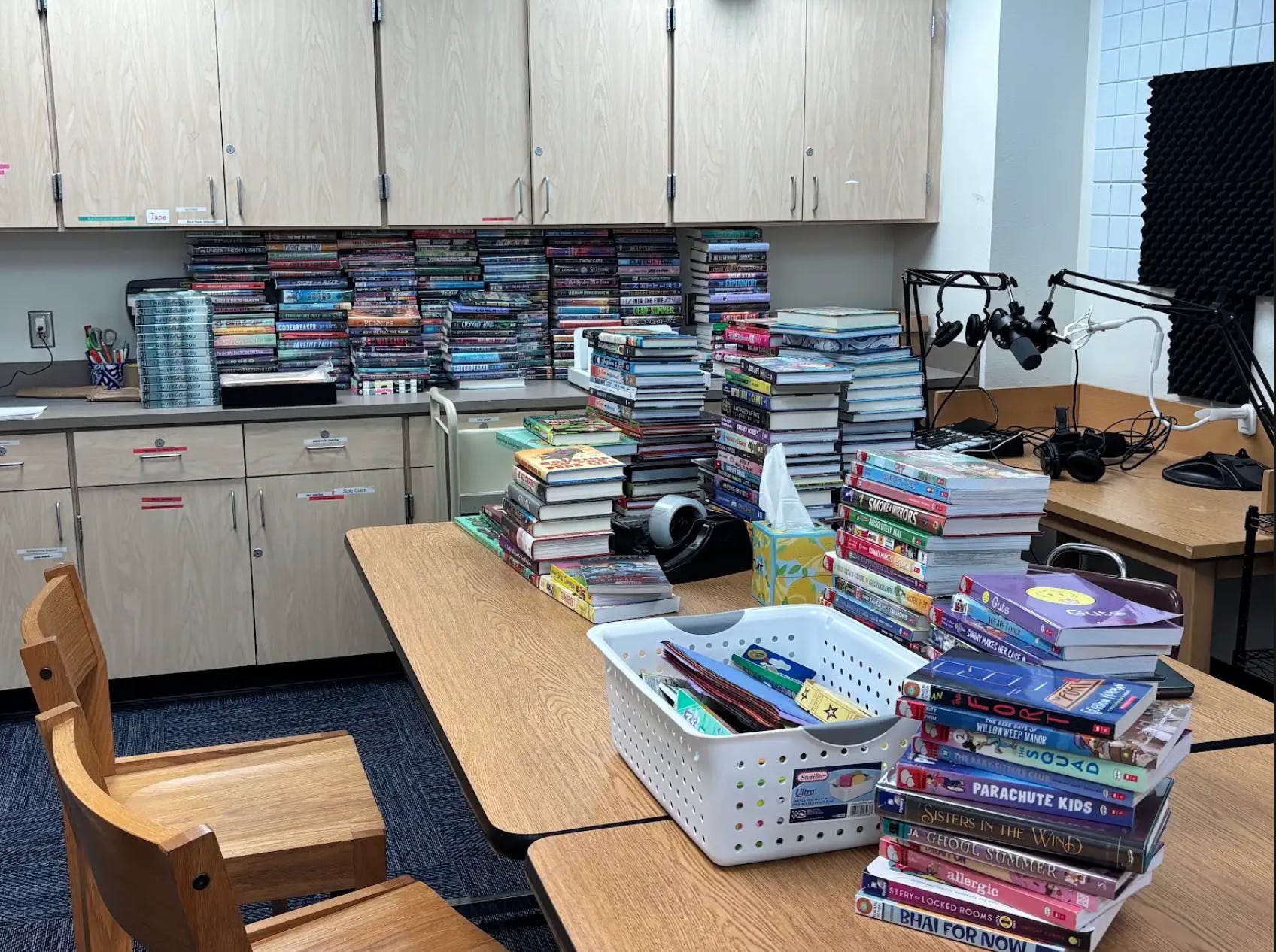
Hunt says the system repeatedly made mistakes, flagging books based on Goodreads reviews rather than content. “Anybody can go on and write like, ‘I hate this book because X, Y and Z.’ It is going to flag it.”
Despite those errors, the district continued to use AI. The results were sent back to librarians, who reviewed the flagged books and alerted administrators to errors, though Hunt says their judgment did not ultimately determine what remained on the shelves.
“[The software] ended up having the final say,” she says. “It ended up being the end-all, be-all, deciding what books were pulled or removed, moved up or taken off an order list.”
New Braunfels ISD did not respond to Uncloseted Media’s request for comment.
Demoted and Doxed
All of this frustration led Hunt to start posting her grievances on social media. “[The school board] did not like how much I hated book banning and censorship,” she says.
Around this time, Hunt learned she had been demoted to a regular librarian after years of serving as the lead.
“It got to the point where my district was like, ‘We don’t want you associated with us at all. Don’t mention us. … If you go to post, know you are representing our district.’ I was put in this box of what I could and [couldn’t] say. They’re my employer and I understand that.”
In addition to being demoted, Hunt says she was “doxed online three separate times.”
She says she was harassed by a mom who targeted her support of LGBTQ content at the library. Another parent protested against her promotion of LGBTQ-themed books at a school board meeting for having “Last Night at the Telegraph Club,” a book about two Chinese female immigrants who fall in love, in the library.
“It ended up turning into [the mom] filing a grievance against me to get me fired,” Hunt says. “In addition to me trying to fight to keep the books in the library, I was also dealing with [personal attacks] against my livelihood, against my job and against my character.”
She says the school supported her “0%” through this whole process. “They did not stand up for librarians. They did not support us. They did not take a stand against the school board and what they were trying to do. We were left out in the cold.”
Hunt says that even an LGBTQ-friendly club she ran, known as Alphabet Soup, was shut down by the school due to complaints and non-compliance with Senate Bill 12, another Texas bill that prohibits LGBTQ clubs in schools. “They made me get rid of that because a parent had found an old flier that had rainbow colors,” she says. “I have a particular student that really took that hard because she had been a member of that club since she was in sixth grade.”
Why It Matters
Hunt says the most frustrating part of SB13 is the impact it’s having on kids who are looking for belonging. She recalls a student who was questioning his sexuality and being bullied. She says she handed the student “You Brought Me The Ocean,” a graphic novel about two male characters who fall in love and one of them has magical aquatic powers.
The student later emailed her and wrote, “You saw me when no one else did and because of you I feel like I can actually be myself.”
“He is thriving now and living his true authentic life,” says Hunt.
Stories like his are why Hunt refuses to stay silent. But the stress has taken a toll: After being demoted and subjected to months of investigations and public attacks, she left New Braunfels ISD for a librarian position at a nearby school.
“They have been nothing but supportive and welcoming,” Hunt says. In her new school, she says challenges based solely on the presence of LGBTQ characters are immediately rejected.
Still, leaving the school she was essentially born and raised in was painful. “Leaving them was the hardest thing ever,” she says. “I never thought I would leave my district. I never thought anything like this would ever happen to me.”
Hunt plans to continue speaking publicly about banned books in her state. Earlier this month, she launched “The Library Stage,” a podcast about censorship, education and the pressures librarians face across Texas.
“My heart is always with the students,” she says. “I have had students tell me a book that I recommended saved their life. That is the kind of impact that librarians are making all over the nation and all over the world.”
If objective, nonpartisan, rigorous, LGBTQ-focused journalism is important to you, please consider making a tax-deductible donation in the U.S. through our 501(c)(3) fiscal sponsor, Resource Impact, by clicking this button:

 | A guest post by
|