

By: Anonymous
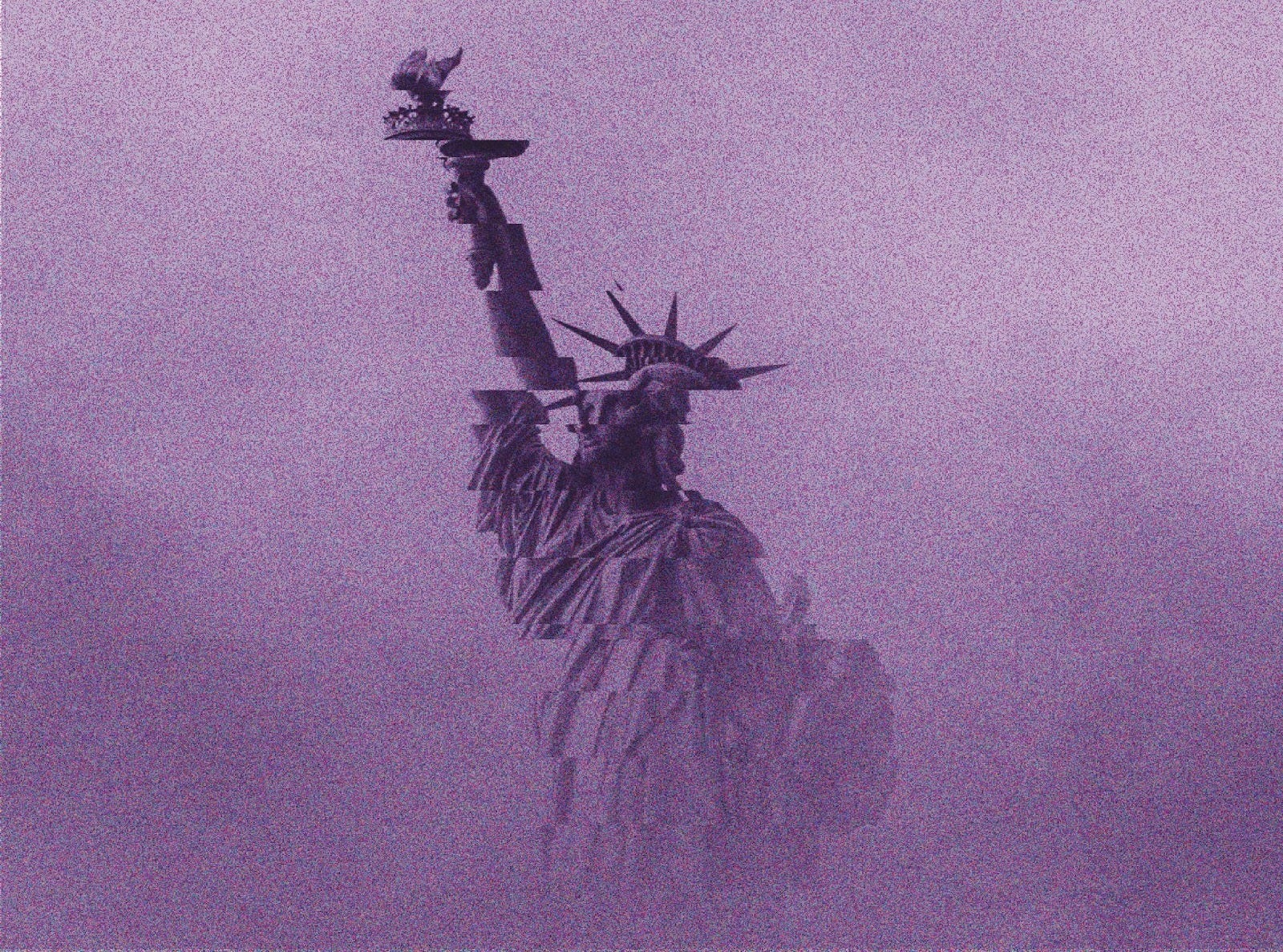
“That’s fine dude. I’m not mad at you.” Those are the first and last words I heard Renee Good say, seconds before she was brutally murdered on Jan. 7 by ICE agent Jonathan Ross.
I came across the video as I watched my fiancée scroll through her social media feeds while sitting in our Brooklyn apartment. We proceeded to scour TikTok to gather more information. Overwhelmed by the sheer number of videos of the shooting—all from various angles—I asked her to put the phone down.
We sat in silence as I interrogated the pit forming in my stomach. I was sickened by the ease of which we just witnessed violence, and began questioning my decision to try and build a life in the U.S. with my soon-to-be wife.
I was born in London to Black parents who migrated from Nigeria in 1990. It was a classic immigrant story: They were in search of a better life overseas, desperate to give their unborn children the opportunities they never had growing up in a country that was rebuilding after centuries of British colonial rule.
My immigration journey, however, is a classic lesbian love story. My fiancée, an American citizen from Los Angeles, met me at a party while she was studying in Europe. She moved back to the U.S. soon after our first date, and serendipitously, I’d just been accepted to grad school to study journalism in New York City. So, after a year of long-distance, I flew across the pond and she moved across the country, and we started a life together.
I was ecstatic to embark on this journey. I was raised on Black television, music and film from the U.S., feeling a strong affinity to African-American culture from a young age. I was always watching “My Wife and Kids” and “That’s So Raven,” and was obsessed with listening to Beyoncé, Usher and gospel music.
Although I inherently knew that the American Dream was built on broken promises, my inner child still romanticized it. I watched women in New York City newsrooms and magazine offices build electric lives: Jenna Rink running through Manhattan in “13 Going on 30”; Andy Sachs surviving the chaos of “The Devil Wears Prada”; and Betty Suarez stubbornly proving she belonged in “Ugly Betty.”
I believed that I could be like them. That I could work in New York media and earn enough to live alone and write long, beautiful stories. The U.S. felt bigger than England. Like a place where a girl could arrive with nothing, but leverage her talent and hunger, and somehow make it.
But just three months after arriving in August 2024, Trump was elected for his second term. And a few months after that, my dream was punctured as he introduced a slew of executive orders attacking people like me: He ended DEI programs; he introduced harsh anti-trans policies; and he enacted some of the strictest immigration enforcement the country has ever seen.
Good’s murder was a consequence of Operation Metro Surge, which started in December 2025 as a supposed attack on illegal immigration. Yet many—mostly Black and Brown—lawful residents and U.S. citizens have been subject to violent attacks and unlawful detention.
In addition, Trump has arrested journalists in Minnesota. And days after completing my degree, I read that the U.S. press has suffered about as many violent assaults this year as in the previous three years combined.
This wasn’t the diverse country that enamored me. Unlike the media I’d consumed growing up, I’m now the intersecting face of the identities the federal government is targeting.
I am a Black. I am gay. I am an immigrant. I am a journalist. I am a woman. And I am scared.
Renee Good’s murder was a chilling development in an already dark time in the U.S. If white citizens are not safe, what chance do I really have to build a life here?
As a Black lesbian, my existence has always felt political. Wanting to exist on my own terms has required constant defense and justification. I left England because I could no longer handle living in the same country as my parents. After I came out to them at 22, they told me that I was a sinner in the eyes of their God. “She won’t be joining me in heaven,” my mom once told my sister.
Now, in the U.S., my resident status is under scrutiny too.
I’m working with an immigration lawyer, and will be submitting my supporting documents for a marriage-based green card in a few weeks. And even though I’m doing everything by the book, I’m still worried: ICE agents have shown up at court dates and immigration interviews.
My lawyer says I shouldn’t worry, but she can’t guarantee it won’t happen to me. And experts agree: “People are trying to follow the rules and they’re being arrested, detained and deported,” Rachel Kafele, director of programs and advocacy at Oasis Legal Services, told me. “There’s a sense that all the pathways for people are really closing, and that’s just created a huge climate of fear.”
I know that my situation isn’t as dire as it is for the many LGBTQ asylum seekers who fled countries where identifying as LGBTQ is a crime.
“[The federal government] is doing whatever they can to not give asylum to anyone,” Kafele says. “And that’s what really worries me, because LGBTQ people need asylum. It’s a human rights safety issue. People will die.”
This unpredictability scares me too, and it’s ramping up. In November 2025, a gay man was detained by ICE in New York during a green card application. That could have been me.
And on Jan. 29, former CNN journalist Don Lemon—who is Black and gay—was arrested. After that, my fiancée and I contemplated whether I should be honest about my journalism career in my green card application, in case this increases my likelihood of running into ICE.
That’s why I decided to write this article anonymously.
I’ve had thoughts of terminating my immigration application out of fear of being in contact with such a hostile administration. What will happen if I get caught by ICE, with no proof of legal residency? What if my Blackness betrays me when I’m running errands? What if my extensive digital footprint exposes me as a “traitor”?
People on both sides of the aisle aren’t doing enough to stand up to the Trump administration, says Isa Noyola, director of programs at the Transgender Law Center. “We are lacking leadership in the Democratic Party around being pro-immigrant and pro-trans and pro-queer,” she says. Just recently, seven Democrats voted in favor of funding ICE.
Alex Brophy of Brophy Lenahan Law Group says immigration judges are also being targeted: “They’re creating this culture of fear not only amongst immigrants and their attorneys, but also amongst the judges, because there’s definitely the message that if you don’t follow the program, they’re just gonna fire you.” In 2025, more than 100 judges with a history of showing favor to asylum seekers have been fired in the U.S.
It’s terrifying for me to think that some of the judges who still have their jobs might be afraid of being let go and wanting to make the administration happy at my expense. We are all just in “survival mode,” Noyola says.
“What worries me is that the courts may become complicit in the breaking of the law,” says Aaron Morris, executive director at Immigration Equality. With less immigrant-friendly judges on the bench, those left behind might show more support of the government’s illegal activities, including its use of detention centers. “Unfortunately, now we’re seeing … people getting caught up in the immigration detention and deportation machine who are not even undocumented.”
Even as a New York resident, I’ve had to reckon with the possibility of being detained if I go through with the green card application. This isn’t me being overly cautious, but realistic: ICE has been knocking on doors in neighborhoods close to me.
“ICE and DHS generally do not provide adequate health care, particularly for people that are transgender or for people living with HIV,” Morris says. I’m on life-saving hormone medication to treat a long-term health condition, and not having access to it for a few days could be fatal. Detainees with diabetes have had access to insulin denied and others have had requests to visit cancer doctors rejected.
Brophy says most detainees whose immigration proceedings continue in detention don’t have access to their files and are not informed of their hearings. “It’s incredibly hard for lawyers to prepare a detained client,” he says. “[The detainees] are not getting enough time and access for counsel to be able to effectively present their case.”
As terrifying as this is for me to think about, Kafele says immigrants outside of big blue cities are arguably in greater danger. “In more rural areas and areas where the local government is very conservative and anti-immigrant and anti-LGBTQ, those people are more at risk. Their local governments, their police officers, the sheriffs, they’re working with ICE and Border Patrol to help detain immigrants and deport people.”
There was an acronym brought up in my conversations with experts: ACAs, or Asylum Cooperative Agreements, which are pacts made between the U.S. and other countries where asylum seekers are transferred to process their claims. Agreements have been made with countries like Uganda, whose 2023 Anti-Homosexuality Act means that gay intimacy in some cases can lead to the death penalty. “You have people who are not only afraid to go to their home country, they’re being threatened to be removed to a country they have no ties to that may be even more hostile,” Brophy says.
While I feel incredibly lucky to hold an English passport, I can’t move back because I want to live far away from my parents. But even if my green card application is successful, my fiancée and I don’t feel safe under Trump: We’ve talked about moving to Europe or Canada once I am more financially stable.
Still, part of me wants to make it work. I’ve found my voice as a writer in New York. The events I attend, friends I’ve made and communities I’ve been exposed to have made my decision to move here worth it.
When I told Brophy I was afraid that my work as a journalist could put me at risk, he quickly responded, “Clearly your passion and your interest is in being a journalist. I wouldn’t want to tell you to stop doing what you’re doing any more than I would tell someone to change their gender identity or their sexual orientation.” Then he said something that really stuck with me: “Because once you do that, we’re all just giving into this.”
I think about that often. About what it would mean to shrink myself in order to survive. I’ve done that with my parents, and I don’t want to do it again. I will continue to follow the legal judicial process, not as a statement or act of defiance. Simply because, for now, I am choosing to stay for the woman I love.
But I’m very scared.
If objective, nonpartisan, rigorous, LGBTQ-focused journalism is important to you, please consider making a tax-deductible donation through our fiscal sponsor, Resource Impact, by clicking this button:

I’m so sorry for the situation in this country right now with immigration and the man in DC. I’m sorry laws exist in some other countries that criminalize being true to yourself, and as a mother, in this moment, I am most sorry that the people whose DNA you share have hearts that have learned to worship a monster god, and not the God who said we were made in Gods same image, and that NOTHING can separate us from that love because God IS love.
So when we say Love is love, it is synonymous. May true love pierce their hearts. And may you never ingest any traces of the poison they have been fed.
Fear is real, the struggle is real and I can barely imagine your courage and am so proud of you for all you have accomplished, and grateful love has found you. Your work is invaluable. Do whatever you can, and protect yourself. You are Welcome here.
Okay well here’s the thing though, Renee Good RAN OVER JOHNATHAN ROSS, so he was trying to defend himself. Also, why do you need the DEI? The DEI was being racist to white people by having quotas where they had to hire a certain anount of black people and couldn’t hire white people after a certain point, so getting rid of it levels out the playing field for everyone
And yeah I guess ICE should get better at administering insulin if they’re not being good enough at it you’re right about that