

Gay Hookup Culture and the Internet: A History from 1994 Until Now
Online culture has transformed sex and dating among gay men. Here are 20 key events that explain how.

This story was produced in partnership with hankycode magazine, an LGBTQ history publication.
Before the internet went mainstream in 1994, gay men looking for their next hookup would cruise in parks, rest stops and bathhouses. For more meaningful connection, they’d use phone lines, send letters and even place ads in the newspaper.
But over the last 32 years, the internet has transformed cruising and hookup culture. Websites, chat rooms and apps now dominate, with the online gay hookup and dating industry valued at $1.5 billion as of 2024.
Here, we will highlight the impact 20 notable sites and apps have had on gay cruising culture.
1994
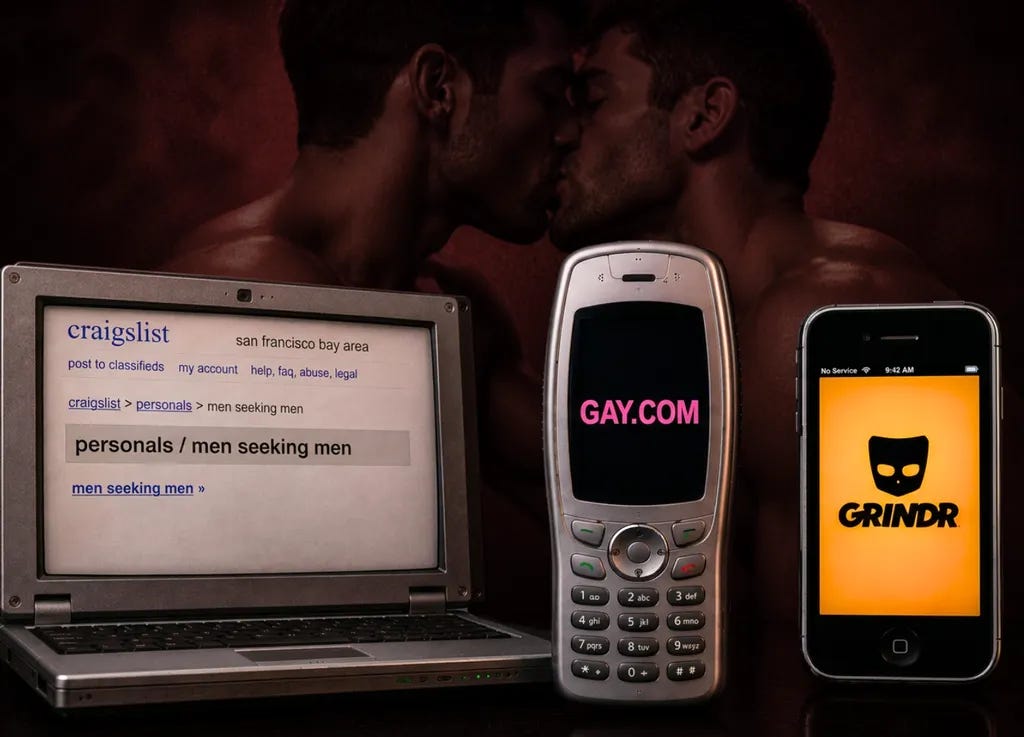
Mark Elderkin and his husband, Jeff Bennett, found Gay.com. A few years later, the site launches with a java-based chat system that features virtual chat rooms like “LA Men 4 Men 18-24.” Over the years, the site grows in popularity by offering a combination of chat rooms, member profiles, message boards and editorial content. A 1998 list of daily chat sessions on the site include “Parent Chat,” “Must See TV,” “Vegetarian Potluck” and “Bisexual Men Chat.”
In 2005, San Jose Mercury News rank Gay.com as the most popular online gay personals site in the U.S.


1995
Craig Newmark launches Craigslist, which begins as an email list and then becomes a website the following year. From 2001 to 2009, the platform had a section titled “erotic services,” in which people openly advertised paid sex. In 2009, that section changed to “adult services,” which had stricter screening.
The section was ultimately removed from the site following a group of state attorneys general saying there wasn’t enough protection against illegal ads that promoted prostitution.
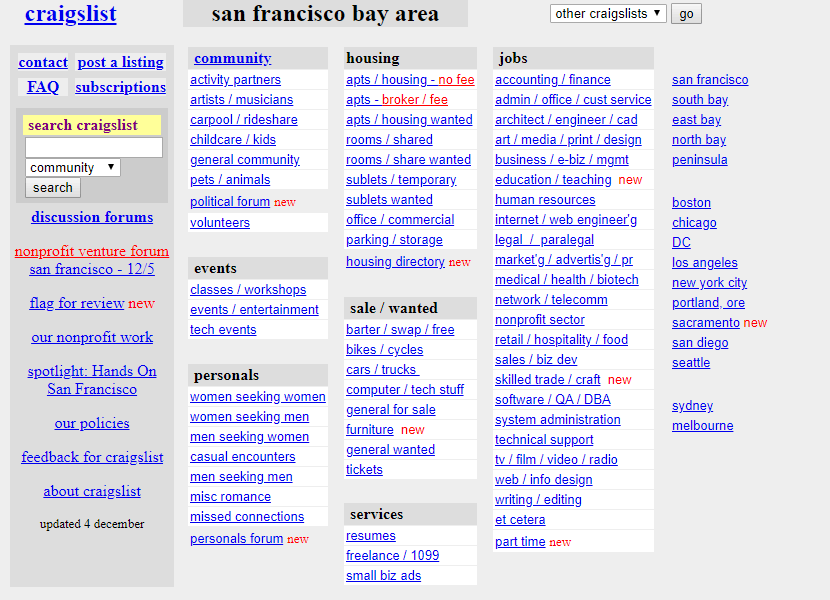
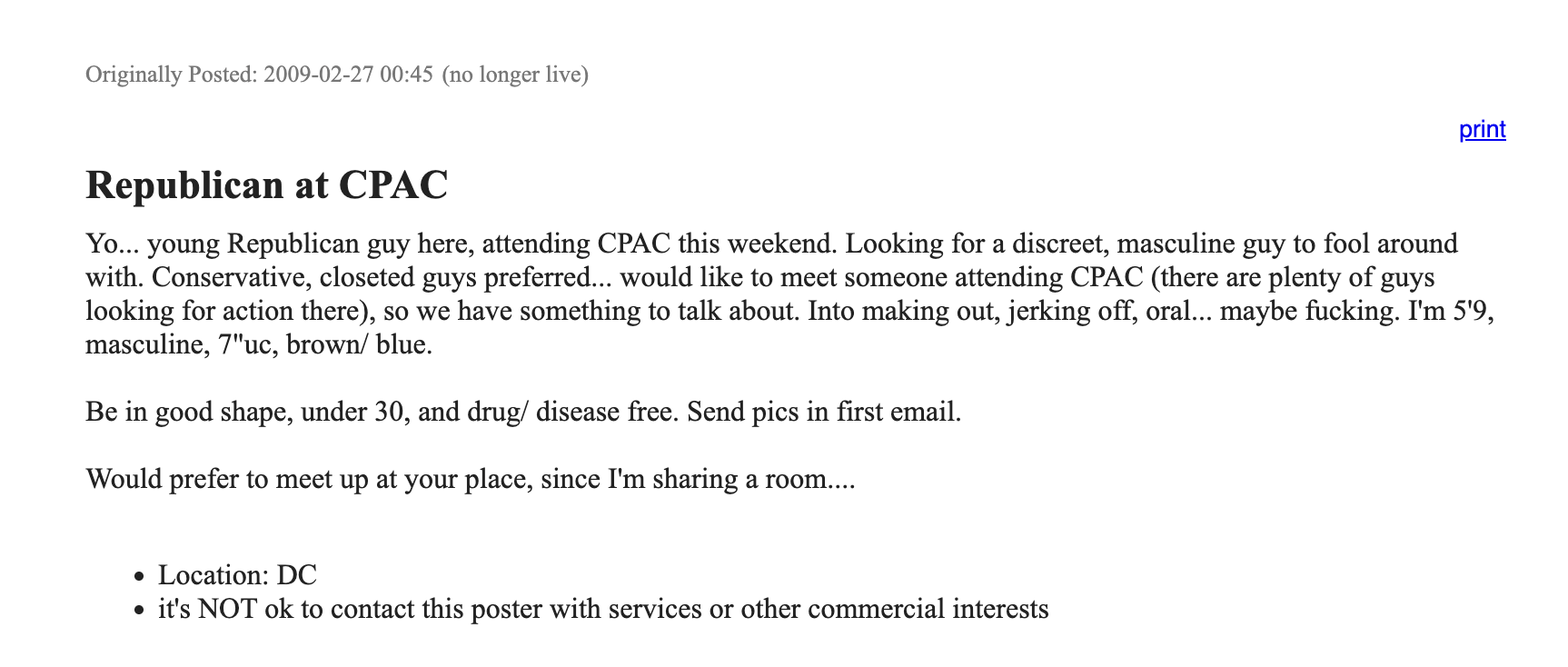
None of this, however, stopped people from using the site to cruise and meet sexual partners; the “personals” section was utilized for this purpose. The men seeking men category—which was removed alongside the personals section as a whole in 2018—included a wide range of personal ads utilizing shorthand to indicate the kind of sex they were looking for: BB indicated bareback, or condomless sex; DL indicated down low, for men who were closeted; and PNP indicated Party and Play, for those who wanted to use drugs, typically crystal meth, and have sex.
1999
Salon publishes an article describing AOL as the “bathhouse of the internet.” By 2000, approximately 20% of AOL’s 21 million users are gay, and the men-for-men (M4M) chat rooms are particularly popular. Most chat rooms are organized by city, so members can enter chat rooms like “SacramentoM4M,” where they can then view profiles of guys near them. Instant messages and private chat rooms—where men exchange naked photos and coordinate hookups—are also incredibly popular.
1999
Squirt.org launches as a sex-positive cruising network that consists of user-generated content including cam shows, videos and written smut known as “cocktales.” The site caters to gay and bisexual men and includes user profiles and suggestions for places guys can meet-up to hookup, including bathhouses, rest areas and parks. Earlier this year, Squirt released a mobile dating app, that they say includes “unlimited chats and no geographic restrictions, making it an essential gay dating app for travel and meeting guys abroad, or finding members nearby on your grid.”
1999
A gay couple, Gary Frisch and Henry Badenhorst, launch Gaydar after a failed attempt to try and help their friend find a boyfriend. Badenhorst said, “We put him on Excite [a search engine], which had a dating section where you could upload a picture. But it took two weeks for him to get a response, so we said that we were sure we could create something specifically for the gay market.” Setting the site apart were webpages for each user known as “profiles,” which have now become standard in online dating.
1999
Recon, a hookup site focused on gay and bisexual men interested in fetish wear, launches. On the site, you can find men interested in BDSM, leather, alternative play and more. In 2010, Recon launches an app that uses GPS to show nearby men. Similar to the site, the app focuses on leather, rubber, BDSM and kink. Recon has held global fetish events in cities worldwide, including Berlin, Paris, London and Chicago.
2001
Fridae, a gay web portal created by scientist Stuart Koe, launches. The site has a stated goal of “Empowering gay Asia.”
Even though Koe is Singaporean, Fridae registers as a Hong Kong-based website to avoid scrutiny from the Singaporean government since homosexuality was illegal at the time. In addition to being a space to find hookups and dates, the site includes gay-related marketing, HIV information and community development opportunities. In 2015, Fridae is acquired by DragonStack.
2001
Jonathan Crutchley and Larry Basile launch Manhunt.net in Boston. The duo had initially started in the gay telephone chat line business. But after noticing a downturn in 2000, they pivoted to the internet. By 2002, 10,000 men from greater Boston had joined Manhunt seeking hookups and dates. The same year, a paid option is introduced and the company expands into other U.S. cities.
2002
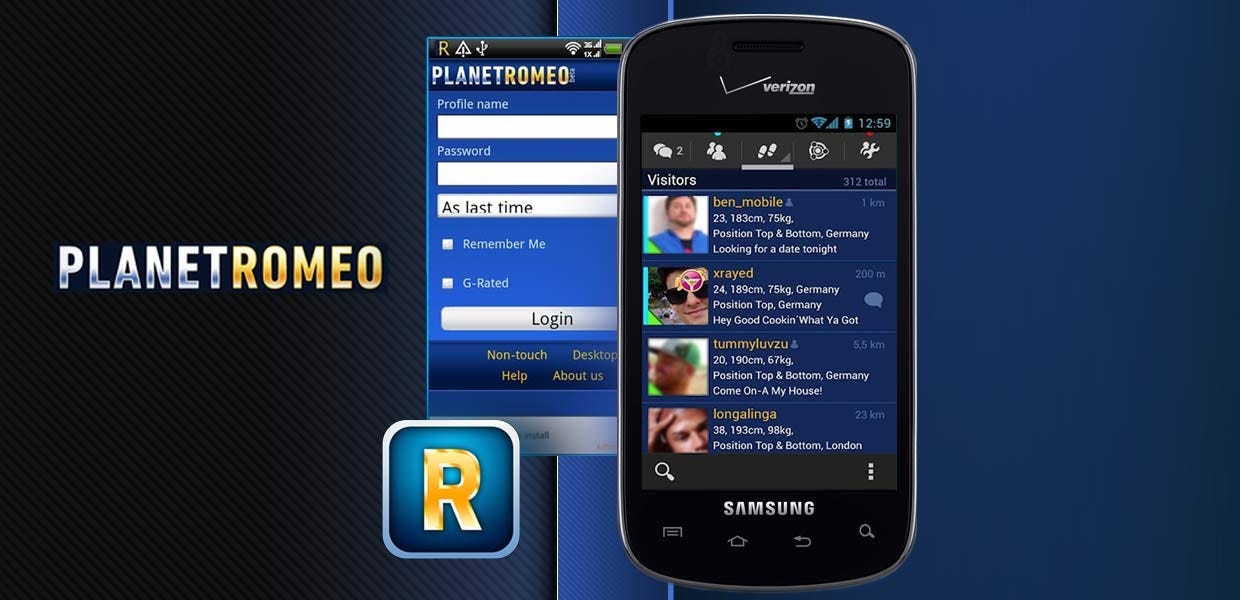
Jens Schmidt launches GayRomeo, which quickly becomes the go-to dating and hookup site for gay and bisexual men in Germany. It later expands through Europe and eventually goes global. In 2011, it’s rebranded to PlanetRomeo due to censorship of the word “gay” in many countries. And in 2021, Planetromeo.com becomes Romeo.com.
2003
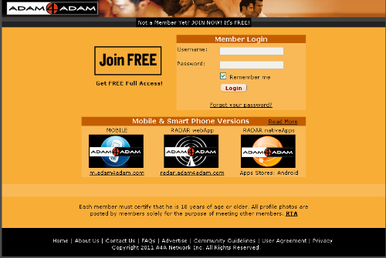
Convergent Ideas, LLC launches Adam4Adam, a site designed for hookups, as well as dating and even friendships amongst gay and bisexual men. Over time, the platform collaborates with organizations to promote LGBTQ rights and health awareness, highlighting safe sex, mental health and HIV awareness. In 2005, San Jose Mercury News ranks Adam4Adam as the second most popular online gay personals site in the U.S., after Gay.com.
2004
OkCupid launches, and by 2012, becomes a major dating app. Notably, OkCupid is the first dating site to expand gender and sexual orientation identifiers: In 2014, it introduces 22 gender and 13 orientation options, including pangender, homoflexible and Two Spirit. By 2021, it offers 60 identifiers after working with the Human Rights Campaign.
2004
Backpage.com launches. The classified ads site includes categories such as “personals” and “adult services.” The site is used by many LGBTQ sex workers. In 2018, U.S. law enforcement agencies seize and shut down the site in an effort to combat forced prostitution and child exploitation.
2009
Joel Simkhai launches Grindr, an app that uses iPhone satellite location data to help men find sexual partners nearby. It becomes the first iPhone app to combine dating and sex with geolocation. The use of location data changes the game for gay hookup culture, combining elements of old-school cruising with the modern digital age. Grindr allows users to filter for what they call “tribes,” which include bears, twinks, jocks and more. The Grindr grid allows users to see men in order of proximity, presented as a grid of bodies, often including faceless photos that lean into traditional anonymous cruising culture.
As Grindr’s site says, “Our mission is clear: become the Global Gayborhood in Your Pocket, so wherever life takes you, the community, support, and opportunities that move us and our business forward are never more than a tap away. … Grindr has grown into the world’s largest network for gay, bi, trans, and queer adults.” In 2022, Grindr would go public, and it is currently valued at $2.74 billion.

2009
Chatroulette is launched by Andrey Ternovskiy, a 17-year-old student from Moscow. The site allows users to anonymously video chat with users worldwide. The site quickly becomes used by men as a way for cyber sex and mutual masturbation.
2010
Johnny Skandros and Eric Silverberg launch SCRUFF, a Grindr competitor that targets LGBTQ men. In 2013, when SCRUFF 4 launched with many new features, it became one of the first social apps to include a transgender community profile and search option.
2012
Sean Rad and Justin Mateen launch Tinder. The most groundbreaking feature is the ability to swipe right on profiles you’re interested in and swipe left for those you dislike.
2012
Ma Baoli founds China’s first gay dating app, Blued, as a successor to an LGBTQ-focused online forum he had started in the 2000s called Danlan.org. Over time, the app expands internationally after its domestic market starts facing challenges due to state controls of LGBTQ media as well as competition from newer, trendier apps. Last year, Apple removed Blued from China’s app store, saying the move was “based on an order” from the Cyberspace Administration of China.
2018
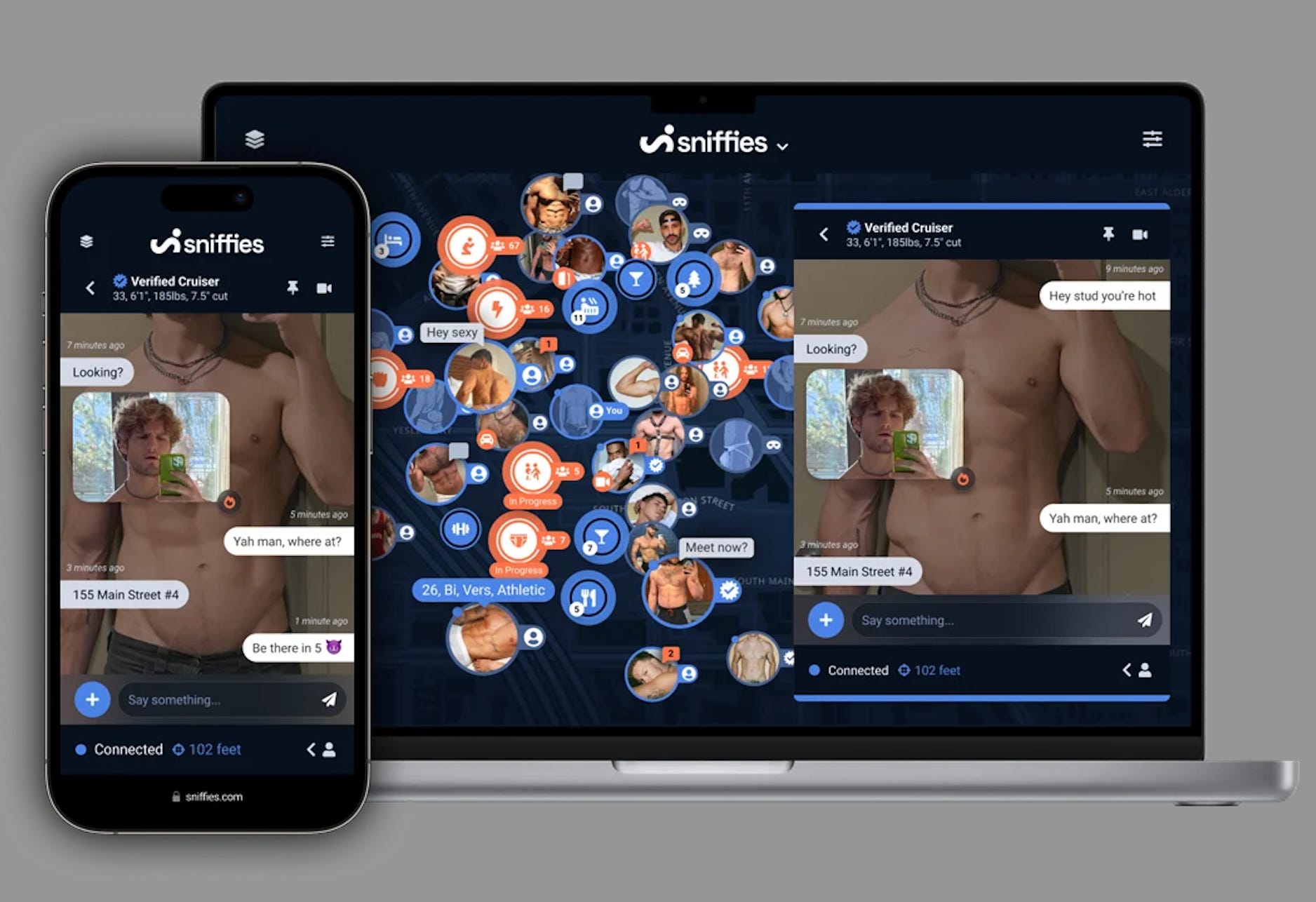
The gay hookup site Sniffies launches. Leaning into historical cruising culture, the app shows a live updated GPS map, providing a simple way for men to find quick sexual encounters. The site says that it is “a map-based app for gay, bi, trans, and curious cruisers.”
Unlike similar sites or apps, users don’t have to set up an account or provide an email address. The site also allows users to invite others to private sex parties or notify them of their presence in public locations like parks and gyms. Another distinction is that nudes can be used as profile photos, and those nudes then show up on the interactive map users reference when seeking a hookup.
2018
Following the removal of Craigslist’s “personals,” DoubleList launches as an alternative. The personals website is a space for people seeking dating or hookups to connect. In addition, DoubleList has various categories as a simple way for LGBTQ folks to connect.
2023
Archer by Match Group launches, with the goal of creating a “social-first” dating experience for gay, bisexual and queer men. The app combines functions of both a dating app and a social media site. In its first year, the app is downloaded over 685,000 times. However, just three years after its founding, its director of brand marketing and communications announces that it will be shutting down.
If objective, nonpartisan, rigorous, LGBTQ-focused journalism is important to you, please consider making a tax-deductible donation in the U.S. through our 501(c)(3) fiscal sponsor, Resource Impact, by clicking this button:

 | A guest post by
|