

I Live in Colorado. Conversion Therapy Destroyed My Life.
The Supreme Court’s decision to overturn my state’s conversion therapy ban will be tragic for many LGBTQ kids.
By Sami Tacher
This story contains mention of suicide and self-harm. If you or someone you know needs support, resources are available here.
At 12 years old, upon returning home from school, I saw my dad sitting in the living room. I immediately knew something was wrong.
“Come here,” he said, with my computer in his lap. He proceeded to show me the pictures of men kissing that he had found in my search history.
“If you live this way, either you’re gonna kill yourself or someone’s going to go out and kill you for it,” he told me. “And neither of those things matter because God will never love you again.”
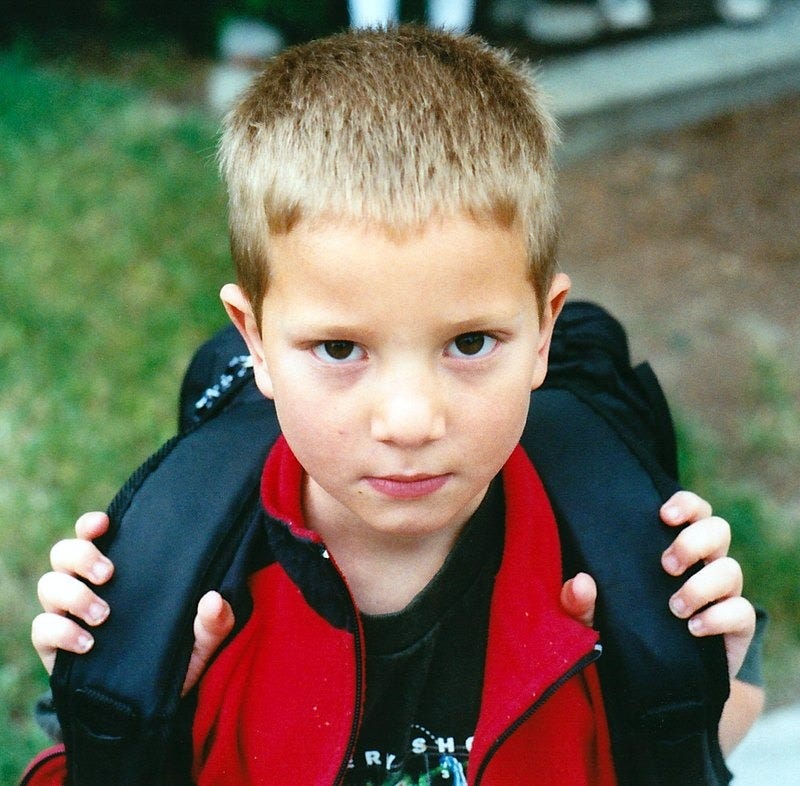
I couldn’t say anything. In our world, my dad was the one with the answers. He was an elder in our church, the second-highest rung in authority and the highest form of control. If he said it, it had to be true.
For the next two years, I pretended like my feelings weren’t there. I felt like I was just waiting for the rest of my life to collapse. I knew being gay wasn’t an option.
So when I found conversion therapy at 15, it felt like the answer. I didn’t know it would cause me to spend the next seven years of my life undoing myself.
I became one of the nearly 700,000 Americans who have gone through conversion therapy. Though 23 states have implemented some bans on LGBTQ kids from receiving the discredited practice, the Supreme Court ruled on Tuesday that Colorado must relegalize it.
When I learned the news, my heart sank. The Supreme Court made the decision to side lawyers from Alliance Defending Freedom, a Southern Poverty Law Center-designated anti-LGBTQ hate group.
I was horrified. I understood the pain. I had experienced suicidal thoughts. And I knew that this decision would cost lives.
The Program
I was raised in Seattle in the International Churches of Christ, a high-control religious organization that was founded in the 1970s and spread to over 130 countries.
Church was not just something we did on Sundays. It was our social life, our worldview, our moral code, our hierarchy and our family reputation. It was the way we understood what was good and what was dangerous.
The messaging was constant: Church services, Bible talks, discipling times, camps, small groups, leadership meetings behind closed doors where I was told not to listen.
Everyone watched everyone. If you sinned, you confessed. Information traveled upward. Shame traveled downward.
So when a camp counselor told me in the ninth grade that he used to struggle with same-sex attraction and that he could help me, it felt like I had a way out.
He introduced me to Strength in Weakness, a conversion therapy ministry that would consume my life.
After telling my mom I had found a solution, I logged into their eerie-looking online community for people trying to resist homosexual thoughts.
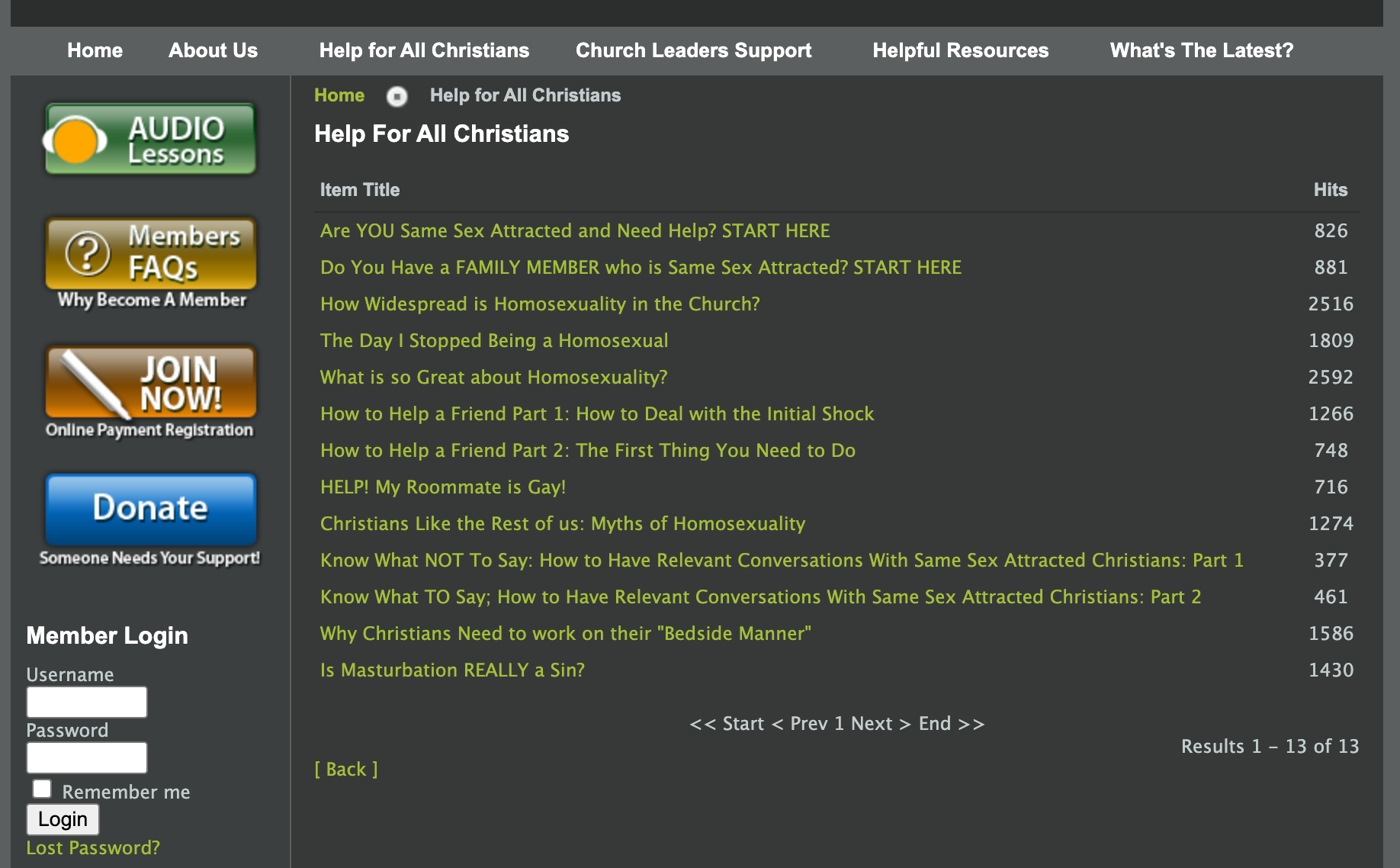
In a section called “Help For All Christians,” there were articles titled “Are YOU Same Sex Attracted and Need Help? START HERE” and “HELP! My Roommate is Gay!” I paid the $55 CAD membership fee and got going.
The expectation was up to an hour a day, sometimes alone and sometimes with other people. You read scripture. You catalogued your temptations. You prayed for strength. You reported back.
They framed homosexuality as a quick fix to a life of emptiness.
If I developed feelings for a boy, I was taught to cut the relationship off. If I found someone attractive, I was taught to confess, analyze it and shut it down. Attraction was treated like a warning flare: not yet sin, but always only one step away.
The program turned my mind into a hostile environment. I was taught that my body would betray me and that a crush was a spiritual emergency. I monitored my eyes, my thoughts, my friendships, my fantasies, my posture, my tone and my body. And because I had never been with a boy, I told myself it must be working. I was miserable and shrinking inside—but I was holding on. And in the eyes of Strength in Weakness, I was succeeding.
But it wasn’t working.
Anxiety became a permanent condition.
The Loneliness It Created
But the hardest thing was the loneliness.
Inside the church, I was the person with the secret defect. Outside of it, I was unbearably Christian. I didn’t belong anywhere.
I spent hours on the Strength in Weakness chat room waiting for just one friend who understood me. Nobody came.
By the time I was 17, I consistently thought about killing myself. More than once, I stood on top of a parking garage looking down onto the street, wishing for a breeze to take me.
The only thing that stopped me was my family. Even then, I was thinking in terms of what burden I could spare them.
Even though my strength began to falter, I stayed with the program through college.
The leader, Guy Hammond—who founded the organization and who had “lived an active gay life until he was 24 years old”—had taken me under his wing. He was likely attracted to my clean track record of having never kissed a boy.
I was flown to conferences. I began counseling older men who were struggling and making content promoting conversion therapy on social media.
Guy sung me his praise. He referred me to Exodus International, a Christian organization that promoted conversion therapy to hundreds of local ministries. The organization shut down in 2013 and has apologized for the harm it caused.
Being pulled deeper into the ministry made the performance more demanding. The more Guy trusted me, the more I felt I had to live up to the image they had built around me: the disciplined one, the faithful one, the proof that this could work. So I kept counseling people even as my own life was unlivable.
The Beginning of Escape
For years, I believed that if I held on, God might make a different life for me. But eventually, reality started outrunning doctrine. I remember I was at the supermarket and I thought the guy bagging my groceries was so cute. By the time I had gotten to my car, I had fantasized an entire relationship with him. At that moment, I realized I would never be attracted to women.
I also began to understand that celibacy, which I had promoted to myself and countless others as the noble solution, would be ineffective.
At the same time, cracks were forming in my family’s faith.
Little did I know, my dad was terrified for me. He sought counsel from the church. He started reading, questioning and trying to understand what the Bible actually taught about homosexuality instead of what he had been told.
I remember the relief when the two of us were sitting in our old house, reading scripture and arriving at the same conclusion: The condemnation we had built our lives around was not as clear, or as holy, as we had been taught. The Bible didn’t condemn homosexuality like the church said it did.
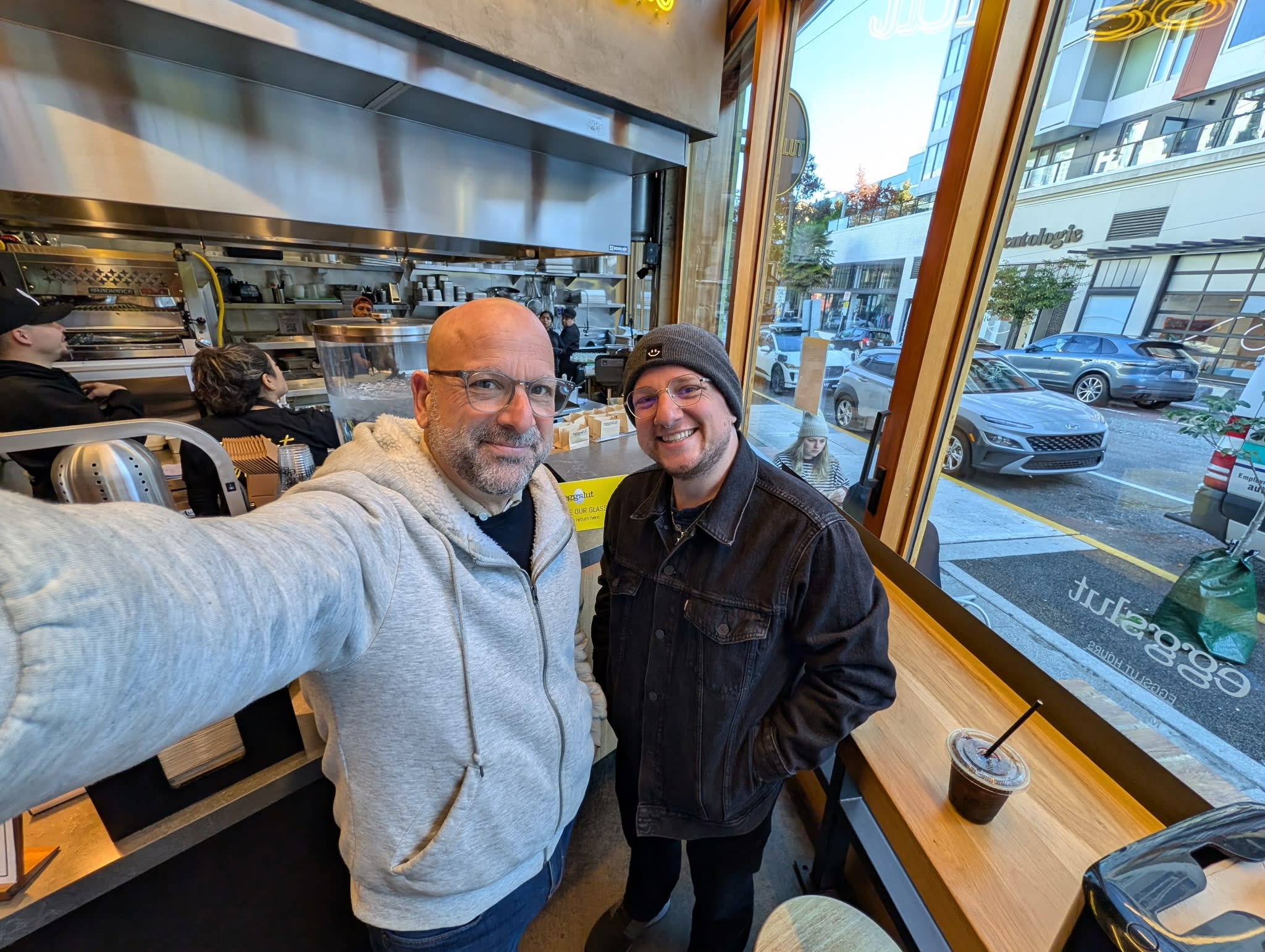
“I’m so sorry,” he told me. He took full accountability. To this day, he has been the number-one advocate for my health and healing. He is my best friend.
For years, I lived in terror that I would destroy my family’s reputation. But in the end, the church revealed itself.
In a meeting to discuss an ongoing issue with a struggling member, my parents attempted to show them forgiveness, but the church said they were too close to see clearly. Suddenly, my folks saw the hypocrisy, the cruelty and the way power was protected and dissent was punished.
They stepped down from leadership, and over time, the church excommunicated our family, and members were told not to speak to us.
But it didn’t matter. The spell had broken and we felt free.
Shortly after, I stopped making content for Strength in Weakness.
As the distance between me and conversion therapy widened, I could finally breathe.
Leaving did not feel triumphant. It felt like standing in the ruins of my life. But I had one crucial thing before me: a future that belonged to me.
Reflection on the Supreme Court Decision
Now, I am working hard to undo the trauma I endured. I am in intensive therapy. I still live with chronic anxiety and chronic pain. And I’m still figuring out how to be myself.
What makes the Supreme Court decision so painful is that I know exactly what kind of world it protects and what kind of pain it inflicts on LGBTQ kids.
People call it free speech. But it is abuse.
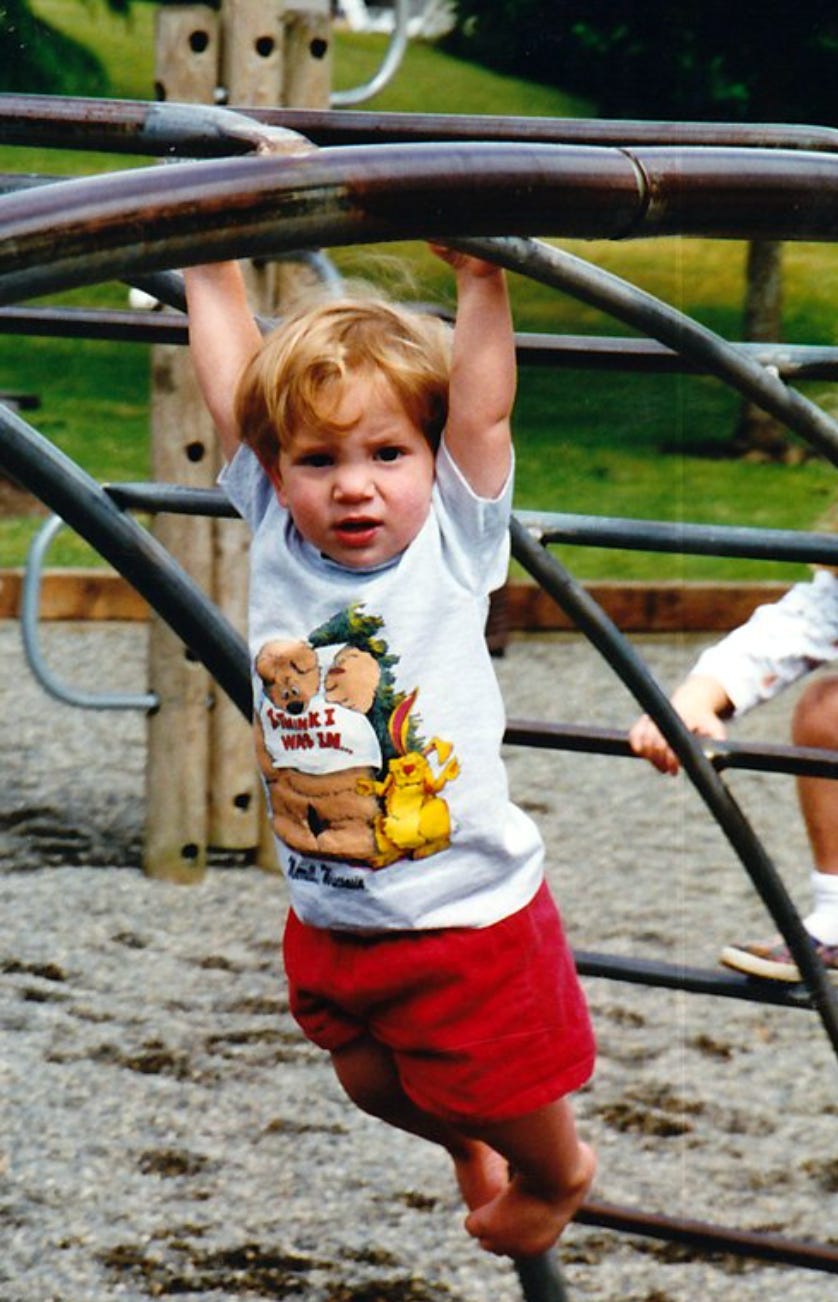
Words taught me to hate myself. Words made me suicidal.
So when I learned that the Supreme Court ruled that this kind of messaging should be protected, that adults should be free to tell children that queerness is sickness, dangerous, shameful or sinful, I do not hear an abstract constitutional principle. I hear the beginning of a tragedy for kids like me.
And what hurts most is that I know the opposite is possible. 1
I’m 31 and managing a local cafe here in Denver. I have a queer community around me that is generous, visible, funny, messy, loving and alive. I look around and see LGBTQ people building ordinary, beautiful lives. I get to belong to something that once would have been described to me as a death sentence.
There is nothing dangerous about this community. What was dangerous was the lie I was told about it. Ignorance made my world small. Education and compassion made life livable. And love gave me back a future.
That is why the SCOTUS decision feels so devastating. While LGBTQ people are some of the most resilient folks I know, I’m also acutely aware of how strong a child has to be to survive after being told, over and over, that who they are is unlovable.
Uncloseted Media reached out to Sami’s dad. In an email, he wrote that his past comments are “rough to read.”
“I don’t remember saying the specific words, but I completely trust Sami, and trust that the words would be painfully and accurately remembered,” he wrote. He added that it was shame and fear that drove his remarks and that it’s “hard to describe the gratitude” he has for Sami’s willingness to forgive him. “Sami has allowed for our relationship to continue to heal, grow, blossom and flourish. I told Sami on the phone yesterday that I’m the president of their fan club.”
Sam Donndelinger assisted in the writing of this article.
Editor’s Note: An earlier version of this story misstated the name of Strength in Weakness as “Strength and Weakness.” The article has been updated to correct this.
If objective, nonpartisan, rigorous, LGBTQ-focused journalism is important to you, please consider making a tax-deductible donation through our fiscal sponsor, Resource Impact, by clicking this button:

The Supreme Court’s March 31, 2026 ruling in Chiles v. Salazar does not itself overturn Colorado’s ban on conversion therapy but rather allows for that outcome by referring a lawsuit over the ban’s constitutionality back to a lower court. In doing so, the Chiles decision also opens the door to other U.S. states overturning their conversion therapy bans.
My heart breaks for you and for all of the hundreds of of thousands of conversion therapy survivors as well as for the ones yet to survive! The Christian Nationalists are among THE most evil people hiding under the banner of Christianity that exists!
I am beyond furious by what Colorado's government did, do they not realize the consequences they've unleashed on their own kids? This horrid practice is banned in my homestate(California) for a reason!