

In 1992, James Dale Sued the Boy Scouts. Now, Pete Hegseth Presents a New Challenge
The Secretary of War has said he will pull Pentagon funding if Scouting America doesn’t get rid of everything “woke” and DEI-related within six months.


UNCLOSETED, with Spencer Macnaughton is a new podcast by Uncloseted Media, an investigative LGBTQ-focused nonprofit news publication. Follow and subscribe wherever you get your podcasts. YouTube // Spotify // Apple
In 1992, James Dale sued the Boy Scouts of America after they kicked him out for being gay. The case lasted nearly a decade and made it all the way to the Supreme Court.
While SCOTUS ultimately ruled against Dale in a 5-4 decision, his case paved the way for LGBTQ inclusion across the organization. In 2014, the Boy Scouts started allowing gay boys to join the organization. Three years later, the organization began allowing trans boy scouts, and a year later, girls became eligible for membership.
But today, Scouting America is presented with a new challenge as Secretary of War Pete Hegseth has put the organization “on notice,” and has threatened to pull Pentagon support if they fail to erase what he calls “an insidious radical woke ideology,” which includes allowing trans scouts and girls to join the organization, and promotion of diversity, equity and inclusion.
In this episode of “UNCLOSETED, with Spencer Macnaughton,” Spencer sits down with Dale to talk about his experience suing the Boy Scouts of America and why he’s ready to speak out against the new challenges created by Hegseth, who he describes as a “terrorist.”
Watch the video or read the full transcript below.
Spencer Macnaughton: Hi everyone, welcome back to UNCLOSETED with me, Spencer Macnaughton. Today I’m here with James Dale, and you may be familiar with that name because in 1992, he sued the Boy Scouts of America after they kicked him out for being gay. While Dale ultimately lost the case, it paved the way for much LGBTQ inclusion in the Scouts. But now that’s at stake, as Secretary of War Pete Hegseth is sparking a new fight threatening to remove Pentagon resources if Scouting America doesn’t erase everything that he says is “woke.” James, thanks so much for coming on the pod today.
James Dale: Thank you for having me.
SM: So you guys actually reached out to us and we weren’t really aware of everything that was happening behind the scenes with the Secretary of War, with Pete Hegseth. And I want to ask you all about that. But first, I want to understand your history as a Boy Scout a little bit more. So tell me about how you got into the Scouts and your history with the Scouts before you were kicked out.
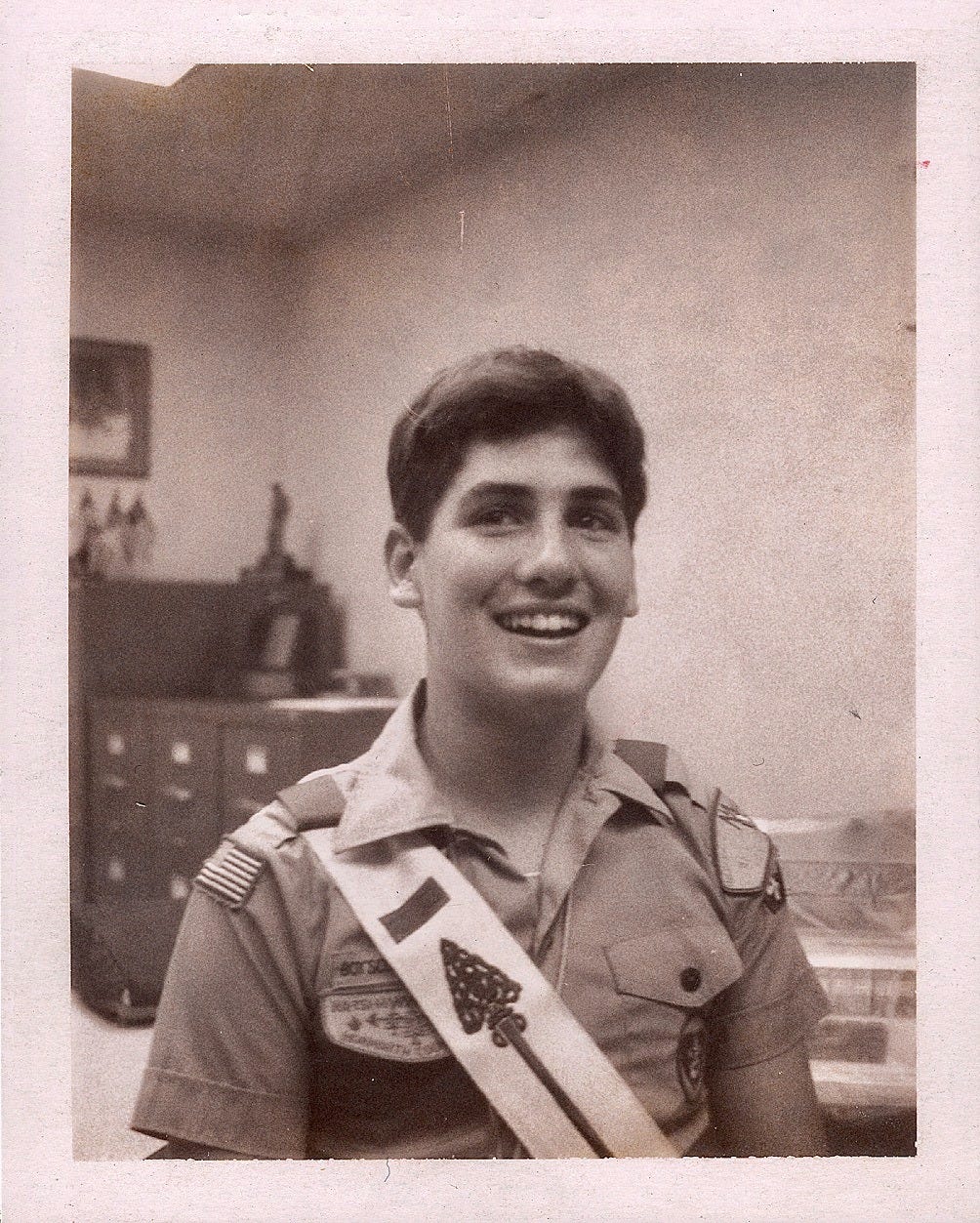
JD: Yeah, I grew up in suburban New Jersey in the ‘70s and ‘80s. So I think when I was 8 years old, I became a Cub Scout and I stuck with it. And pretty much, I would say most of my adolescence, I got more and more involved in the Scouting program. I was in different troops, I was in leadership positions, so I stuck with it when I was in college. And then in my second year at Rutgers, I came out of the closet and I came out pretty quickly. I went from coming out in September of that year, 1989, to running the Gay Alliance in December. So a few months after that, I was speaking at a conference on the needs of gay kids to guidance counselors and teachers. It was the Rutgers School of Social Work Conference. And as a result of that, I appeared in the local paper. The Scouts saw that, and ultimately sort of the wall came down. “You’re no longer allowed to be in the Scouting program. We do not allow gay people in Scouting. Homosexuals are inconsistent with the values we put forward,” which was really a gut punch to me. I didn’t expect Scouting to be welcoming me as an openly gay man, but I didn’t expect a formal policy that I’d never heard of. It really seemed to run contrary to everything the Scouts stood for, which is about welcomeness, inclusion, leadership, community. So all of the things that I was hearing from Scouting actually told me to come out and be a leader, be honest in your relationships. So as a result of that, this started this, you know, 10-year legal battle, because I was expelled in 1990, and then it reached the United States Supreme Court in the year 2000. So pretty much my entire 20s, you know, are defined by this lawsuit.
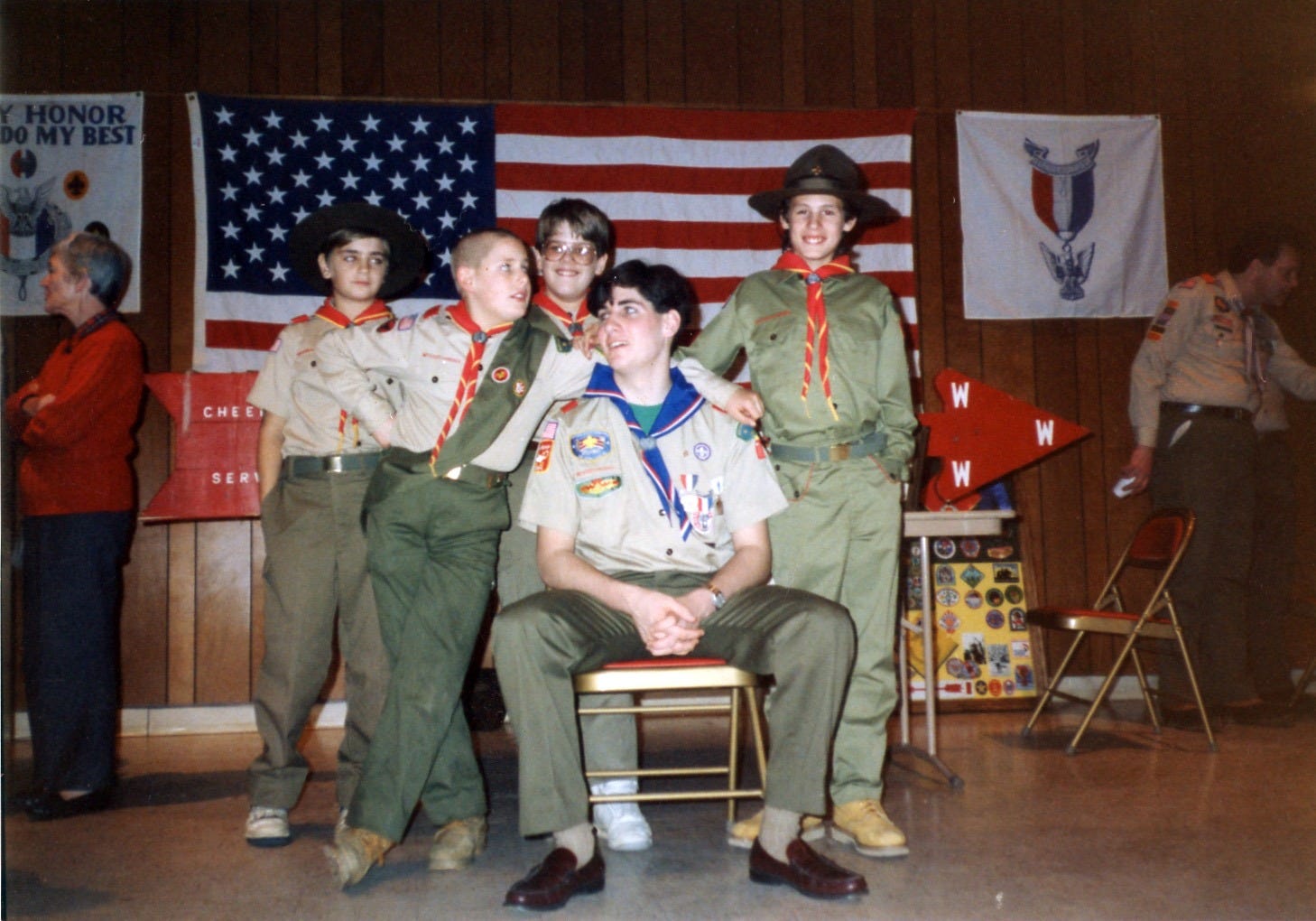
SM: But that wouldn’t have been typical for a gay person coming out in their teens in the ‘90s, right? I find it really impressive, it probably took a lot of courage to actually be like, “No, this isn’t right and I’m actually gonna sue the Boy Scouts of America.” So how did you get from being kicked out for being gay to going and saying, “I’m gonna sue this massive organization?”
JD: So for me to go from being the co-president of the Gay Alliance to suddenly saying, “Let’s sue the Scouts,” it was a leap. But you know, in the mind of an idealistic, somebody raised by the Scouting program, taught to believe in the process and taught to believe in American values, it really wasn’t that big a stretch. And I also was raised Lutheran. I was pretty religious as a kid with my family. I went to church pretty much every Sunday and taught Sunday school. And again, my religion wasn’t dogmatic, it wasn’t hateful. So I wasn’t receiving a lot of anti-gay messages from the social institutions around me, but I guess maybe I was a ballsy 19-year-old kid who thought that this is wrong and I’m gonna challenge it.
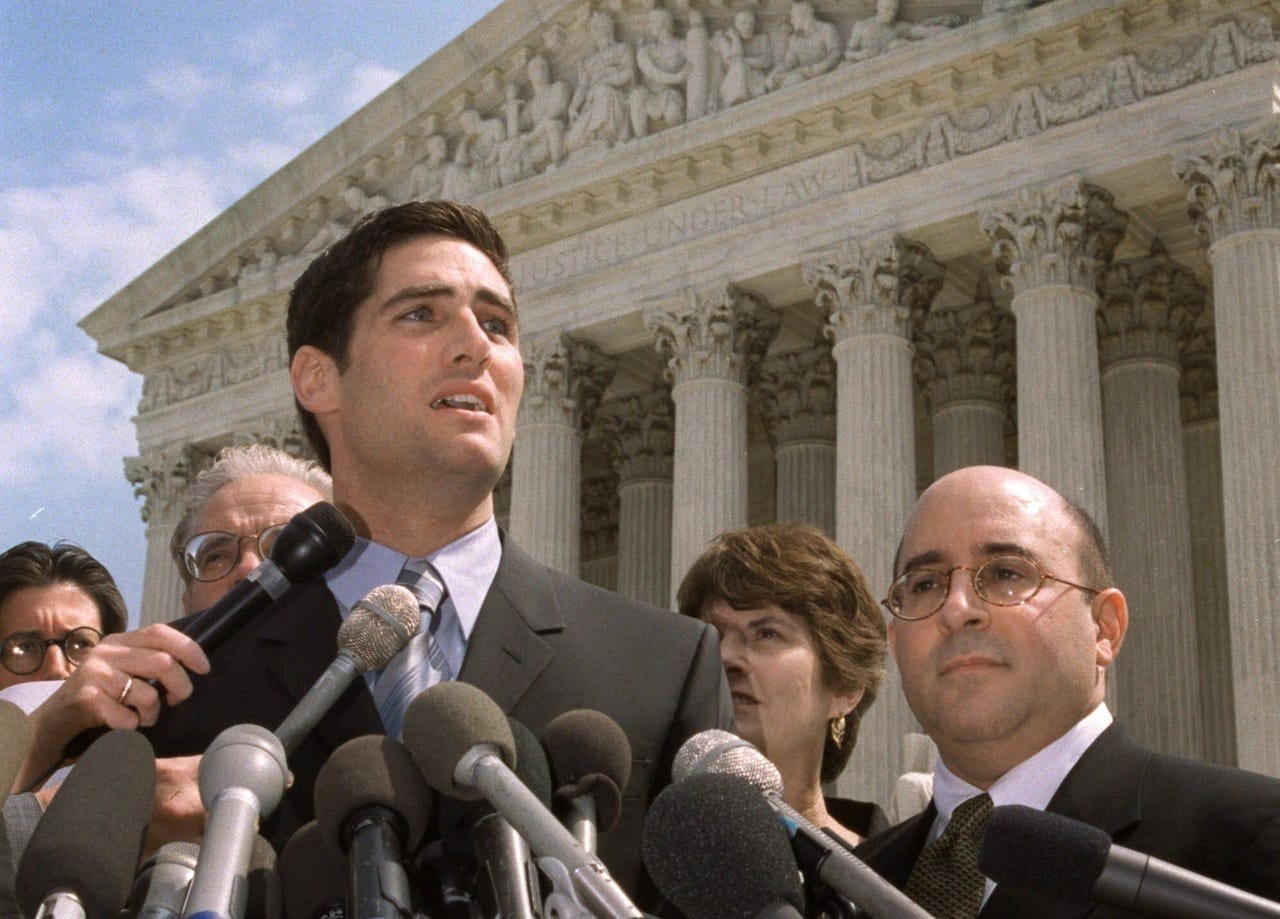
SM: No, it’s super interesting. And I wanna get to like what’s changed because honestly, your advocacy paved the way for a lot of change in the Boy Scouts. So in 2000, you ultimately lose the case, which was literally called Boy Scouts of America v. Dale. That’s you! And the Supreme Court held that the constitutional right to freedom of association allowed the Boy Scouts to exclude a gay person from membership in spite of a state law requiring equal treatment of homosexuals in public accommodations. So, that’s a mouthful. Explain what that means.
JD: So basically, New Jersey is one of the first states in the country to amend their nondiscrimination law to include gay people, gays, lesbians, bisexuals. I think that’s all it was at the time. So basically going through the New Jersey court system, the first judge called me a sodomite 18 times. He was horrible, despicable. As a result of that, I got a lot of press. So basically this guy was so homophobic in New Jersey that it made national headlines. Other people had lost to the Boy Scouts, but never had someone been such a bigot as the guy who was a bigot to me. Then I won an appeal after that. But then [the] New Jersey Supreme Court, who is the final say on state law, said unanimously, “We in New Jersey believe that this type of discrimination goes against what we believe in as a state.” Like, expelling somebody from an organization because they are gay—as a public accommodation, they are going against everything we as a state are trying to do. So that was an incredible victory. Rarely has there been a unanimous decision from a state court on LGBT rights. And this is in 1999, so that was huge. Naively, when they appealed to the Supreme Court, they said, “Well, this is great. Suddenly, the Supreme Court is gonna put an end to this discrimination, not just in New Jersey, but across the country.” But basically I believed that they would do the right thing, and they did not. By one vote, but they did not. They gave the Boy Scouts of America a First Amendment shield to say not “Have you been anti-gay since you, for the 100 years you’ve been around?” but “Do you want to define yourself by being anti-gay?” And they said, “Yes, we do. Just like the Ku Klux Klan defines themselves by their animus towards Black people and Jewish people, a whole host of people, we wanna define ourselves by our anti-gay discrimination.” So the Supreme Court gave them the right to define themselves by their bigotry. So they were oblivious to the cost, the price of that bigotry. So they leaned into this and then America leaned away from them. Days after I lost, the backlash against Scouting started and then a month later and then six months later, then a year later. The New York Times, The Wall Street Journal, USA Today, every single media across the country was saying the Boy Scouts lost instantaneously. Members were leaving, dollars were evaporating, the Boy Scouts of America became toxic. Like other youth organizations that were not anti-gay but not pro-gay suddenly said, “We’re not anti gay, we welcome gay people” because they’re all terrified of suffering the same backlash for bigotry the Scouts did. So the pollyanna in me can look back on this now and say, “Wow, my loss inspired a movement that forced the Boy Scout to change.” It inspired people. So in terms of what I believe in, I believe losing was better than winning.
SM: That’s what I was wondering, was it a blessing in disguise? Because since that lawsuit, things have really changed at the Boy Scouts. They’re now Scouting America, where they allow girls in. And I remember in 2015, I was working at The Wall Street Journal and I actually followed this kid, Joe Maldonado, he was an 8-year-old trans boy. And I documented the first openly trans boy going to a pack meeting, I think, in New Jersey. And we filmed the whole thing. And it was so powerful to see this kid who was just dying to be a Scout actually finally be able to go. And I feel like Joe, to me, now that I think back on filming with him that day, I hope he’s doing well now about 10 years later, was really able to do this part and parcel because of your advocacy that paved the way. Is that how you feel?
JD: I do. I think when Joe’s case came up, and I kind of followed that pretty closely, I think the Scouts were fucking terrified. They’re terrified that the same thing was going to happen to them all over again. And they were struggling to stay alive. They were struggling to be relevant. It was also, not to kind of leave this out of the narrative, too. There’s also a whole bunch of cover-ups of pedophilia that was taking place in the program. So instead of focusing on that problem, they focused on the gay people, right? They kind of had their eye off the ball.
SM: Sounds like the Evangelical church.
JD: It does, it sounds—exactly, very similar. So I think by the time the Joe thing came down, I don’t wanna say they crumbled, but they were like, “Oh my God, we gotta get out in front of this, trans kids are welcome.” So then they allowed trans kids in and they’re like, “Oh my god, but like then gender, what do we do about this gender thing? So, well, I guess girls are welcome too.” It kind of just, I don’t wanna say it crumbled. But essentially when they started to compare themselves to the values they had, this bigotry they were bringing along didn’t make sense.
SM: Yeah. And I mean, I could talk to you about this history for a long time. But I’m sure a lot of listeners are wondering like, “Why are we here now? What’s the news behind this?” And if you do fast forward to today, there is a new fight brewing as Pete Hegseth is essentially trying to “kick woke out,” or at least that’s what he says. For the folks who don’t know, Pete Hegseth has a very transphobic, homophobic track record. You can read all about it at UnclosetedMedia.com if you like. But before I ask you about it, I want to play a clip where essentially, Hegseth is threatening to pull military support unless Scouting America changes its membership rules. So here is a clip of a video that the Secretary of War account posted to its Twitter on February 27th where Hegseth is essentially putting Scouting America on notice. So Bella, if you wanna play that clip and then James, I’d love you to respond to it and tell us about it.
JD: Sure.
Pete Hegseth: After 2012, however, the Boy Scouts lost their way, and a once great organization became gravely wounded. Diversity, equity and inclusion; DEI crept in. The name was changed to Scouting America. Girls were accepted. The focus on God as the ruler of the universe was watered down to include openness to humanism and earth-centered pagan religions. Scouting became an organization that no longer supported and celebrated boys. They even welcomed the destructive myth of gender fluidity and transgenderism to infiltrate their membership. Along the way, standards were lowered and merit destroyed in favor of an insidious, radical, woke ideology that is anti-America and anti-American. The changes Scouting America made since 2012 have also jeopardized their relationship with this department. And I was very seriously considering ending our support of Scouting altogether. We have a department to protect, after all. Beyond that, the policies Scouting America have in place violate President Trump’s Executive Order 14173, entitled “Ending Illegal Discrimination and Restoring Merit-Based Opportunity.” But before making this big change, I decided to meet with the current Scouting leadership to convey our deep concerns. Based on that face-to-face conversation, and subsequent conversations, Scouting America agreed to make several key reforms. The department’s support for Scouting is contingent on them making substantial progress toward reaching these and many other positive changes in the next six months. At that time, we’ll vigorously review progress and decide whether or not to continue our support. The onus is squarely on Scouting America to deliver. If we’re unsatisfied with Scouting America’s progress toward and commitment to the agreed-upon reforms, we will find them in violation of the president’s executive order and cease our support.
SM: So, a lot to unpack there. I mean, filled with obviously transphobic dog whistles and such. To the folks who don’t understand why there is a relationship here, can you kind of explain the relationship between Pete Hegseth military and Scouting America because I think some people are like, how are they even connected and why could Hegseth’s pressure actually have consequences if they don’t cave?
JD: The Scouting relationship with the U.S. Government goes back many, many years. They’re chartered by an act of Congress. In terms of the Department of Defense, I remember being in Scout camp and you would see the surplus peanut butter from the Department of Army, or the tents were surplus military tents. There’s a very tight relationship between the U.S. government and the Scouting program, for like 125 years essentially. But what’s on the table right now with this very particular moment is particularly military families. When kids are in Scouting and their parents are in the military—if you’re like a military brat—basically your parents are moving every two years from military bases all around the world. You feel uprooted. So Pete Hegseth is going to take away that relationship, take away the access the Scouting program has to military bases across the globe. So that’s like an intangible price on that. And they’re threatening to take all of that away. So Pete Hegseth didn’t just say, “We have an agreement.” He said, “We have an agreement and if they don’t fall into line in the next few months, we’re gonna reevaluate that and take stuff away from them.” So it’s just a threat, it’s a bullying tactic.
SM: And he’s essentially giving them, from what I’ve seen in the reporting, a six month deadline. They have to do this in the next six months. And from everything that you’ve seen, what exactly does he mean? Like we see “get rid of woke” and these kind of quick sound bites, but like what specifically is he trying to get them to do?
JD: I’m sure he would love, just like you said, the name to be the Boy Scouts of America. He would like girls out, trans kids out. For whatever reason, gay white men seem to be OK right now. We’re in the cabinet, we’re horrible people too.
SM: Why do you think that though? Why are gay white men okay?
JD: I do not under—I mean, probably because the ground game has been so much longer. I think we’re just not there yet with the trans community. There’s just a lot more work that needs to be done. I think we need to go out there. I think we need to see visible trans leaders. We need to meet people that are trans. People need to understand that this vilification that’s happening isn’t real. It’s a distraction. It’s BS to cover up for their own flaws in policy and government work. So they’re scapegoating people that are less than 1%, less than half of 1%. There is no issue of trans kids in Scouting. It’s not a problem. These are made up problems to rally the base and get people upset. They’re not real problems. So what this is about is, just like he’s gone after universities and law firms and pretty much everybody in America, the United States government, the same day we went to war, Pete Hegseth posted the seven minute video that you showed a clip of essentially saying, “We need to take on the Scouting program because they’re all wrong.” First of all, what does Pete Hegseth know about Scouting? He was never a Scout. He was never even in the program. So I don’t know why he’s so fixated on this. And from talking to people that were, quote-unquote, “negotiating with Pete Hegseth,” which, you don’t negotiate with a mobster. You don’t negotiate with a terrorist. So unfortunately, Scouting America, and I understand why they’re negotiating with this terrorist, they’ve negotiated. So it’s a slippery slope, and it’s a dangerous place to be in, kind of getting to bed with somebody like, unfortunately, the Secretary of War.
SM: You call him a terrorist?
JD: He is; we are terrorists, I can speak quite honestly. I’m sure I’ll be called un-American now, but I would put my American credentials on the line anytime, toe to toe with Pete Hegseth. You know, I literally am happy to go toe to toe on who is a better patriot. I believe in fairness for all Americans, and he—that’s just a whole other—
SM: No, no, but I think it’s interesting because I think a lot of people water down the language they use to describe certain folks in this administration. Why do you believe he’s a terrorist?
JD: We’re terrorizing! First of all, they’re terrorizing the Scouting program, that’s obvious, right? They’re terrorizing other countries left and right. We’re creating messes around the world. I mean, I feel like this is a little bit out of the scope of this program. We’re creating chaos and disasters around the entire world. Is that not a terrorist? We’re inflicting terror all over the world!
SM: And one other thing, back to that quote, you said, “I don’t know why he did that the day we went to war, why he came after Scouting America.” Why do you think he did?
JD: Well, what this really was, having heard what happened in the room or portions of, or third person or first, second person, what happened in the room. Pete was really—trans wasn’t the focus. Trans was the red meat or the thing he was able to make out of it. He want[s] it to be the Boy Scouts of America again. He didn’t get that. They held firm on that. He wanted to kick out 200,000 girls. He didn’t get that either. So I think what happened was he was able to find some gray space or misunderstanding about how they’re validating if people are biologically a boy or a girl and what that looked like. I think he wanted to check birth certificates. Like, the Scouts aren’t gonna check birth certificates. So he was trying to find ways to claim a victory when he essentially lost, because there are enough senators and congressmen, Republicans, that are actually saying, “Don’t cut off funding to the Scouts.” So he needed to come out of this negotiation he was doing with the Scouting program and claim victory. So that’s what all this anti-trans rhetoric is really about. It’s really a gender war. It’s really about masculinity and toxic masculinity at that. It’s about reinstating this lost perception of what the world used to be. And I don’t know what problems he had with his parents, but you know there’s something there that needs to be unpacked by a therapist and I’m not qualified for that. You know, he’s got—a lot of these people, I don’t understand their problems with gender and why it’s so threatening that a woman is in Scouting or a girl’s in Scouting. How does that threaten him? How does that make his world different?
SM: And why do you think he’s saying in that quote, “We need to return to the focus on God as the ruler of the universe and earth-centered pagan religions and an openness to that”? I mean, I don’t even really understand that but what does that tell you from like what that messaging because that’s obviously intentional wording that’s written for him. Why is he saying it like that?
JD: Like you said those are dog whistles. They’re perfect dog whistles that are going to get his base upset. It distracts from the war at hand, distracts from these other things. I mean I don’t think he was trying to, if he wanted to make news out of that story, he could have done a better job. He could’ve released that video and he’d been negotiating with them for months. I don’t know why the video had to come out the same day. It was obviously a pre-recorded video. It wasn’t like he did it on the spot or [got] caught in a press conference. That was a planned media drop. The day we went to, or hours before we went to the war, they went to war at like 1 a.m. the next day. So for whatever reason, he timed it for that news cycle to get it out there, probably to piss off the queer community and to rally his base as they went to war. So that’s probably what his strategy was there. Of course, the Scouting program, their response was horrible. So they allowed this media narrative from the Secretary of War to go out there and filter the airwaves. And you see news organizations like Erin In The Morning, a big trans kind of a newsletter on Substack as well, going out there and saying the Boy Scouts caved on trans kids. I mean, there’s a memorandum of understanding between the Scouting program and between the Department of War. A contract that basically said what they agreed to and what they didn’t agree to. That has not been made public. That has been made essentially a form of confidential by the Department of War. So I encourage people to file Freedom of Information Acts to get that document because I would love to see what Scouting actually agreed to and what the Department of War agreed to because that is what they did or didn’t cave and that’s the truth in what happened. I wasn’t in the room, I’ve heard what happened in the room, but the only way to know for sure is to look at that document, but let’s find out what they actually agree to and let’s try to hold the Scouting program accountable to do the right thing. Because I just read, I just read this morning that the Jamboree that’s coming up in the end of July, the National Jamboree, where kids from across the country and around the world come together to camp and skillshare and have cultural exchanges and whatnot. The last time at Jamboree, they had something called an LGBT inclusion space, essentially. Basically trying to make it the big tent and make sure that everybody felt they had a space to go to where they’d be fully embraced and accepted as their true self. Um, I just found out today that there will be no LGBT one this year. So again, the information is kind of coming out drip, drip, drip, what they agreed to and what they didn’t agree to. So I would love to know really what happened and I would love to put pressure on the Scouting program to not bend the knee and not cave in to—you can’t negotiate with a terrorist. You can’t.
SM: And also interesting, you’re on the board for Lambda Legal. Will you guys sue? Can you guys sue? Is there a legal battle to be had here?
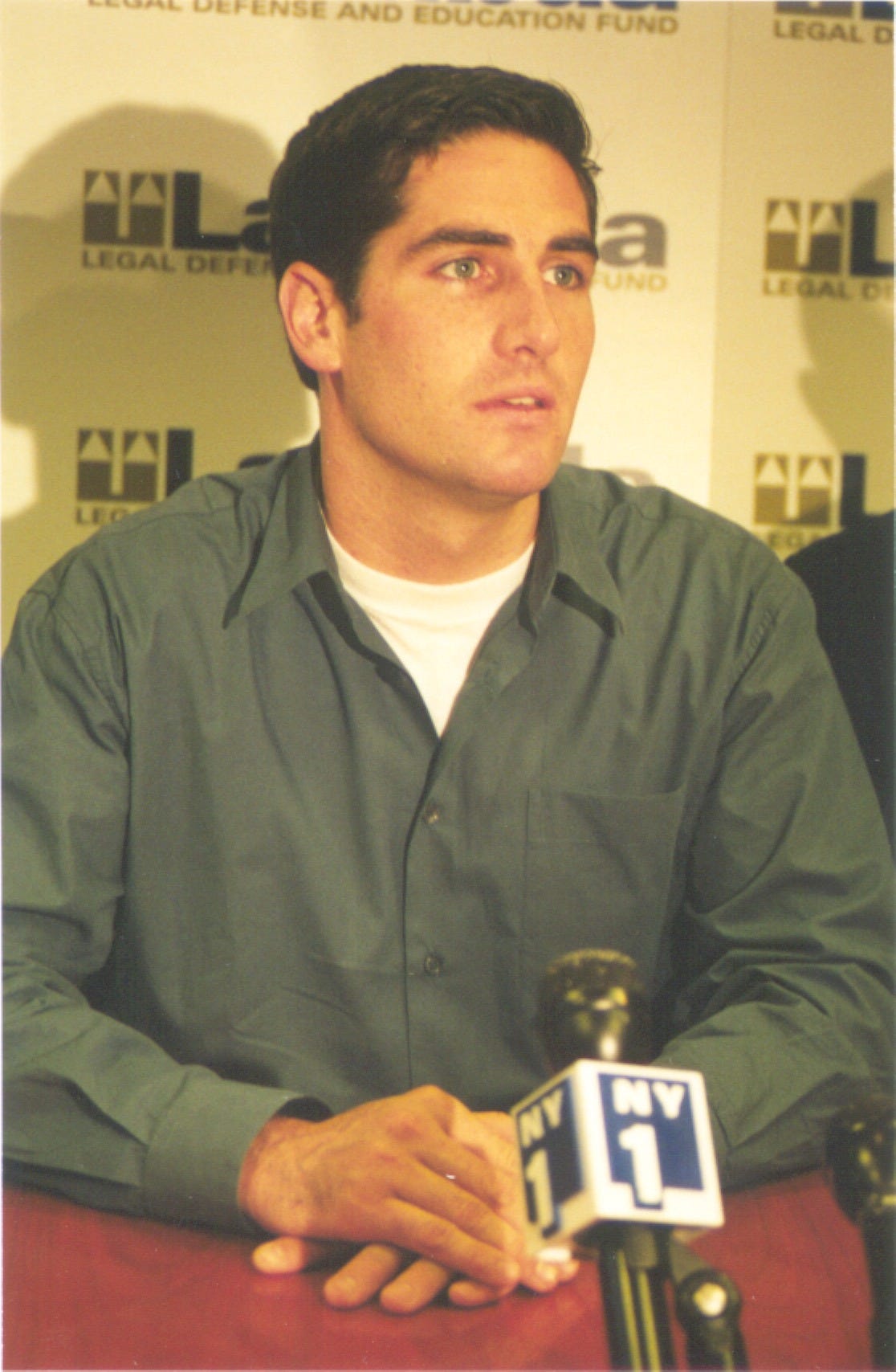
JD: You know, I don’t make those decisions for the cases we take, but I was talking to the executive director, I mean the CEO, Kevin Jennings, and he was like, “We could be defending the Scouts.” We could be. So this op-ed that I wrote for Time recently, this Supreme Court decision where I lost, which was horrible, I mentioned that before, basically gave the Scouts the right to say, “These are who our members should be. Our members are not going to be gay people, they’re gonna be boys.” At that time they said, “No girls.” So basically, Pete Hegseth and the U.S. government is undermining that decision where I lost. They’re undermining the Scouts ability to decide who their members should be, right? The Scouts are saying, “We want trans kids.”
SM: Yeah, I want to read something. No, no, no. Sorry, I’m interrupting you. But I want to read something just because it’s totally related. So you wrote in Time magazine recently in an op-ed that the Department of War is threatening to pull military support unless Scouting America changes its membership rules. And you say that is not a legal argument, it is an authoritarian overreach of a private organization. So why wouldn’t you sue?
JD: Yeah, well, we have to have a plaintiff coming forward. Again, I don’t make those decisions, but I think it’s ripe for an opportunity.
SM: Do you think somebody should sue?
JD: I think so, yeah. Because if the Supreme Court can overturn the decision where I lost, maybe that’s going to be a different way. But I find myself defending this horrible decision that expelled me from Scouting, defending that decision now. I’m defending the Scouts that kicked me out. Defending or supporting at least, so it’s very weird. It’s a very weird time in America with all the stuff going on and how everything is backwards.
SM: Because it’s interesting because essentially like what you write in that Time magazine article and what you’re saying is that like what Hegseth is doing completely contradicts what the Supreme Court ruled against you for, which makes it technically illegal.
JD: Yeah, but you know, you can’t have it both ways. You know, Donald Trump, Pete Hegseth, U.S. Government Administration, the White House, what do you want? Decide where you’re gonna play. I just need to know what the rules are because you can’t keep changing the rules and that’s what they’re doing. They’re trying to constantly change the rules to benefit themselves and their donors and their supporters and their base. Let’s just have one set of rules and have it be consistent. Because I could argue, defending that horrible decision where I lost. And that’s what I’m doing now, but I could also argue that they shouldn’t have kicked me out in the first place and let New Jersey’s gay rights law stand. But which is it? I could argue both, and I think I do pretty well. I think they’re the ones that are going to have no logical consistency to their argument.
SM: I think it’s also interesting. I think one thing you said too, is that not coming after gay white boys is interesting. And I think a lot of people say, “Oh, trans is one thing, you know, LGB is another thing.” But I just want to flag to our viewers, to our listeners, that Pete Hegseth also has a very anti-gay track record. And here’s just one example when he served as the publisher of Princeton’s conservative campus newspaper, the Princeton Tory, in an editor’s note titled “The Rant.” He outlined the publication’s anti-gay views, and he said, “The movement to legitimize the homosexual lifestyle and homosexual marriages is strong and must be vigorously opposed. Homosexuals themselves should not be demonized, however, their lifestyle deserves absolutely no special legal status.” So I just find it so interesting that all these folks are saying it’s just the transgender community we’re coming for, but it’s not, is it?1
JD: Yeah, I mean, I don’t suffer fools gladly. I mean trans people are the canary in the coal mine. You know, the same people that hate trans people, and that gets them really excited kicking them out of Scouting or trying to, are the same ones that don’t like me. So I see the parallels here, but you know for whatever reason it’s just not in fashion to be anti-gay, anti-gay male right now, right? You know we got Scott Bessent as the Treasury Secretary, Richard Grenell ran the Kennedy Center. There’s lots of horrible people that are gay men. So I don’t want to cover for them. But I also believe we’ve seen this in history, we’ve seen this in other authoritarian regimes where you’re safe for one minute and suddenly you’re not. So don’t get a false sense of confidence and comfort. The same people that hate them hate you too.
SM: We’ve talked so much about policy and specifics, but obviously at the end of the day, this comes down to the human toll this takes on kids on children, right? Um, when you think about like the little Joe Maldonados or the little James Dales even, what are your concerns about what these decisions could do in terms of their life, their comfortability, their mental health, their wellbeing?
JD: One of the reasons earlier this year or last year, we started to think again about Scouting. It wasn’t because suddenly they allowed gay men and gay kids in because I felt like society has already caught up with that for the most part. Not that we should be naive and rest in our laurels. We need to be vigilant about defending our rights. But I felt like they weren’t leading on that issue, right? Society forced them to allow gays in. I felt that particularly on the trans issue, they were leading. They were leading. And it didn’t take a lawsuit for them to allow Joe in, right? It happened almost instantaneously when the issue came up, they kind of got on the right side of history. So I felt like they had been leading on that. So I fear now that the messages Scouting are sending to trans kids is that “you’re welcome, but you’re not welcome,” or “your value is debatable.” And the messages are unclear. I think Scouting needs to come out there, which is not really what they’re doing right now, really strong and really loud, about where they stand on these issues and who they wanna be. Who does Scouting America wanna be? Do they wanna go back to the old days where they’re caving and they’re doing the wrong thing? Or do they wanna to be the organization they should have been all along and align themselves to their values and the values of fairness and equality and community acceptance and leadership. They need to be leaders on this issue. They need to lead and highlight the trans members in the organization and celebrate them, not kind of put them on the chopping block.
SM: If you could talk to Pete Hegseth, what would you say to him? What would you want to say to him if you had a chance to speak to him?
JD: I don’t get it. Like, really, seriously, how does a trans kid, you know, a 15-year-old trans kid in a Scout troop, where they’re all welcoming the kid, why is that rubbing you this way so much? I don’t understand what’s going on. These are just kids, right? This isn’t about military readiness or whatever BS they have for their other -isms and their other hatred of people. These are just kids trying to find a place where they belong. That place in the ‘80s, the Boy Scouts were that for me. And then they expelled me. But now they’re saying, “We welcome trans kids.” Trans kids are in Scouting. They’re getting along with the other kids. We’re not reading about these horror stories about trans problems and Scouting, it’s a non-issue. It’s a made-up story. Don’t we have better things to worry about? Isn’t that war in Iran much more important and valuable worth of your time than taking a war with a youth program that’s trying to build American citizens into the best they can be?
SM: James, I’m so grateful for your time. And this was a really fascinating conversation and an important conversation to have because I don’t think we’re talking about it enough, especially as there’s gonna be decisions made soon. So thank you so much for speaking with me and coming on the podcast today.
JD: Thank you so much for having me. It’s been a great talk.
If objective, nonpartisan, rigorous, LGBTQ-focused journalism is important to you, please consider making a tax-deductible donation in the U.S. through our 501(c)(3) fiscal sponsor, Resource Impact, by clicking this button:
If you’re in Canada and would like to donate, you can make a charitable tax-receipted donation here:

 |
|