

Surviving Conversion Therapy, Reclaiming Love: A Father-Son Journey [WATCH]
In this week’s “UNCLOSETED, with Spencer Macnaughton,” a dad and his Colorado son grapple with how the discredited practice nearly tore apart their relationship.


UNCLOSETED, with Spencer Macnaughton is a new podcast by Uncloseted Media, an investigative LGBTQ-focused nonprofit news publication. Follow and subscribe wherever you get your podcasts. YouTube // Spotify // Apple
This story contains mention of suicide and self-harm. If you or someone you know needs support, resources are available here.
On March 31, the Supreme Court (SCOTUS) voted 8-1 to overturn Colorado’s ban on conversion therapy. In their ruling, which was seen as a huge blow for LGBTQ rights, SCOTUS sided with lawyers from the Southern Poverty Law Center-designated anti-LGBTQ hate group Alliance Defending Freedom and in turn paved for 22 other states and D.C. to overturn bans.
More than half of the nearly 700,00 Americans who have experienced conversion therapy in the U.S. are minors. And the discredited practice is linked to depression, PTSD and suicidal thoughts.
Sami Tacher and their father, Greg Tacher, have experienced the devastating impact of conversion therapy firsthand. Greg, a former elder at the International Churches of Christ in Seattle, initially rejected Sami’s gay identity and supported their journey through years of a conversion therapy program that would result in unbearable loneliness, suicidal ideation and trauma that they still carry today.
Through that time, though, Greg slowly deconstructed his faith and has since left the church. Today, the father and son duo say they’ve come full circle and are “best friends.”
In this episode of “UNCLOSETED, with Spencer Macnaughton,” Sami and Greg share their story.
Watch the full podcast above or read the transcript below.
Spencer Macnaughton: Hi everyone, welcome back to Uncloseted with me, Spencer Macnaughton. Today, I’m here with Sami Tacher and their dad, Greg Tacher. Sami recently wrote an essay for Uncloseted Media about the devastating effects conversion therapy had on them growing up. Greg, who was an elder at their church, rejected Sami’s gay identity because he believed that so-called same-sex attraction was sinful. But there’s a silver lining. Greg has now left the church, and Sami and him are best friends. Greg and Sami, thanks so much for coming on and speaking with me and Uncloseted Media today.
GT: Thanks for having us.
SM: I actually wanted to start, Greg, with you. I wanted to learn a little bit more about your relationship with religion. You were an elder. Talk to me about what that means for somebody who doesn’t know and tell me a little bit about church life and the conception of homosexuality in that world.
GT: My love of spirituality found a home in religion. There were some good initial drivers putting me in that space: love, peace, getting the message out to other people, being on the side of God, those kinds of things. And I think over time, the organizational elements completely took over and crystallized. And so some of the spirituality that I sought after originally became very dogmatic and dualistic. It was very either—
SM: Extreme?
GT: Quite extreme. It’s very black and white. Homosexuality was clearly an either or, and it was a not. It was a bad thing. It was definitely that way. So I carried that with me.
SM: So obviously Christianity spans so many denominations and different belief systems, but you were an elder, I think in the International Churches of Christ.
GT: Yeah.
SM: Just for people who might not be religious at all, what was the expectation if you had a kid or a family member who was gay?
GT: ICOC, as it was called, is called, was definitely a splinter, a sliver of a broader arena of non-denominational Christianity. But there were certain things that they bit down on hard, that would classify it as definitely a sort of... Let me get this right…
Sami Tacher: Something that I’m hearing you call attention to, they wouldn’t say this but certainly some sin was considered worse or had heavier implications than others, and homosexuality was at this end of the spectrum of all sexual sins which had a very heavy impact.
GT: That’s a great point. Some of these categorical sins became just what Sami said. They became worse than others. And sexuality had this whole den over it, a shadow over it. Homosexuality was dangerous. It had another little piece to it. And so, to my knowledge, I didn’t know any other elders or even leaders who had homosexuality around them in their family or people they knew, so when it sort of arrived at our doorstep, the initial reaction [was] “Oh my God this must be really bad.”
SM: Because you see it as dangerous.
GT: That’s right, exactly right. It was actually dangerous, that’s right. The thing that came along with homosexuality is, now what do we do with you? If you’re in the Church, especially if you’re a leader in the Church, we’re not just gonna kick you out. What do we do with this category of people?
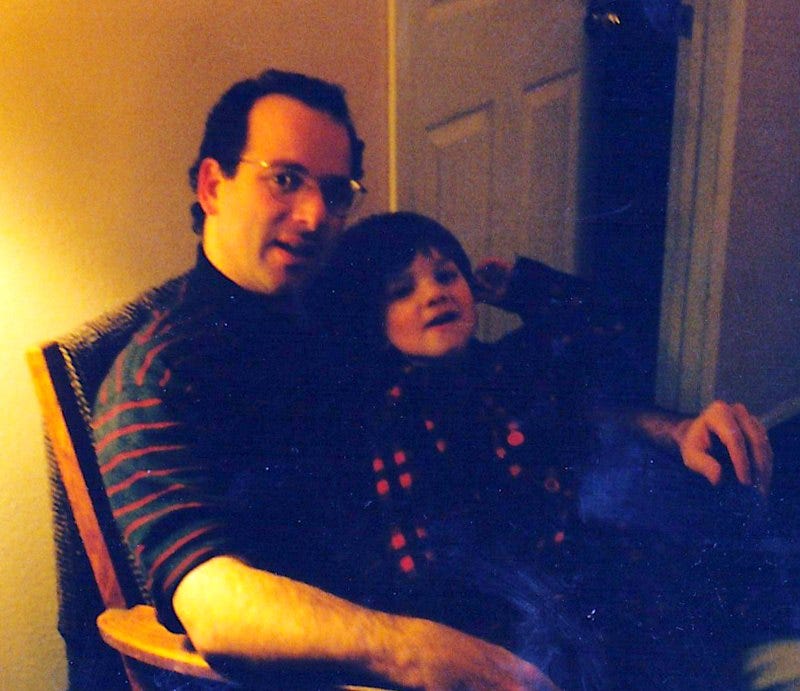
SM: And Sami, so you’re growing up in this church, before you and your dad had any conversation about you thinking you might be gay, like what were the feelings that you internalized as a kid?
ST: Yeah, I mean, especially when I was young, homosexuality was a hidden thing. It wasn’t discussed. The only times that it would exist for me was the once every three years that there was a sermon where it was brought up in a list of sins. So even in my first feelings of homosexuality, I think I just characterized it as like, “Well, I’m being led to sin, I am being tempted. That’s normal, it’s just like when I wanna do any other sin.” I didn’t necessarily metabolize that information as like, this is a part of who I am. But that came in time because I recognized that I wasn’t attracted to women. It was a whole dance. But yeah, I do remember when I knew I was gay, I remember saying those words to myself.
SM: How old were you?
ST: Probably 11 or 12. I mean it was basically a death sentence, it was like, there’s just no way out of this one. I have no choice but to just do whatever I can to keep my family afloat because like they’re the ones that have a chance. And our family was integrated so heavily because of the eldership. Before he became an elder, I was actually pulled aside by one of the ministers and explained that one of the expectations of an elder is that all of your family is faithful to our movement specifically. And that was something that came up. So I knew going into everything that if I were to “become gay,” if that’s where I go with this, I live this out, I incorporate this into my life, then I’m making a difference for the sake of my father and for my family and our status. That was so important, I just didn’t wanna break that.
SM: That was all really interesting, but you say you realize you were gay, you thought it was a death sentence. Really?
ST: Well, I think, especially at that point in time, my whole life was built up towards the idea of heaven. And we said often enough that there’s no guarantee life on earth will be good, happy, easy, [but] life in heaven will be worth it. That’s the whole point. But yeah, of course it’s going to be painful and it’s going to suck. I think I just realized that my life on Earth is going to be unlivable, and there’s probably not a lot of hope for me getting into heaven anyways. So it’s probably just pain for me for the rest of my existence.
GT: You know, Spencer, part of the challenge, and it’s hard to describe the mindset, but it’s quite thick. And I think this exists in conservative religions, especially Christianity. But there is a believed bifurcation. It’s an either or; you’re going one way or the other. And that’s all there is. There’s no other space. So what Sami is explaining, I think, is this idea that if this is true for me, there is nowhere to go. So the death sentence isn’t dying, the death sentence is there’s no hope. There’s zero hope. And there’s no hope for my family having a good life in this space. There’s no hope for me. I’m going to interrupt my dad’s potential leadership or whatever that might mean. That’s disruptive. But then even in the end, I’ll be separated from God for all eternity. That is a shared belief that resonates throughout the weekly meetings and all of this that you’ve got to be in this certain path otherwise forget about it, it’s not going to go well for you, and hopefully God will forgive you. So this is happening in this environment and then Sam is like, “Oh crap, here I am.”
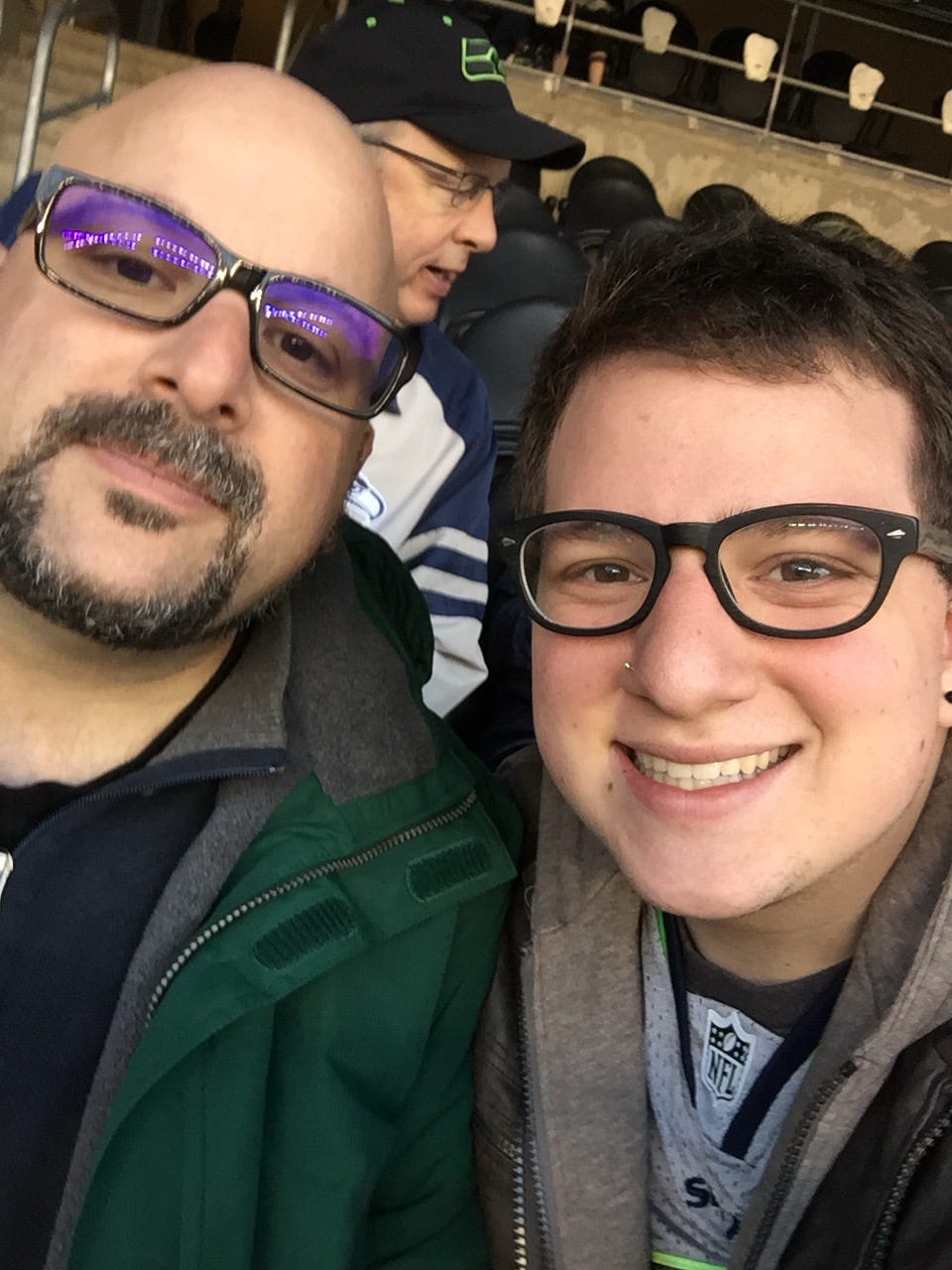
SM: So Greg, you’re an elder at the Church. You have high status at the Church. You see homosexuality as dangerous. Sami, you’re worried it’s a death sentence. At 12, I think, Greg, you find gay porn on Sami’s computer. Take me back to that moment.
GT: I think when this showed up, I think my initial response, as best I can remember it is, “How do we fix it?” That’s really where I went, how do we handle this, manage this? And I carried with me the belief that if you don’t get a handle on this, you might not make it to the pearly gates.
SM: Was it anger, fear, worry? Like, what were the exact emotions you felt towards Sami in that moment?
GT: I think it was fear for sure, and shame, and some of that was brought into my own life about my own views about homosexuality, and quite honestly, just ignorance and judgment, which I just carried with me that surfaced at this time commingled with this very conservative, small-minded religious worldview.
SM: Take me to the moment where you confront Sami, maybe Greg, tell me about how you confronted Sami and then Sami, tell me about how you remember receiving that confrontation.
GT: I think likely I was motivated, like, we got to get after this. So we’re going to have this conversation. But it definitely was delivered, no doubt, with this massive amount of authority.
ST: Everything in my body, um, just fully tensed and told me that I have to listen. But yeah, that was the moment that everything was like, I don’t even have a choice. You know, this idea of like, I could hide this and then maybe sneak away. There is no sneaking away. Like I’m being watched, so I have to make sure.
SM: And what do you remember your dad telling you and then how did you respond?
ST: Gosh, I get it in flashes. I remember hearing that God wouldn’t love me if I lived that lifestyle. That I would get killed, someone would hunt me down, or I’d kill myself, so just don’t do it.
SM: And Greg, how does it make you feel to hear Sami recount that?
GT: It’s brutal, you know? At the same time, there’s a beauty in being invited to share in suffering, right? Because I mean, I was there. So that there’s a beauty in that too, right. It’s like I get another opportunity real time, in this moment, to walk with my son through life. So yeah, it’s brutal, it’s so painful. I feel quite honestly grateful to be invited to this space because it’s an opportunity to expand the heart.
SM: It makes you emotional.
GT: Oh, yeah. Yeah! Yeah, I mean, it’s, you know, I feel sad for unnecessary pain that I caused my son. Yeah, hell yeah. That goes against something that’s so central not only to just being human, but to a father-son connection for sure.
SM: And Greg, you sought counsel from the Church after you found that out, is that correct?
GT: Oh yeah, I mean there was protocol for this kind of stuff. But I had a few people I could fight in where I felt like it wouldn’t be too disruptive.
SM: And my guess is that when you seek counsel from the Church, none of the folks you spoke to were saying, affirm Sami, accept him as a gay person, anything like that.
GT: That wasn’t coming up. No, I think initially it was like, “Let’s not tell anybody and let’s figure out a plan,” and essentially it was control measures, right? Let’s, without saying it that way, but let’s keep this under wraps and we’ll deal with it as we go.
SM: It’s so crazy, because the way you guys are describing the strategy, it’s like you’re covering up a murder, but he’s just… Sami’s just gay.
[Sam and Greg laugh]
GT: Well, and murder Spencer is interesting because Sami used the language death sentence. This is where we’re connecting. It is in that space where we know nobody’s going to come out of this and go, “Oh, this is okay. This is great. Let’s work with it.” It’s like we’re going to have this long slow death walk to inevitability, whatever. Yeah.
SM: Well, and Sami, I know obviously you were on board with a strategy to suppress a lot of this and we don’t need the whole story because we have an amazing essay that you should read by Sami at unclosetedmedia.com, but you did seek out conversion therapy. So give us the spark notes of that. How did you get there? How did you find it and what was it like?
ST: Yeah. In my mind, I thought everyone was talking, but I think I was probably obviously gay to anybody who knows what gay is. So there was a counselor at camp. We would go to camps, that was a part of the church culture. There’s a counselor from another church who sought out a relationship with me who is queer and was able to introduce me to Strength in Weakness, which is an organization run by Guy Hammond, but he had this online ministry and it was from within the ICOC, specifically to help people battle their unwanted same-sex attractions. And it was like all of this confusion that had been built up like “what do we do, we need a plan” and all of a sudden we were being handed a script of a plan by somebody who is trusted by certain names in the Church that were a really big deal. And the fact that it was a community? I was... At this point, I had never met a queer person that I knew of. So this community of people who are not only queer but trying to live the lifestyle that I’m trying to live because I’m trapped in this system, it gave me the hope that I lost. This idea that I am headed for a death sentence. It’s like, this is my only way out. So I found it and that kinda changed everything. When we were talking about “what’s the strategy going to be,” we got a strategy guide which completely changed the conversation.
SM: What did that strategy look like? Give us specifics on what you were supposed to do to manage same-sex attraction.
ST: Yeah, I mean, essentially this idea of temptation. You are going to be tempted. That is inevitable. So you have to make as few temptations appear in your life as possible. Control your environment, control who you’re with, control who you’re around. So for me, that meant make sure that you never look at a guy. Don’t look at them. And if you start to look at them, you need to never see them again. Oh, you have a friend, you’re starting to get close, you’re starting to get attached, that’s dangerous. Cut it off, push them out of your lives. I remember Capitol Hill in Seattle is in the queer neighborhood. I remember being there as a teenager and walking around and seeing pride flags and seeing flyers for queer events and being with somebody and telling them I need to not come to this neighborhood because it’s going to try and lead me towards a life that is happy or tell me that there’s a life that’s happy out there as a queer person. So I need to stay away from this community.
SM: You were seen kind of as the star student, I believe, right? Guy really thought you were the poster person and you started almost becoming a conversion therapy influencer a little bit. Like you’d upload YouTube videos and try and tell other people to do the same thing. Tell us a little about that.
ST: Guy Hammond really appreciated me. I kept trying to do more for the ministry. That happened around the same time where I would start taking calls for people. I was answering a lot of questions for people, and then yeah, I started making videos about my experience and what was working for me, and I remember the first time that I met Guy Hammond, he made a big deal out of the fact that I’d never kissed a boy. That was really important, that I’d never... Fallen into temptation.
SM: So you’re taking calls, you’re telling people how to do it, that you can do it. You’re kind of becoming the poster boy in certain ways of this organization. But inside, you are not feeling good. Take me, if you’re comfortable, inside how you were mentally because I know it was not good.
ST: Yeah, it was bad. I’d say it was really, really bad. I just felt so alone in all of it. And there were so many days where I just didn’t see how this was feasible. I think especially being a teenager and going through all of the hormones of being a teenager, feeling like my sexuality completely dominated everything in my body. I have no control over it. And this is going to be for the rest of my life because I’m counseling men who are in their 40s, 50s, people who are married for over 10 years. All I’m hearing is that this is impossible, and it hurts, and people feel hopeless and that’s how I felt. And it’s this idea that maybe I can control it now, but how am I supposed to leave my family home where there’s so much control and constraint and I have all of these supports and keep it up? I just didn’t see how that was possible.
SM: And are you comfortable, there was a part where you wrote about one of the darkest moments and—
ST: Yeah, yeah.
SM: Are you comfortable if I read an excerpt from your essay?
ST: Go ahead.
SM: OK, so you wrote that: “The hardest thing was the loneliness. Inside the church I was the person with the secret defect. Outside of it I was unbearably Christian. I didn’t belong anywhere. I spent hours on the Strength in Weakness chat room waiting for just one friend who understood me. Nobody came. By the time I was 17, I consistently thought about killing myself. More than once I stood on top of a parking garage looking down onto the street wishing for a breeze to take me.” I mean, it’s unbearable even to read those words, but we know there’s so many little Sami’s out there right now experiencing that. Why did you decide to be so vulnerable and write that for the world to see? It takes a lot of courage to do that. A lot of people would not.
ST: Yeah, the reason is because that’s what conversion therapy does to people. It happens very consistently. There are so many people who face suicidal ideation and kill themselves. It’s horrible. It’s absolutely horrible. It happened to a very close friend of mine from Strength in Weakness. Their name was Brandon. They were transgender and they were forced to de-transition and they had just left the church, and every day that I’m fighting this fight that I am fighting within my body and that I’m fighting this fight for my community, I’m just trying to think of what would’ve kept Brandon here because I really wish that they were here with me. And that’s every little Sami and every little Brandon that’s out there. Every single one of them deserves to have a long, happy life and I want that to exist as a possibility for all of them.
SM: A hundred percent, and you know, we’re in a time, and I say this stat a lot, but I’ll say it until it changes, in a time when roughly 40% of LGBTQ kids seriously considered suicide in the last year in the United States. That stat is inexcusably high. Greg, I want to see when you hear or read that excerpt from Sami and understand that that was part of their experience in conversion therapy, it must be shattering to hear that as their dad.
GT: Yeah, I think what shows up for me, certainly Sami’s suffering, for sure. And then there’s a part of me that goes, yeah, that’s kind of reasonable for what was handed to Sami. And at the same time, the other thing that shows up for me is how distant you can be as a human walking alongside another human in the same community, that’s church or whatever, and have no idea this stuff is going on and feeling like you’re toeing the line and doing the right thing, and the human element has been eviscerated. And before you know it, in situations like this, the other person just exits life. And you’re left going, “What the hell was that? What is going on?” Because you can be so disconnected by these kinds of communities. You know, this kind of groupthink, this kind of small-mindedness.
SM: Retrospectively, do you feel like you were brainwashed almost? Is that a word you would associate with it?
GT: I think it’s a great word, if you think about the idea of your brain being washed. We did this all the time with consistent messaging, and the messaging would show up sometimes in your face, but a lot of times it was very subtle and kind of towed the line and all the stuff. But we did enough washing to try and keep ourselves in this mindset that we were doing the right thing and on the right path. And we weren’t washing our brains with things that actually are still in, quote-unquote, the scriptures: love, joy, peace, patience, kindness, fair exchange of heart. And I think a lot of people suffer trying to, quote-unquote, do the right things, scripted by others, and lose themselves in the process, and unfortunately lose loved ones in the process as well, quite literally. Yeah.
SM: We’ve talked a lot about sadness, a lot about the struggle that you guys have gone through. But the beautiful thing, and one of the reasons I’m so happy about your guys’ story, is that you describe yourself as best friends today. So I want to know, Greg, how did you wind up getting out of the Church?
GT: I think for anybody who might be paying attention to this, or read Sami’s essay, to check themselves. I think the Church had an incredible way of providing you a story and continued messaging where the only check-in was like, are you doing these certain things or not these things and then you’re good. And you can lose touch, literally, with yourself. When we find ourselves in that space, it’s hard to get out. And the things that might help are the things that would severely interrupt that story. And I think the way I would talk about me getting out of the Church would be there were things that came to me that severely interrupted that story, and so enough of that reached the surface to my ears where it was just untenable and I couldn’t support our overall structure anymore. It was oppressive, it was controlling, it was unfair and it was unsupportive. And so, for all the things that happened to help me get to the place where I could actually see that, those were the things that helped me leave the Church. And some of them with my own kids, it was just time to go.
SM: What’s your advice, Greg, to the parents or family members who have LGBTQ loved ones and are maybe questioning? They’re maybe questioning right now listening to this and thinking, “I don’t know if I can go there,” because I think there’s a lot of people in that space who don’t go further with those thoughts.
GT: Yeah, that’s a great question. I think this is a pretty tricky and complex place, but I think one thing that tends to show up for most people in that situation is fear and shame. And I think these things tend to control, I’ll use that word, and guide much of the parents in this space about how they do this. And so what I would say is the first thing is just step away, give yourself some time to actually really consider your world view. How much respect are you giving your experience and the experience you have relationally with your offspring compared to this construct of belief that is a slice of somebody else’s imagination. Consider what your kids are going through. If they were to be going through choices around suicide regularly and they carried that within them wherever they went, take that on and sit with that and see what role you play in that and what role you want to play in that because they are your offspring. So my advice is open up, sit with experience, invite in, in a non-judgmental or reactive way, input. Especially from your kids. They’ll teach you the things that God is waiting for you to learn. And that’s happening today, even in this situation with Sami. And I would say that’s why Sami is one of my best friends on the planet, because of what I can learn from Sami. That only happens on an intimate level when your hearts are connected, but your hearts don’t get connected if there’s judgment in there. So, get a pickaxe and a shovel, get the judgment out, find a place to love, meet there, and I think the world opens up.
SM: So Sami, you go from Strength in Weakness, advocating for people to get into conversion therapy, but now you’re out, proud and happy. How do we get from there to here? And what did your dad leaving the Church mean in terms of your ability to be comfortable in your own skin?
ST: Yeah, I mean, I feel like my dad gave me a hall pass to be gay at the end. I feel like that was kind of the exit, was that, you know, he was stepping out, we were talking about it, it was like, it really doesn’t seem like this is biblical as much as it is cultural, and that’s obviously something we’re rejecting at this time, is the culture that we’re a part of. And with all of the pain that I was still feeling, because the effects of conversion therapy are long-lasting and very heavy. It’s very hard to let go of that to this day. There are days that I do not feel proud. But I accept who Sami is. And being able to integrate that way over time, it’s very, very hard work. But you know, I think love is something that comes with intuition. Our hearts are meant to be big and they’re meant to find love and to find community and the more that you follow that, the easier it gets.
SM: And now that you guys are both on the other side, when you on March 31st turned on the news and saw that the Supreme Court had overturned Colorado’s ban on conversion therapy and it was an 8-1 ruling, what were your thoughts?
ST: You know, I got pretty sick, pretty immediately. It was real scary to recognize that while people are fighting, that the battle is that uphill—8-1 uphill. I think one of the specifics of this that’s difficult is they’re trying to say free speech, [that] conversion therapy can fall in line with free speech. If you’re faced with that kind of authority against your sexuality, there is going to be major harm caused. And they’re trying to say that that should be allowed under free speech, and in licensed therapy, which I find appalling, horrifying. I feel such a depth of despair for all the kids who are going to experience it.
SM: Sami, I wanna read a quote about the decision you wrote, and Greg, have you react to it if that’s OK?
GT: Okay, yeah.
SM: So Sami writes: “Now I am working hard to undo the trauma I endured. I am in intensive therapy. I still live with chronic anxiety and chronic pain and I’m still figuring out how to be myself. What makes the Supreme Court decision so painful is that I know exactly what kind of world it protects and what kind pain it inflicts on LGBTQ kids. People call it free speech, but it is abuse. Words taught me to hate myself. Words made me suicidal. So when I learned that the Supreme Court ruled that this kind of messaging should be protected, that adults should be free to tell children that queerness is sickness, dangerous, shameful or sinful, I do not hear an abstract constitutional principle. I hear the beginning of a tragedy for kids like me.”
GT: It’s just such a great discussion and comment for a human to protect this kind of behavior. From a Supreme Court place, like that place of authority. To be able to do that, I can’t imagine how disconnected you must be or what else might be driving you to protect something for yourself or something else you’re afraid of or fearful of. This is so far away from what is natural in the human exchange. It’s far away from love, and I agree with Sami on this point where to hide that under the guise of free speech is just kind of a chickenshit move, quite frankly. And the net effect of that is more and more and heaped on abuse, protected abuse, that’s going to continue to disenfranchise a whole, and this is the worst way to say it, but I think this is a way that they might think about it, category of humans. So, in my mind, it’s an abject failure of... responsibility. It’s a real sad moment for humanity.
SM: Well said, well said. I want to finish with you guys on a positive note by asking, you say you’re best friends, tell me more about that. What is your relationship like today? What do you guys mean to each other?
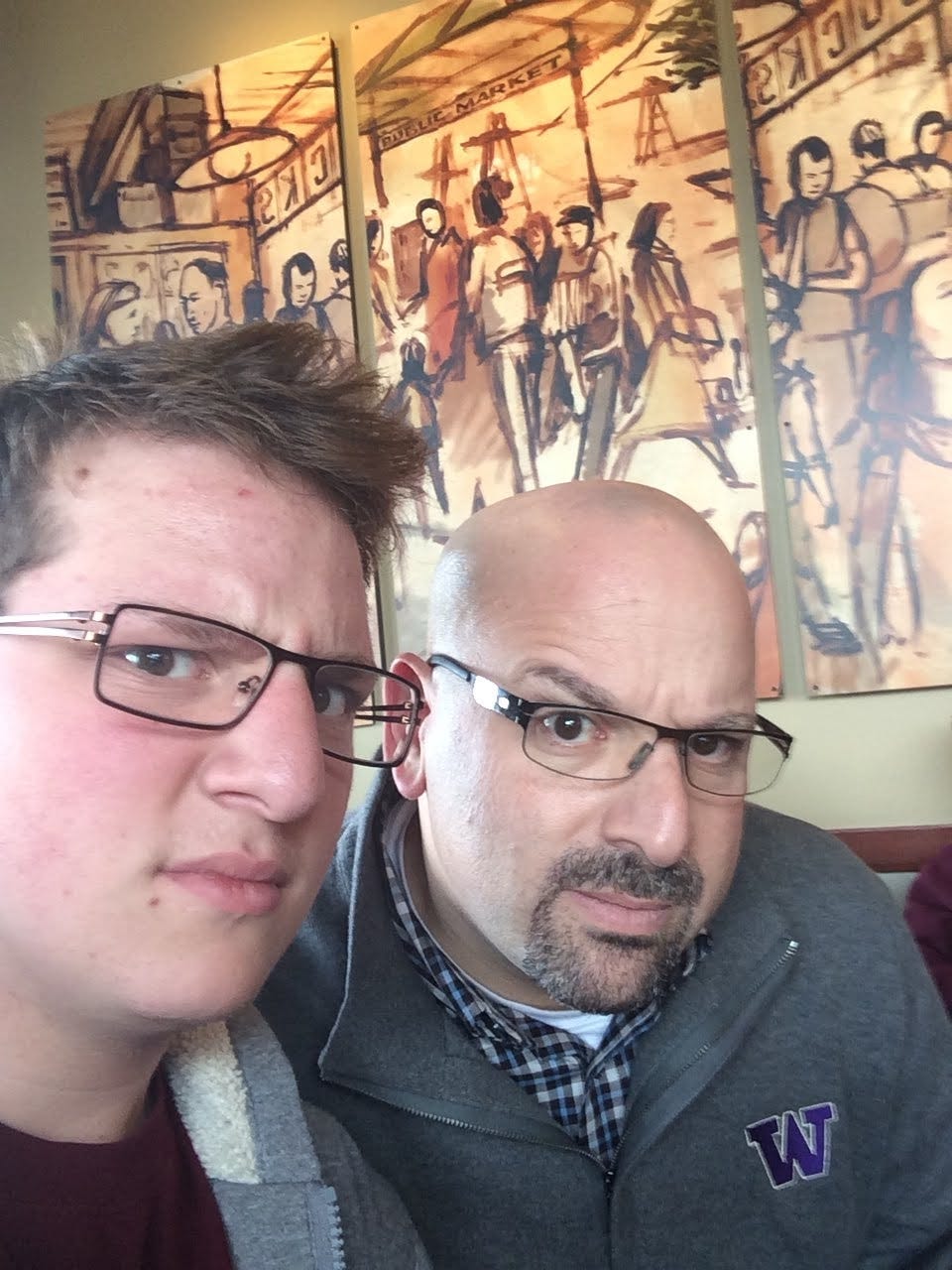
ST: My immediate response is, well, he’s my best friend, because that just holds such significance for me right there. He’s the person that I call when I have something exciting to share with somebody. It’s like, oh, I want to tell someone, because no one’s more excited to hear about what’s going on in my life. We talk about what we’re learning all the time. That’s the coolest part. We get breakfast all the time. We’ve always gotten breakfast since I was a little kid. We’d wake up before anybody else in the house, and we’d go out and get breakfast. And we still do that. Whenever I’m in town, we have to find the best breakfast and get a really, really good cup of coffee. It’s so cool to have somebody to bounce thoughts with and to have somebody who feels like they respect my thoughts and they want to hear what I have to say and they’re willing to let my thoughts be influential in their life and I get to do the same.
SM: It’s beautiful because I see you lighting up talking about your love for your dad in your voice and your facial expressions which is a beautiful thing to see. But a lot of people might not have been able to find that forgiveness. How did you...? Was it easy? Was it hard?
ST: Well, I think some important context, all of the pain that was caused came from a place of love. And I don’t think that that’s necessarily always the case. I think my dad really wanted to love me. And I think that was apparent and I could see it. But I would say my father’s humility is what really stood out. He’s willing to take a humble posture and say, “It’s very possible that I caused some of the most immense pain in your life.” I think a lot of people would never own up to the pain they’ve caused, especially for their child. Um, yeah, and I’m so grateful for his humility.
SM: And Greg, what does Sami’s relationship, best-friendship mean for you today? And what have you learned about yourself through all this?
GT: You know, I think when you put somebody in a best friend category, there has to be a couple of things that show up. One is, and this gets thrown out a lot, safe space today. It’s “I can just say it,” I don’t have to strategize or do any of that. It is safe. Sami is safe, and I’m safe for Sami. So when you can enter that space, you can experience somebody on a more intimate level than you otherwise would. And you can get to know them on so many different levels, and you can get to know so many different things about them.
SM: It’s real.
GT: That’s right, and so Sami and I have that. Another thing that I think needs to be not present in that, is judgment. You have to be able to ferret out the judgment piece. There’s certain things that come along with parenting that are very challenging because we feel like if we’re judging, we’re protecting. And so you gotta get adult to adult with the other human and take that off the table.
SM: That’s beautiful, too. You guys are so cute. I love, I love. And Greg, though, like I said, it’s been a total journey for you, you know?
GT: Oh, I think, you know, the ultimate lesson from Sami is, it’s okay to be human. I no longer need to perform as a good Christian or a good dad to hold all things together. Whatever these things might be, I can be supremely human. And I think when we’re in that space, the world opens up again.
SM: I love that, and I think that’s a beautiful place to end. Greg and Sami Tacher, your story is remarkable. Thank you so much for coming on and speaking with me and Uncloseted today.
ST: Yeah, thanks for having us.
GT: Thanks for having us.
SM: Fabulous, and we’re gonna put in the show notes for some resources for anyone who is struggling out there with mental health. And for those who want to follow and subscribe, you can find Uncloseted with me, Spencer Macnaughton, wherever you get your podcasts. Thanks again, guys.
If objective, nonpartisan, rigorous, LGBTQ-focused journalism is important to you, please consider making a tax-deductible donation through our fiscal sponsor, Resource Impact, by clicking this button:

 |
|