

‘150 Homes in 10 Years’: How the Foster Care System Fails Trans Kids
Transgender youth in foster care face abuse, instability and new federal policies that are making it even harder for them to feel safe.

Editor’s note: This article includes mention of suicide and self-harm. If you are having thoughts of suicide or are concerned that someone you know may be, resources are available here.
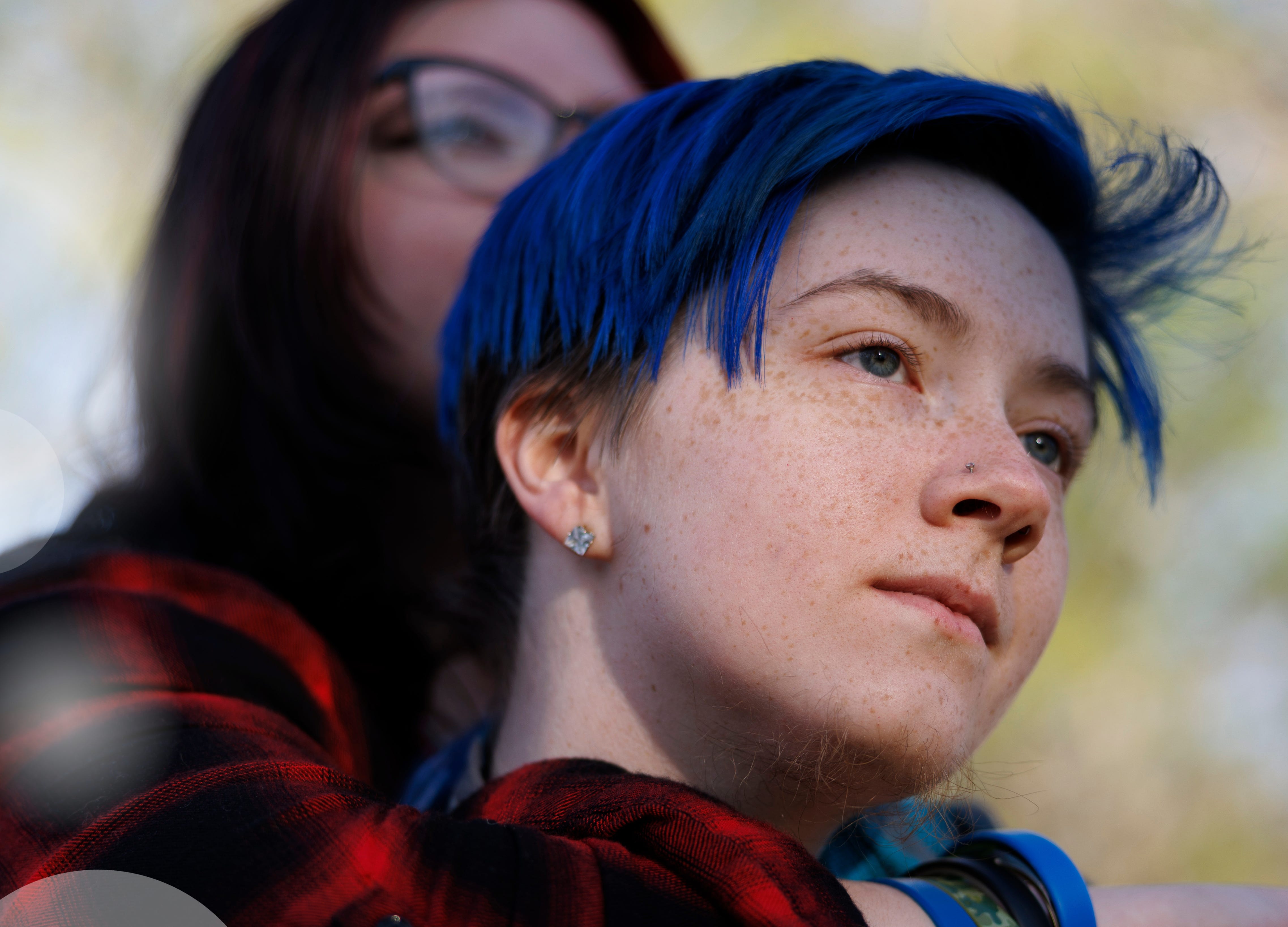
At 8 years old in rural Kansas, Hayden Dawson remembers being forced to eat outside with the dogs.
Other times, they weren’t fed at all.
“I would chew sunflowers outside because I was so hungry until my face would become splotchy with a rash,” Hayden, now 20, told Uncloseted Media.
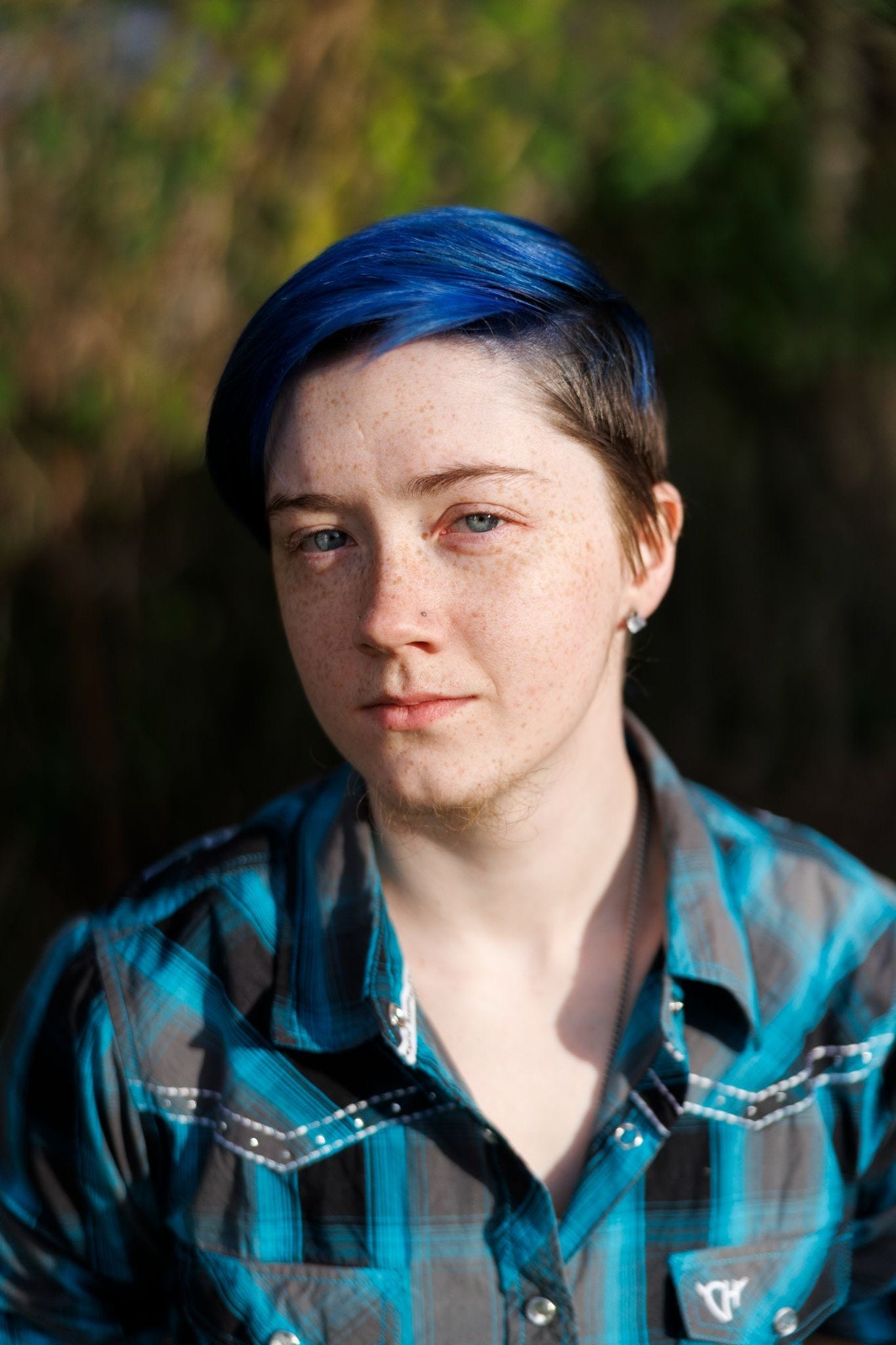
Hayden, who is nonbinary and gender fluid, says whenever they wanted to wear boy clothes, play with boy toys or express themself in a gender nonconforming way, their foster parents were “highly offended” and worried that Hayden would be a “bad influence on the other kids.”
They lived in the turberlance for eight months until their caseworker changed their placement after noticing the severity of Hayden’s weight loss and the rash spreading across their face.
But the next home was not safe either. Or the one after that.
“You have to pick and choose,” Hayden says. “Do I wanna be happy in the identity that I am and the body that I want to have, or do I want to survive?”
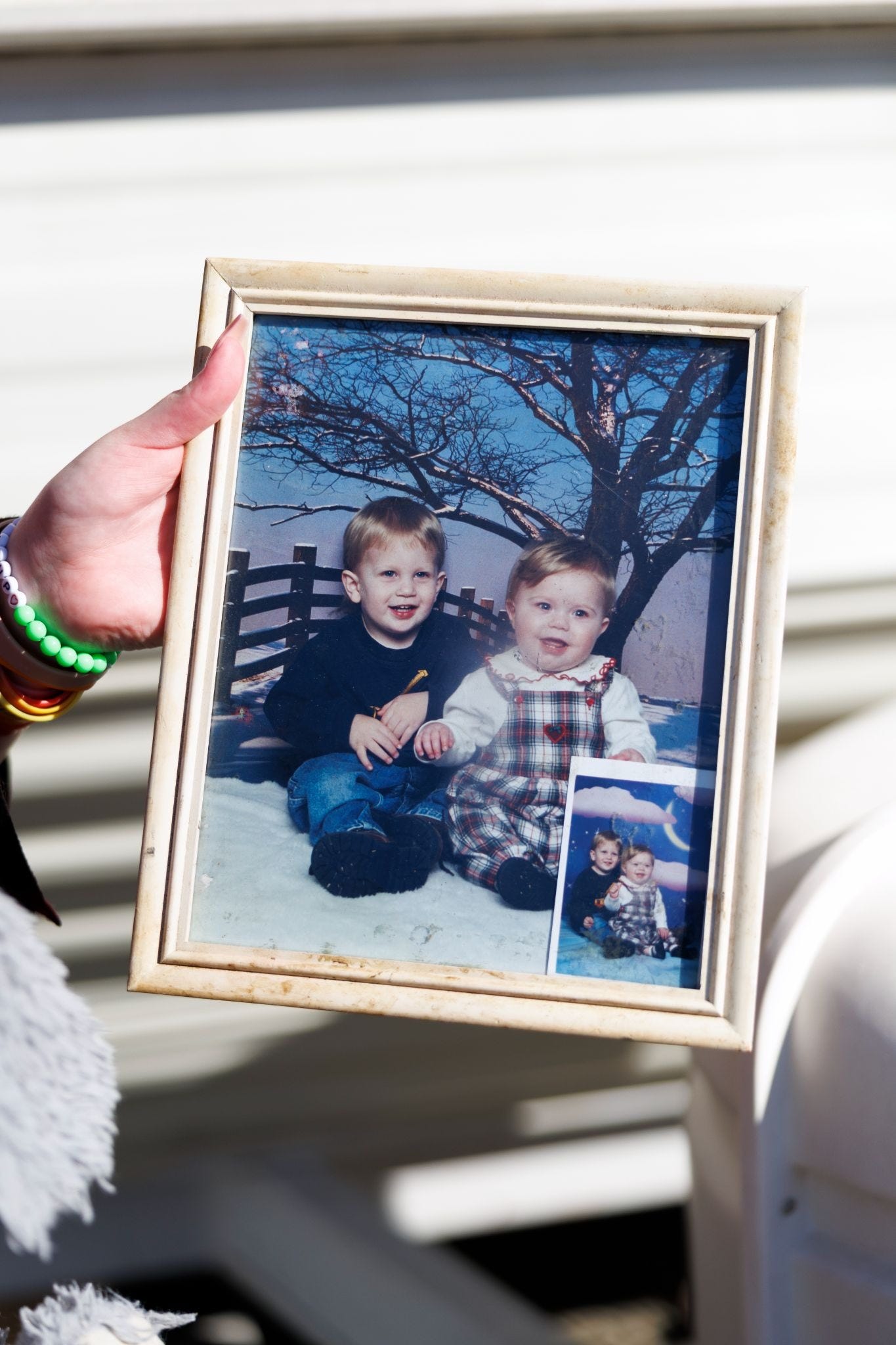
From age 8 to 18, Hayden says they were placed in over 150 foster homes, which was confirmed by two other sources close to them. They say roughly 80% of the homes were “non-accepting”: their foster parents refused to use their chosen name, called them a girl, told them God doesn’t love them and they’re going to hell, and physically beat them with the Bible as they chanted, “Be gone, Satan.”
By the time Hayden was a teenager, they became suicidal, cycling through mental health facilities and hospitals.
“I felt like no one was looking out for me. I was a very angry kid because no one understood me,” says Hayden. “I felt like I had no reason anymore.”
Advocates and former foster youth describe Hayden’s experience as part of a broader pattern.
A 2021 Trevor Project brief found that LGBTQ youth who are in foster care are three times more likely to attempt suicide than LGBTQ youth who are not. And 45% of fostered trans and nonbinary youth have attempted suicide.
This is particularly alarming because LGBTQ kids make up a third of all children in America’s foster system, and trans youth enter the system at five times the rate of the general population.
In 2026, there are few guardrails that protect transgender foster youth from abuse. Even though federal law requires safe placements, it’s unclear what that means for trans youth as protections vary across the U.S. While some states have explicit protections that prohibit discrimination based on a child’s LGBTQ identity, lawmakers in at least 11 states this year have introduced bills that would allow foster parents to refuse to affirm a queer child.
“As a kid, you’re basically rolling the dice on who you get,” Currey Cook, director of the Youth in Out-of-Home Care Project at Lambda Legal, told Uncloseted Media. “It’s frustrating and exhausting that, despite clear federal legal obligations, … this administration is erasing information and protections that are critical to a large share of the young people in the system. There is no justification for that.”
A Patchwork of Rules
According to Lambda Legal, there are 16 states without any explicit child-welfare nondiscrimination protections for gender and sexuality. Additionally, only one of these states, along with 15 others, has specific guidance for child-welfare staff on how to work with LGBTQ youth, such as information about asking how they identify, how to respect their names and pronouns, and how to consider their needs when making placements. Only 11 states require specific training for caseworkers for LGBTQ youth, and 16 states do not list gender identity as a protected class.
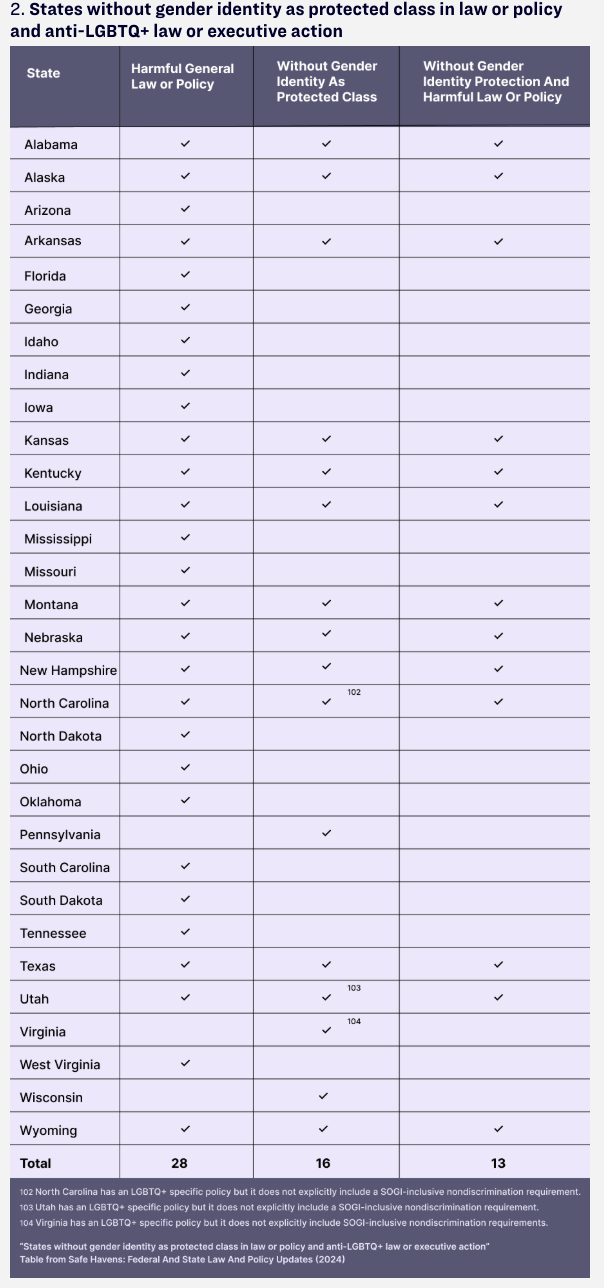
“It’s a complete patchwork,” says Cook. “You can have a caseworker doing their best to be supportive for an LGBTQ kid and right down the street, another caseworker having their own personal opinion for whatever reason that may be saying, ‘We don’t have to do that.’”
While the 14th Amendment guarantees that youth in state custody be treated equally and kept safe from harm, these laws aren’t always followed.
“The constitution isn’t top of mind for a caseworker,” Cook says. “They’re dealing with what’s in front of them and what their agency policy is.”
In 2024, the Biden Administration’s Department of Health and Human Services (HHS) adopted the federal designated placement rule, which would have required state and tribal agencies to make affirming placements available to children in foster care who requested them. But a federal court vacated the rule last year. And last month, Trump’s HHS proposed rescinding it altogether.
“[The] rule theoretically protected children from going into a situation where they would be rejected,” says Mary Kelly Persyn, founder and attorney at Persyn Law & Policy, who focuses on child and youth advocacy. “Putting a child in an LGBTQ-rejecting household is dangerous. It’s not a philosophical disagreement. It’s actually dangerous to that child—physically, emotionally, psychologically and developmentally.”
After the rule was vacated, advocates say agencies have grown increasingly uncertain about what protections, if any, they are expected to provide.
Threats and Rollbacks
Because HHS acts as the primary source of funding for state foster care agencies, it has significant control over them, according to Cook. “[The Trump] administration, out of the blue, has sent letters to states that say foster parents are to be affirming in their care saying, ‘We are investigating you,’” says Cook. “We haven’t seen this before.”
The letters, obtained by The Imprint, instructed agencies to “review and, where necessary, amend” policies that require foster parents to affirm the gender identity of foster youth.
In addition to threats at the federal level, a spate of bills that target affirming families is swirling through state legislatures. In New Hampshire, a proposed bill says that refusing to affirm a child’s gender identity cannot legally count as abuse, explicitly stating that a parent “is not guilty of endangering the welfare of a child … for raising a child consistent with the child’s biological sex.” In South Carolina and Georgia, versions of these measures seek to block the state from intervening in cases where parents deny gender-affirming care, including restricting how abuse, neglect and “best interest of the child” standards can be applied. In North Carolina, a similar bill became law last year.
Cook says these bills follow a “coordinated legal strategy from conservative advocacy groups,” including the Becket Fund for Religious Liberty and Southern Poverty Law Center-designated anti-LGBTQ hate group Alliance Defending Freedom (ADF). ADF—which aided in overturning Colorado’s ban on conversion therapy in March—has challenged states that require foster parents to provide affirming homes.
Elliott Hinkle, who works with child-welfare agencies on LGBTQ issues, says the fear surrounding state laws and Trump’s executive orders has made some workers hesitant to address gender identity at all.
“There’s this confusion over what’s legal that’s actually making people scared to do their jobs,” Hinkle told Uncloseted Media. “People are so afraid to talk about LGBTQ youth that care is being delayed, kids aren’t being placed or [are] placed in unaccepting homes, or they are being ignored, and that’s harmful. … LGBTQ youth make up about a third of the system—this is not a small issue.”
Unsafe Placements
For kids in care, the lack of standards creates a fear over where they will end up.
“[Caseworkers] should do more research before placing a child in a home,” says Grayson Dawson, Hayden’s partner, who also spent time in foster care.
“Being trans makes you more vulnerable, and a lot of the time in foster homes, you learn to hide who you are just to keep a roof over your head and food in your stomach.”
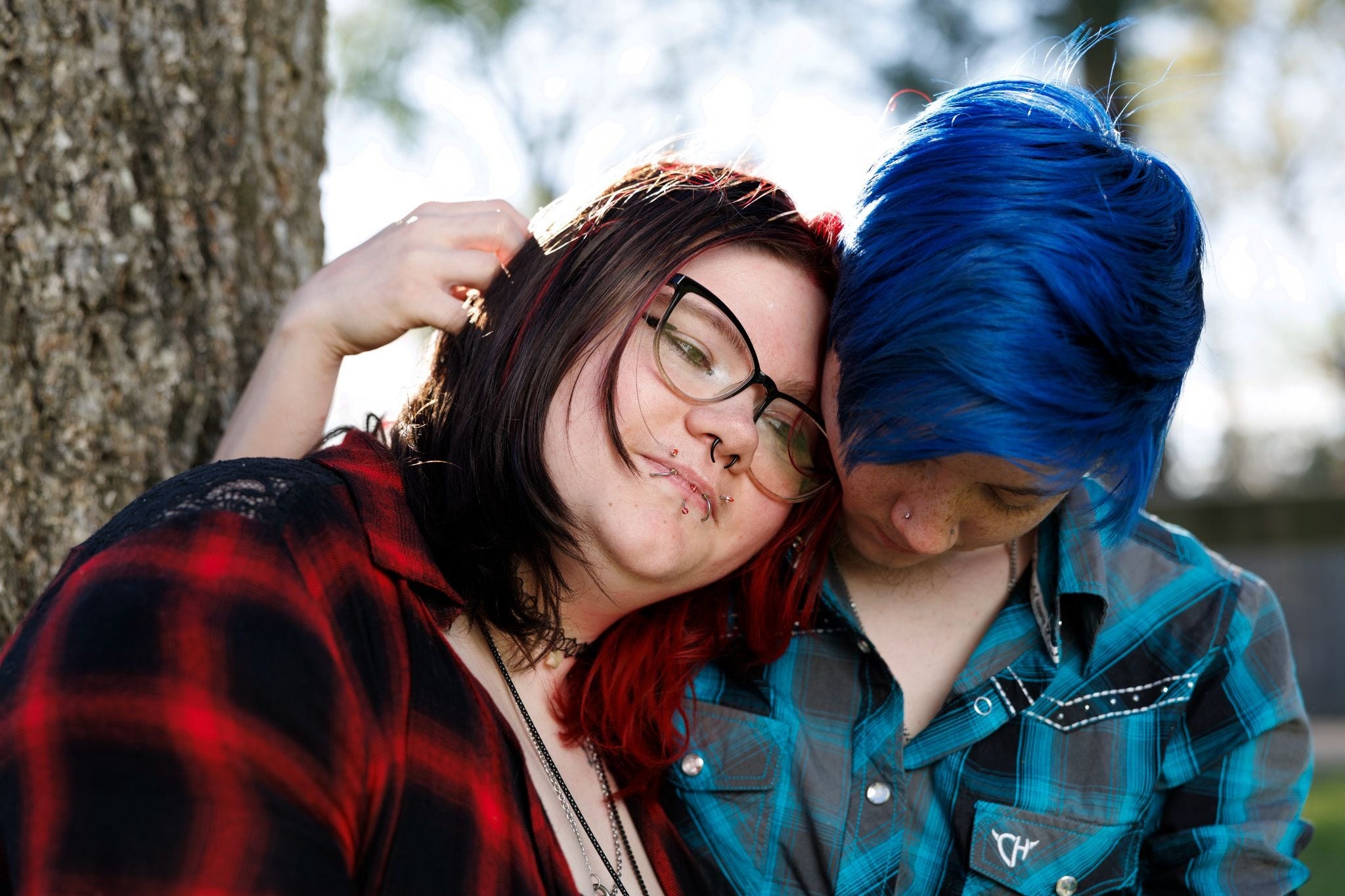
Grayson says that he was mistreated for being trans and had to “dim down” his identity to receive placement. “My foster families would use our pronouns around our caseworkers,” he says. “As soon as they’d leave, they would just completely treat us like shit again.”
“As a trans kid, you’re really relying on luck to find a good housing situation,” says Amanda Finely, a mom in Kansas who took in Hayden and Grayson for a few months. “You’re relying on people who may have these same hateful beliefs. Hayden and Grayson really went through hell. I can’t imagine trying to navigate all of that as a child.”
Hayden says they went through at least eight caseworkers “that didn’t understand and didn’t want to understand.”
They say when they were placed on adoption websites, they were often referred to by their deadname and by the wrong pronouns, even though they explicitly told their caseworkers they identified as trans.
Hayden’s foster agency, KVC, wrote in an email to Uncloseted Media that there is “no specific field for sexual orientation in Matching Families,” the program they use to match foster kids to families.
“Caseworkers and foster parents really just don’t care,” Grayson says. “We’re children going from abusive and terrible homes back to more abuse.”
Grayson’s and Hayden’s caseworkers did not respond to Uncloseted Media’s request for an interview.
Faith-Based Objections
Part of the reason foster parents are able to get away with such treatment is because of religious exemptions.
Some states allow foster agencies to refuse services or act according to religious beliefs as it relates to LGBTQ kids and foster parents. These laws are of particular concern to queer kids because Christians are far more likely to foster compared to the general population.
Lifeline Children’s Services, a private agency that has been cited as a resource on ADF’s website, “doesn’t have any policies regarding LGBTQ kids,” according to a social worker who works for them.
While she told Uncloseted Media that she tries to place LGBTQ kids in accepting families, she says that’s more of a “personal preference.”
In November 2025, Trump signed an executive order titled “Fostering the Future for American Children and Families,” which says that parents should be allowed to foster even if they report religious beliefs that would prevent them from caring for an LGBTQ child.
On top of the order, there have been a slew of lawsuits from religious parents, some represented by ADF, saying that they should be allowed to foster even though they will not accept an LGBTQ kid’s identity.
In 2023, a Catholic couple filed a lawsuit against Massachusetts officials after the state denied their request to foster because they “would not be affirming to a child who identified as LGBTQIA.”
In a 2023 case, Jessica Bates argued that her religious beliefs prevented her from complying with some of Oregon’s trans-inclusive policies, including using a trans child’s pronouns.
The court sided with Bates, saying that Oregon’s policy likely violated her First Amendment protections. While the case is ongoing, the judge ordered a preliminary injunction that blocks the state from enforcing those requirements against her.
Cook disagrees with these policies. “Individuals from any background and faith are welcome to be a foster parent,” he says. “Your personal beliefs are your personal beliefs, but they cannot transfer out to the kids you are being paid to care for and who are being placed in your care to mitigate the abuse they came from.”
Persyn agrees, saying that sexual and gender minorities need to become a protected class to safeguard them against First Amendment lawsuits.
“If we have a bunch of Muslim faith kids and we need to place them, are we going to say no if your religion tells you? Would we allow that in the case of Black kids? Would we allow that in the case of the children of immigrants?” Persyn says. “Is there any other social category that the law recognizes where we would allow that?”
Why No Protections Are Problematic
Benjerman Xander, now 22 and living in Roseburg, Oregon, says his experience in the foster care system led him to participate in a class action lawsuit.
In the suit, it came out that the state’s foster-care data didn’t even know how many LGBTQ youth were under its care. The state assumed that only 2% of children in the system were sexual- and gender-minority youth, while the plaintiffs’ expert estimated the number to be nearly 10 times higher.
The order alleged that the state had “a policy of not asking” children in care whether they identified as LGBTQ, making it harder to place them with affirming families.
Xander was placed in the foster care system at 10 years old. He moved through 13 foster homes, eight facilities and three therapeutic homes, and said many caseworkers seemed to care more about whether a placement was “technically adequate” than whether it respected his identity.
Before he told his foster family he thought he was a boy, he remembers feeling like he had a hot iron in his throat.
“I choked on my words a little but then eventually it kind of poured out. And then once I said it, I felt so much better. I felt like that hot iron went away.”
Seconds later, his foster family erupted, saying they wouldn’t allow it in their house and immediately took him to church to get him baptized.
Many homes later, Xander was transferred to River Rock, a group home in a former juvenile detention center. There, staff stripped his access to testosterone, which he had been taking for two years.
He was teased mercilessly, with other residents calling him “shemale,” telling him he was broken, putting makeup on him against his will and physically fighting him.
“I was very suicidal. I felt like I was alone in the world, and I had no one to go to, no one to talk to,” he says. “It rips your heart apart, it rips your whole soul. It breaks you down to the point where trusting that you’re allowed to be loved, to be who you are, feels impossible.”
When Xander was finally placed in an affirming home, the difference was immediate. His new caseworker understood him, gave him options for where he could stay and tried to place him in LGBTQ households. “He changed my life.”
River Rock and the attorneys on Xander’s case did not respond to multiple requests for comment.
The Search for Affirming Homes
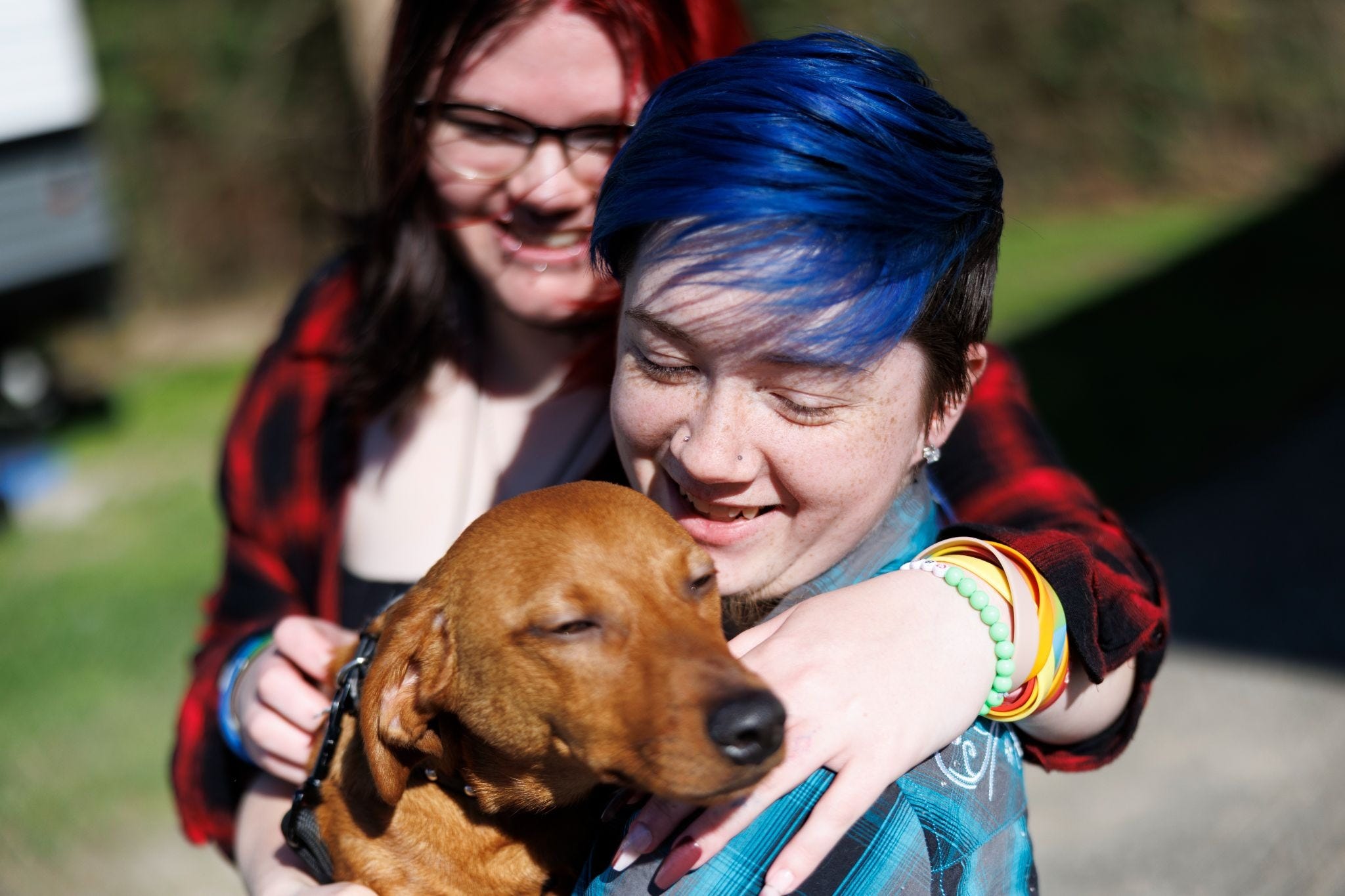
Hayden and Grayson say affirming homes save lives for trans kids. They both say that it was not until they were placed in an LGBTQ-affirming group home in Kansas that they felt their depression and suicidality began to ease.
“Through 10 years of foster care, I’d never been in a place like that,” Hayden says. “A lot of it was just abuse after abuse and no one understood. But when I got with them, they really, really helped. They need more homes like that,” they added, recalling that staff helped them get on testosterone, into therapy and into routine medical care.
Because the LGBTQ-affirming homes are in demand but somewhat undercover, they are hard to find, according to caseworkers who are looking for them.
“It even took my caseworker some time to find it,” Hayden says. “They also only have so many beds. And there are so many kids who need it.”
A caseworker in North Carolina says that it took them months to find placement for a trans girl.
“We actually found out about a hidden program with one of the private agencies in our state where a youth basically has to be referred internally,” she says. “So it’s a program within this private agency where they license foster parents specifically for LGBTQ children. But it’s not like you can find it on a Google search, which is really bizarre, because if families want to meet this need, you have to know somebody who knows somebody to get you that information.”
Looking Forward
Right now, most of the safety for trans youth relies on which state they live in and who their caseworker is.
In an ideal system, Persyn says, foster parents would not need a special rule telling them to treat LGBTQ kids with respect and dignity. But because the law still does not consistently recognize sexual orientation and gender identity (SOGI) the way it recognizes other identities, those protections remain fragile.
“There has to be some way to establish SOGI minority identity as an actual thing,” she says. “This is not a matter of politics or personal belief, but this is part of what the system is obligated to safeguard for the children it takes into its care.”
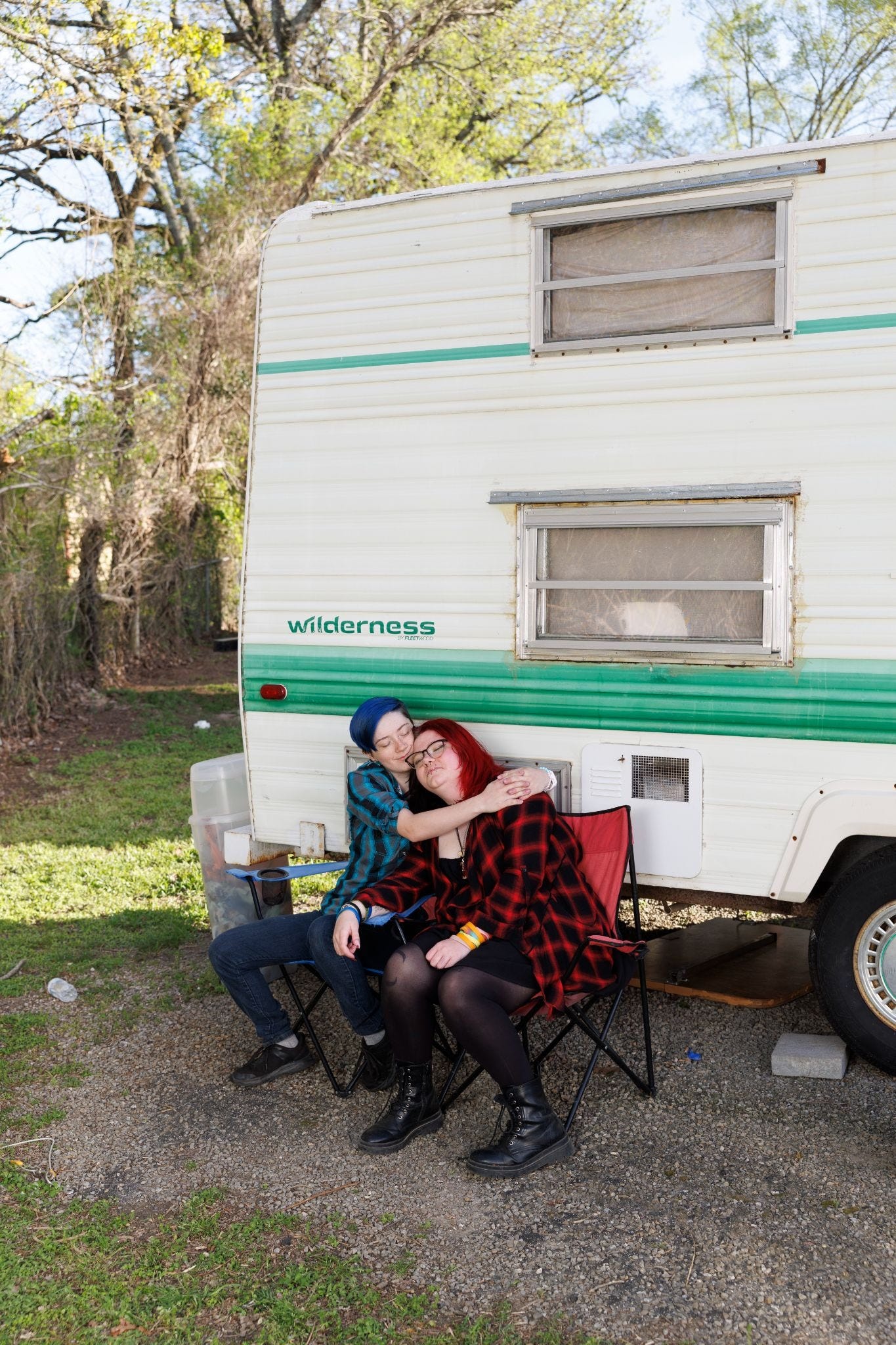
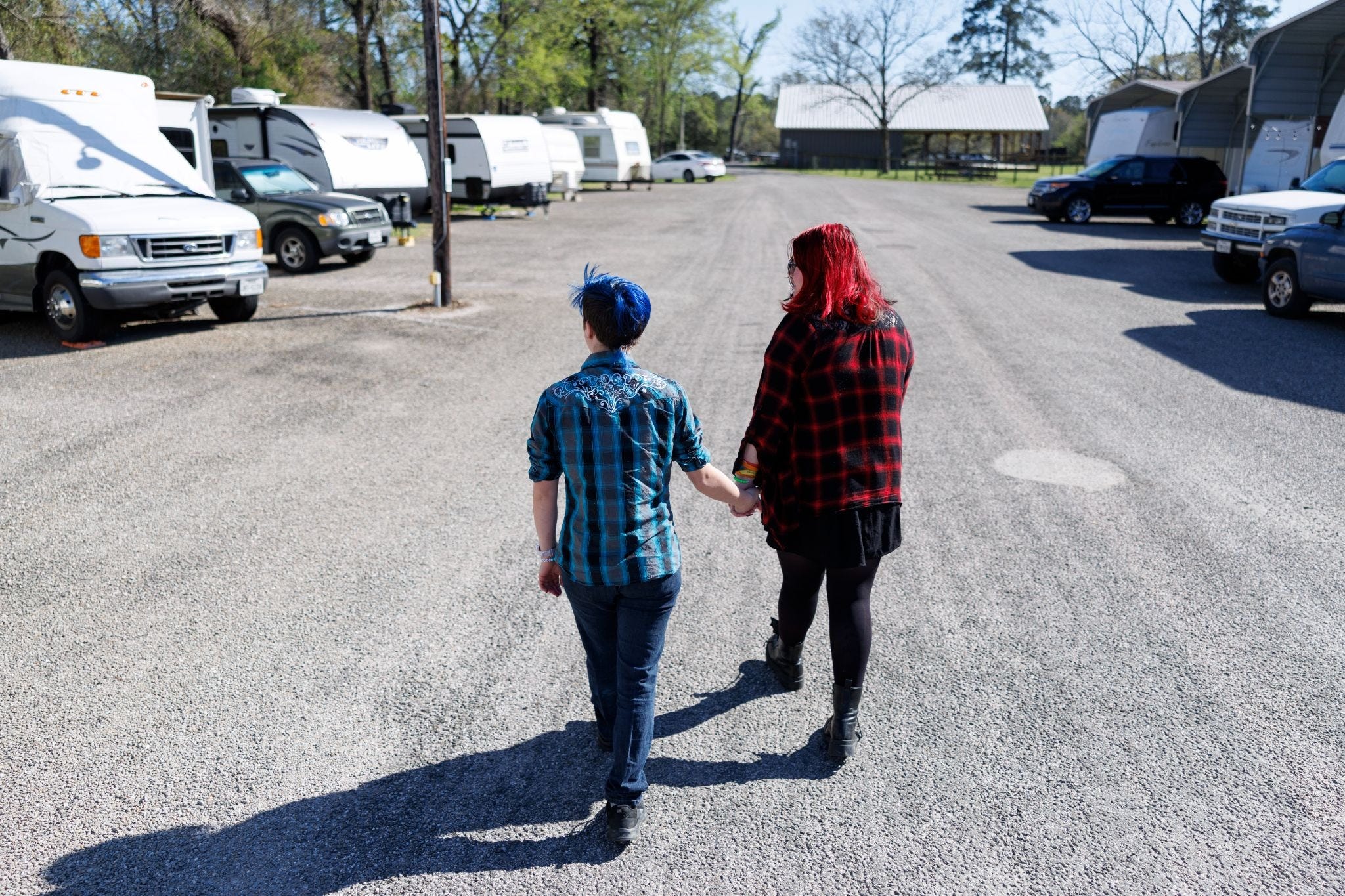
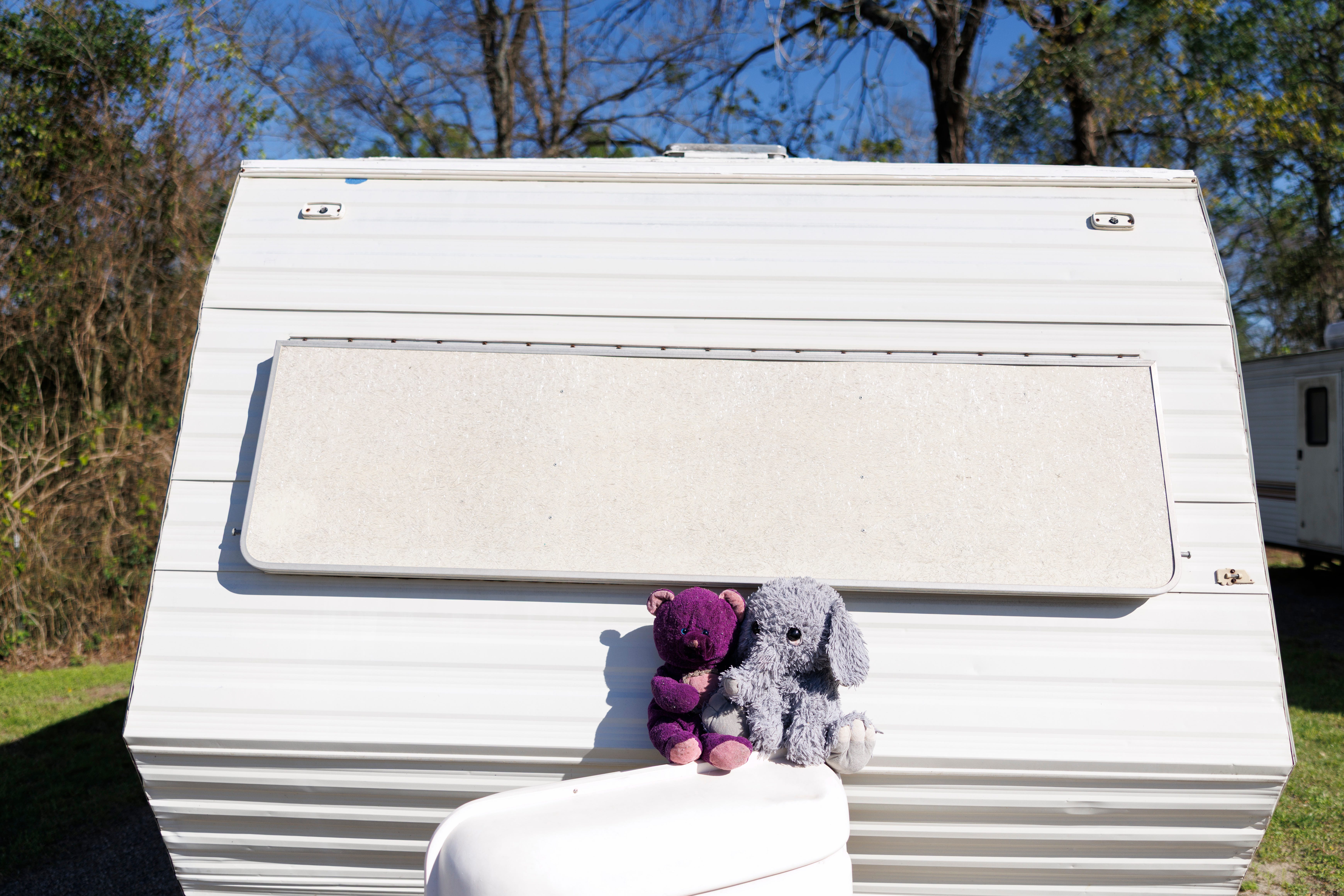
Hayden, who has now been out of the foster system for two years and is living in a trailer with Grayson in Texas, feels for the countless trans foster kids who are in unsafe situations. Their advice: “Do not lose hope.”
“People are going to continue to try and break your spirit, don’t let them,” Hayden says. “I know it’s hard and I know you feel like you don’t have a single person in the world, but you do.”
“There’s a huge community that cares about you,” Grayson adds. “They have your back and if you just keep fighting through your battles and keep going and find that light at the end of the tunnel, you’ll get there and then when you do get there it’s gonna feel amazing.”
In an email to Uncloseted Media, KVC’s PR and Media Relations Director Christina Santiago, wrote, “We cannot comment on any specifics regarding youth in our care due to HIPAA and privacy restrictions. However, we can share that we are deeply committed to our core values, including that the heart of our work is helping people. Our team prioritizes placing youth with families that are best suited to meet their individual needs, and we are constantly reviewing our practices and protocols. We always welcome and greatly appreciate feedback from youth with lived experience, to ensure that our mission-driven care continues to evolve with the needs of the youth and families we serve.”
Editor’s Note: Mary Kelly Persyn’s title was updated to reflect her current position.
If objective, nonpartisan, rigorous, LGBTQ-focused journalism is important to you, please consider making a tax-deductible donation through our fiscal sponsor, Resource Impact, by clicking this button:

From abortion care to gender-affirming care, youth deserve autonomy over their own bodies! Our country's family policing system is failing kids again and again. Thank you for uplifting Hayden's story 🧡
I'm sobbing. I'm so glad Hayden shared their story. Very brave of both of them. 🩵