

'Take the Test, Risk Arrest': Why Some HIV-Positive Americans Are Still Forced to Register as Sex Offenders
Survivors of AIDS-era exposure laws are fighting to overturn statutes that ignore modern science and disproportionately punish LGBTQ Americans of color.

Keywords: HIV criminalization, sex offender registry, HIV disclosure laws, HIV-positive individuals.
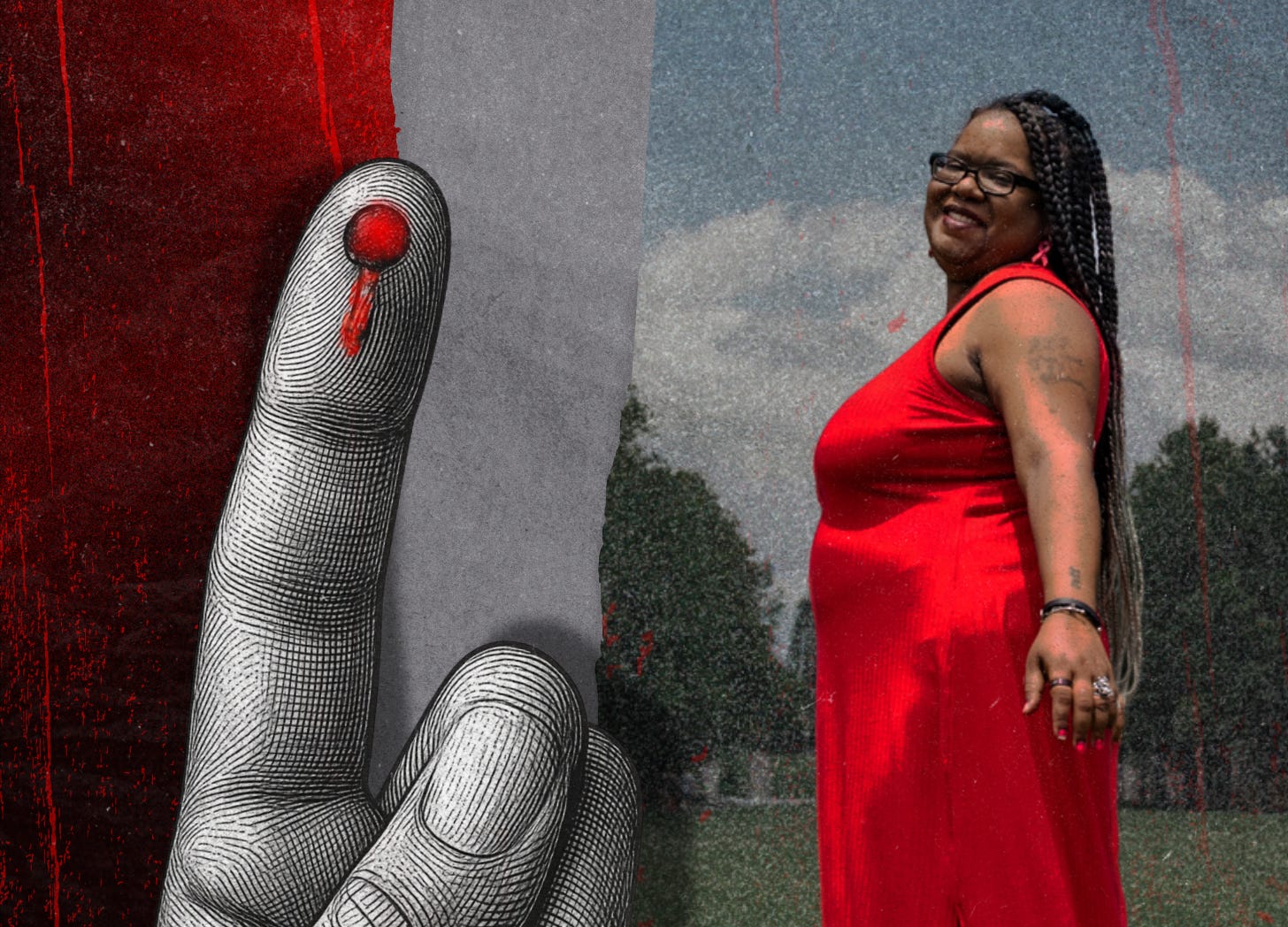
For nearly 17 years, Lashanda Salinas-Hicks remained shackled to the reality of life on the sex registry: She was legally required to stay 300 feet away from schools, parks and playgrounds, and she was forced to report to the sheriff’s office four times a year or risk a felony charge.
That’s because in 2006, Salinas-Hicks’ partner pressed charges against her after a break up, accusing her of having sex without disclosing that she was HIV-positive. Although she says her partner knew of her status before engaging in intercourse with her, that didn’t stop her from being jailed for about two months, put on a three-year probation and forced to register as a sex offender.
“I was in a state of depression for 17 years because, if I went out, I had to constantly watch my back,” Salinas-Hicks told Uncloseted Media and GAY TIMES.
Though not physically behind bars, the 44-year-old retreated from public life. While Tennessee law specifies that incidental or accidental contact with minors is not technically a crime, Salinas-Hicks says law enforcement told her from the start that she “can’t be around any kid” or she’d risk being thrown in jail.
Out of fear, she listened to that directive. She no longer went to church services as children stood in the pews. She no longer shopped during the day, opting to get groceries early in the morning when she was less likely to be around children. She couldn’t even be around her family, whom she didn’t see for the extent of her time on the registry, save for her disabled sister for whom she cared.
“It’s like ripping a Band-Aid off of a sore,” Salinas-Hicks says of her time on the sex offender registry.
Despite the fact that Salinas-Hicks was and remains undetectable—meaning the amount of the virus in her blood was so low that it’s impossible to transmit through unprotected sex—she was resigned to nearly two decades of life on the sex offender registry.
Salinas-Hicks is one of the more than 4,400 Americans who have been forced to register as a sex offender because of their HIV status, according to data aggregated by the Williams Institute. And today, 32 states still impose criminal penalties for HIV-positive people who fail to disclose their HIV status before sexual intercourse.
As of this year, five states—Louisiana, South Dakota, Arkansas, Ohio and Washington—may require registration on a sex offense registry as part of the punishment for a conviction under HIV-specific laws.
Despite the availability of HIV prevention drugs, such as pre-exposure prophylaxis, there’s still an effort to harden HIV criminalization laws in some parts of the U.S. In January 2025, New York Republicans introduced a bill to make the state’s current misdemeanor statute on HIV transmission more punitive, and Louisiana introduced a bill to make the “intentional infection of a sexually transmitted disease” a felony.
“[The laws are] a relic of the past,” Jada Hicks, senior positive justice project attorney at the Center for HIV Law and Policy, told Uncloseted Media and GAY TIMES. “You could technically in some states be virally suppressed, incapable of sexually transmitting to another person and still be convicted for an HIV-related [offense].”
Laws Written for a Different Era
The U.S. was the first country in the world to instate HIV criminalization laws, with dozens of states implementing them during the height of the AIDS epidemic in 1987. Some states, including Florida and Louisiana, maintain a “civil commitment” provision, meaning an individual who has already served their prison sentence for HIV-related charges may be subject to involuntary commitment to mental health or medical facilities.
These laws were implemented under the assumption that HIV is incurable and a death sentence. But advancements in medication, such as antiretroviral therapies, have rendered this legislation obsolete. In 2024, an estimated 57% of those living with HIV in the U.S. were undetectable.
These laws may still be in place because of a knowledge gap. A 2019 Kaiser Family Foundation survey found the majority of Americans remain unaware of certain HIV preventative measures.
“Not a lot of people understand HIV. They don’t understand the realities surrounding the roots and risks of transmission,” Hicks says. “I think a lot of people still think of HIV as a death sentence.” She says it’s this ignorance that is condemning innocent people to lengthy sentences and the confines of a life on the sex registry.
“These sentences … are extremely and unduly harsh,” she says.
Infection as Victimization
In some cases, Hicks says people living with HIV don’t even need to engage in sexual intercourse to receive charges. In various states, an HIV-positive person can face criminal charges if they spit, vomit or bleed during an interaction with law enforcement.
Even discussing sex can lead to criminal charges for those with HIV. In many places, prostitution is treated as a misdemeanor, but in states like Tennessee, someone with HIV can face a felony charge of aggravated prostitution. “Even having a conversation and agreeing to engage in sexual activity in exchange for money can be enough under some state laws to result in a conviction,” Hicks says.
Jose Abrigo, HIV project director at Lambda Legal, says that these laws are frequently co-opted as a lever of power in abusive relationships.
“What the data says is that HIV criminalization is used by abusers,” Abrigo told Uncloseted Media and GAY TIMES. “Their partner will say, ‘I’m going to go to the police and say that you had sex with me while having HIV.’”
Racist, Homophobic and Transphobic Laws
Abrigo says these statutes disproportionately target minority groups. “They’re also incredibly racist. … They’re also incredibly homophobic. They’re also incredibly transphobic.” Since the laws are predicated on enforcement, Abrigo says that trans and queer people of color—who are often the most policed and surveilled—encompass the brunt of individuals forced to enter the sex offender registry.
According to the Williams Institute, Black Americans are most likely to be arrested and convicted for HIV-related allegations.
“It’s a dual punishment,” Abrigo says.
The Law Versus Public Health
These laws may also be exacerbating the spread of the virus. Because most state statutes require an individual to have knowledge of their status as a prerequisite for prosecution, many people adopt a “the less I know, the better” mindset to shield themselves. Hicks says the slogan among some communities has become “take the test, risk arrest.”
While HIV rates have plummeted in the U.S.—falling from a peak of about 130,000 annual cases during the mid-1980s to an estimated 32,000 in 2022—criminalization laws present a roadblock to further mitigation.
And those efforts come during a tumultuous time for individuals living with HIV. Despite announcing goals to defeat the HIV epidemic in the U.S. in 2019, President Donald Trump has slashed federal funding for HIV research. And last year, he ended a 37-year tradition of recognizing World AIDS Day.
“Under this administration, I actually think we’re going to see continued increase of carceral approaches, meaning I think that we’re going to see states trying to further criminalize based on health status,” Hicks says.
Small Changes Come Too Late
In some pockets of the U.S., there are changes taking place. In 2023, Tennessee overturned its statute requiring HIV-positive individuals to be listed on the sex offender registry. While the law still carries felony offenses for individuals who fail to disclose a positive HIV status to sexual partners, the reversal of the sex offender registry provision meant 154 Tennesseans—including Salinas-Hicks—would no longer be required to be listed.
When Tennessee modernized the law, the first thing Salinas-Hicks did was visit her younger cousin, who was 2 when she first entered the registry.
“I went to her and I hugged her and I told her, ‘I know you don’t know me, but I’m your cousin and I want to get to know you,’” she says.
Salinas-Hicks played a pivotal role in overturning Tennessee’s law. She lobbied at the state Capitol starting in 2021, participating in demonstrations like the Day on the Hill, an event for community members to speak with lawmakers. She says she shared her story with senators as a way to “hit them in their heart” and educate them on how outdated laws are hurting people.
“We’ve got to get up there to the Capitol and get in these people’s heads,” she says.
Maryland and North Dakota also repealed their HIV criminalization laws last year.
But overturning the sex registry provision to Tennessee’s HIV criminalization law was only half the battle. The underlying charges for criminal exposure to HIV in the state remain a felony. Salinas-Hicks says that advocates have pushed to reduce that charge to a misdemeanor, but the state government wasn’t open to that amendment. And so, advocates continue to push to reduce the charges associated with HIV exposure in Tennessee, as well as in 31 other states.
For Salinas-Hicks, the fight is a matter of adjusting to the current reality of HIV, a disease that is no longer considered a death sentence, and which doesn’t define a person’s life. “Let’s fix the laws to match the science,” she says.
Salinas-Hicks’ former partner did not respond to Uncloseted Media’s request for comment.
If objective, nonpartisan, rigorous, LGBTQ-focused journalism is important to you, please consider making a tax-deductible donation through our fiscal sponsor, Resource Impact, by clicking this button:

I lived through the Reagan years of the AIDS crisis of the 1980s as a queer teen and young adult. The criminalization aspect is heartbreaking for those who live with what was once considered a death sentence - and for people like Lashanda Salinas-Hicks - it was a death sentence in a different way. There should be justice for her and every other of that 4000+ who were criminalized. Thank you for this eye-opening heartbreaking post.
Why are we playing the race card over a DEADLY VIRUS!!?? It’s a virus, it doesn’t discriminate. And I thought we didn’t like the stigma of it being considered a gay disease, so stop feeding into it