

How Fox’s OutKick Relentlessly Targeted a Michigan Teen Girl
Dan Zaksheske has written 18 articles focused on a trans girl who plays high school volleyball. Why?


Since Sept. 5, right-wing sports publication OutKick has published 19 articles about a 12th grade girls’ volleyball player at Skyline High School in Ann Arbor, Michigan. The player caught the attention of reporter Dan Zaksheske after he obtained public documents that appear to show her requesting a legal name change from a traditionally masculine first name to a traditionally feminine one.
Over the next three months, Zaksheske would write 18 of the 19 articles OutKick would publish about this student. He and other OutKick reporters attended multiple high school girls’ volleyball games where they recorded and reported on Skyline High’s volleyball season. At the heart of each article was a focus on the girl, who Zaksheske refers to as a “trans-identifying biological male.”
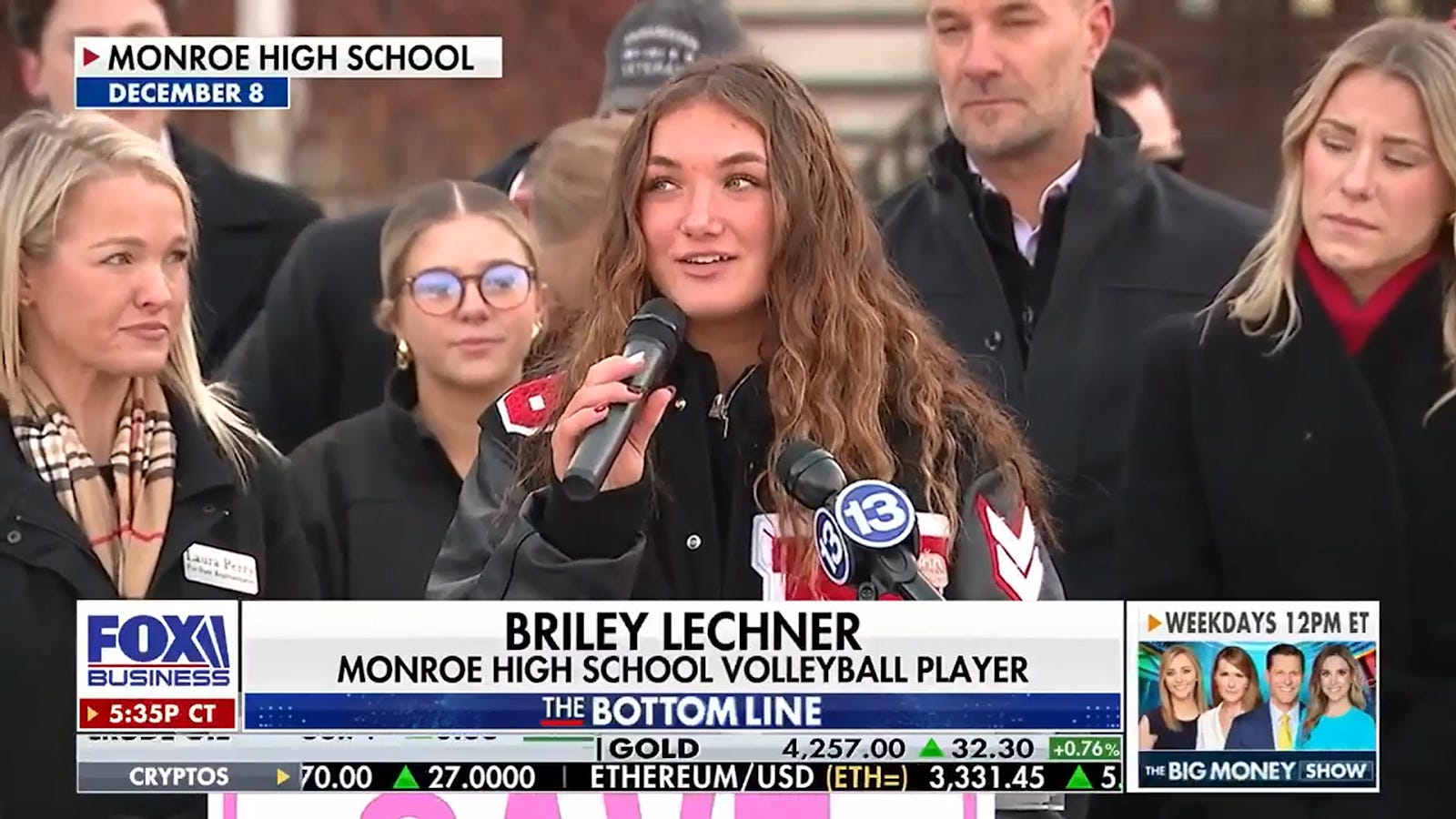
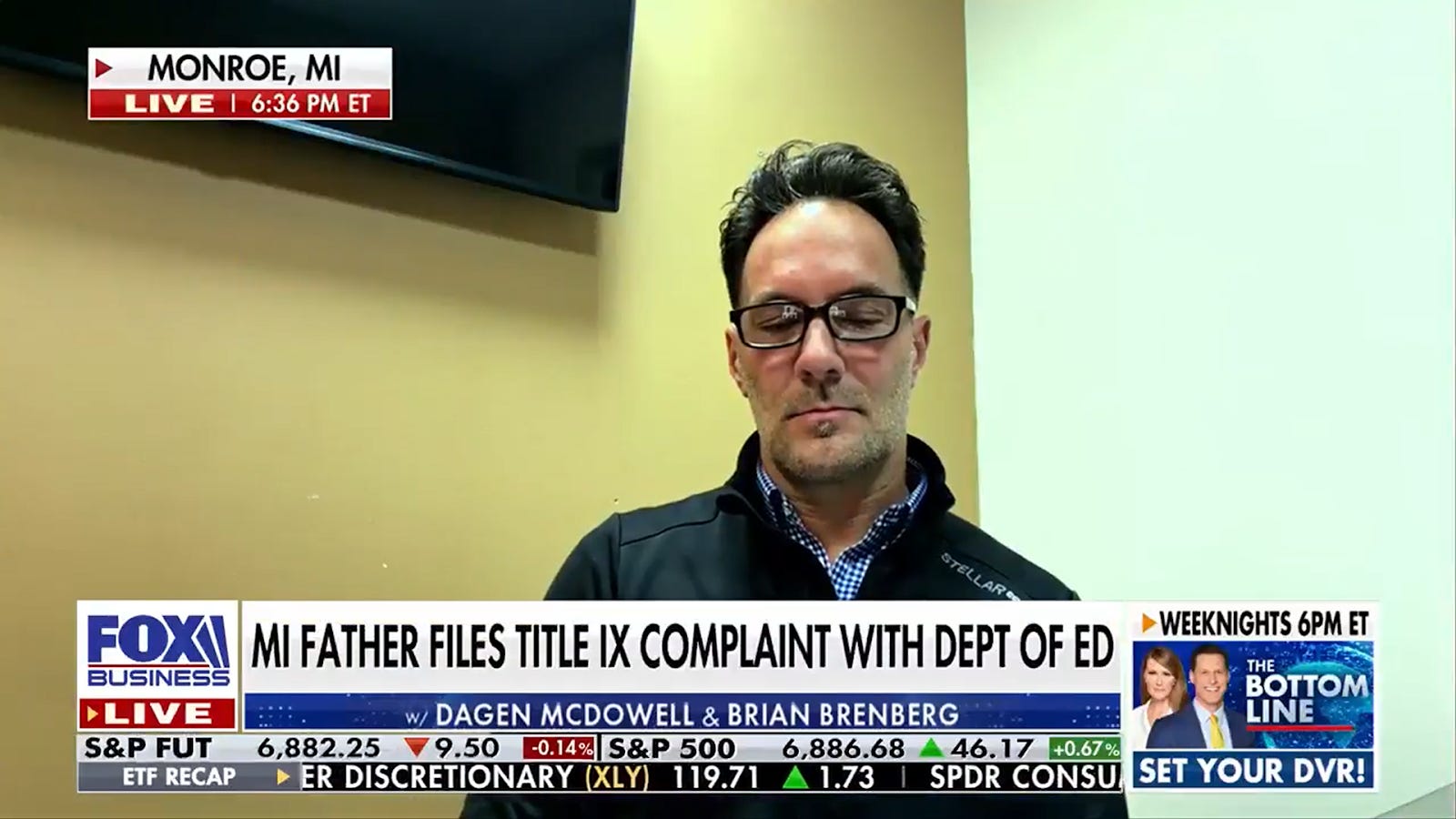
Zaksheske’s reporting stoked a controversy that drew the attention of multiple right-wing publications, politicians and influencers. This coverage led Sean Lechner, whose cisgender daughter played against Skyline and allegedly shared a locker room with their team, to file a Title IX complaint.
While the Michigan High School Athletic Association (MHSAA) does require trans athletes to get a waiver approved to compete in official state tournaments, the Democrat-majority state Senate outright rejected the idea of a trans athlete sports ban earlier this year. In addition, LGBTQ Michiganders have strong anti-discrimination protections under the state’s Elliott-Larsen Civil Rights Act.
In the complaint, Lechner calls for a ban on “biological males from competing in female sports” and for a “full investigation into actions and communications of Ann Arbor Public Schools/Monroe High/Chet Hesson,” citing a Trump executive order that declares that trans-inclusive policies are in violation of Title IX.
Shortly after the complaint was filed, Uncloseted Media published an interview clip with Hesson, the athletic director of Monroe Public Schools, in which he simply said his “heart goes out” to the player for being under such scrutiny. Less than 24 hours later, he was put on administrative leave.
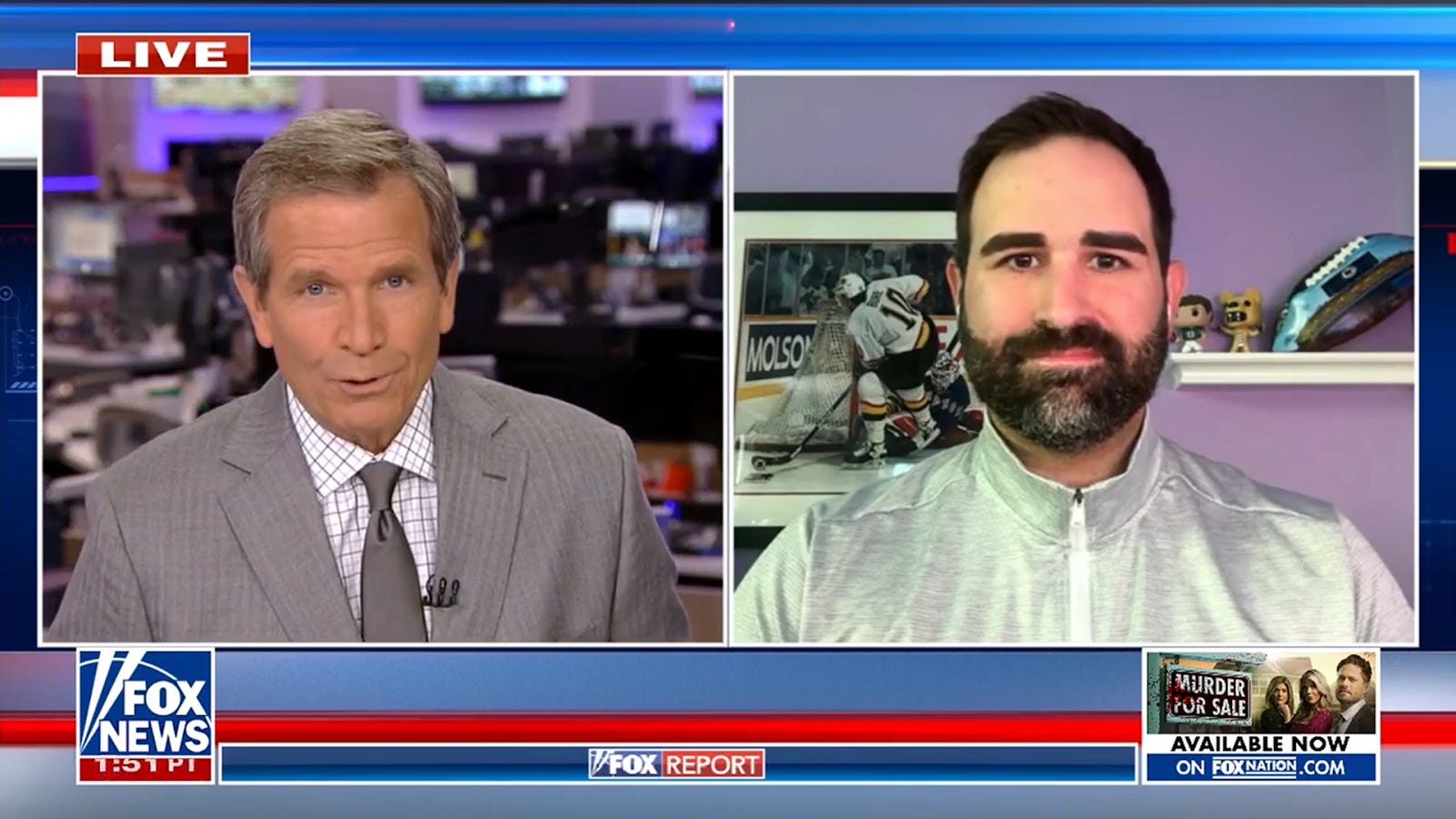
As this story spreads like wildfire, experts in journalistic ethics are raising concerns about Zaksheske’s reporting.
“OutKick’s inflammatory reporting on a Michigan high school volleyball player who may or may not be trans disregards several core principles of the Society of Professional Journalists’ [SPJ] Code of Ethics,” Dan Axelrod, chairman of the SPJ’s ethics committee, told Uncloseted Media. SPJ’s Code of Ethics, originally adopted in 1926, has been embraced and used by thousands of journalists from numerous newsrooms and schools.
“The Code cautions reporters to ‘show compassion for those who may be affected by news coverage,’ and to ‘use heightened sensitivity when dealing with juveniles,’ while ‘weigh[ing] the consequences of publishing or broadcasting personal information,’” Axelrod says. “[OutKick] has essentially ignored all those ethical principles, given [Zaksheske’s] relentless coverage of the player, which has led the public to easily infer who she is, and its negative framing of her story.”
Ethical Questions
The player, whose mother did not respond to an interview request, does not appear to have publicly come out as trans prior to the publication of Zaksheske’s first article.
Chad Painter, associate professor and chair of the communications department at the University of Dayton, says this “brings up a whole host of issues.” While Zaksheske wrote that he did not name the girl “because the student athlete is under 18,” Painter says that doesn’t do enough to conceal her identity.
In his reporting, Zaksheske references the existence of publicly accessible name change documents, the girl’s county of residence and the name of a local volleyball club she’d been a part of. “Someone who is reasonably well-versed in being able to Google someone can figure this out pretty easily,” Painter, who has co-authored multiple media ethics textbooks, told Uncloseted Media.
“There’s longstanding norms in newsrooms that we don’t out people, that that is a very personal decision that an individual gets to make, and unless there is a massively compelling reason to do that, it’s not our role,” he says. “The idea that he is in the clear because he didn’t specifically write this person’s name in a story, it wouldn’t hold up to journalistic scrutiny.”
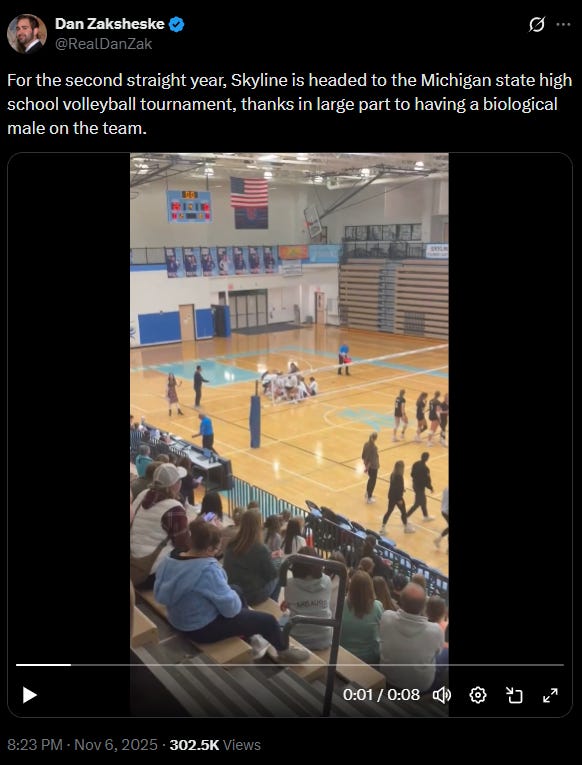
And Zaksheske’s reporting appears to have outed the girl. The same day that he published his first article on the matter, an X account whose mission is “to call out these male athletes and expose the damage that they have each caused to women and girls in sports” published the girl’s full name and deadname along with multiple photos and videos of her. (Uncloseted Media has chosen not to link to these posts directly in the interest of her privacy.)


In addition to the 18 articles Zaksheske wrote, he also tweeted about the situation at least 41 times and attended at least four high school girls’ volleyball games. While watching, he recorded videos of the girls playing and then posted them to X and OutKick’s website.
“Having 19 stories about one athlete … to me, that seems like this coverage is out of line with how we’d normally talk about, especially high school sports, which, frankly, no one outside of this little area in Michigan are going to really care about,” says Painter.
“Outside of the culture war stuff, I don’t see where this is a story.”
When Zaksheske was confronted by multiple people at the school about attending and recording one of the games, he published another article accusing them of harassment. “I was shadowed by the school principal and harassed and stalked by Skyline supporters,” he wrote.
Painter notes that while Zaksheske was within his rights as a journalist and citizen to be attending and recording such events, he understands why the school would approach him with skepticism.
“I have a feeling that if I just started showing up randomly to high school volleyball games and taking photos and videos, there would probably be questions,” Painter says. “Because, again, we are talking about minors.”
“The reporter has a right to pursue news … and that right especially exists at a public school,” says Axelrod. “However, one has to wonder at what point is the coverage just pandering to curiosity as opposed to serving a valid societal purpose in informing and facilitating larger discussions about real and valid questions regarding the participation of trans athletes in sports.”
Misinformation and Animus
Zaksheske has pushed back against similar criticism on X, accusing those who question the ethics of his reporting of being “in favor of sterilizing, mutilating and castrating children” and characterizing his reporting as “exposing their heinous acts.”
“I don’t see that as an ethical problem because it doesn’t even enter into the world of ethics,” Painter says of Zaksheske’s rhetoric. “It is wrong factually and it doesn’t really have a place in what we do in terms of the journalism field.”
Misleading rhetoric about trans health care is common throughout OutKick’s reporting. Zaksheske has written several articles about gender-affirming care, where he has claimed that puberty blockers “take healthy children and sterilize them for life.”
Puberty blockers have been FDA-approved for treating precocious puberty in cisgender children since 1993. Multiple studies have found no evidence of them causing permanent infertility, and gynecologists and endocrinologists have said that they do not cause sterilization.
Much of Zaksheske’s coverage of trans people has been negative. Of adult trans women, he wrote that “that person might see himself as a woman, but we are under no obligation to ‘affirm’ that.” He also wrote that doctors who provide gender-affirming care “have to answer to their consciences.”
OutKick also generally misgenders trans women and girls, referring to them as “males,” “biological males” or “trans-identifying males,” additionally using masculine pronouns to refer to them.
Painter notes that this goes against the “Associated Press Stylebook,” which he says “any newsroom worth its salt is going to follow.”
“The journalist and the news outlet squander their credibility covering these types of societal questions when they use language … that fails to recognize and respect the underlying humanity of an entire group of people,” Axelrod says.
In an email, Brian Karpas, OutKick’s director of media relations, told Uncloseted Media that the publication “stands by the thorough and responsible reporting of Dan Zaksheske and will continue to protect women from competing against biological males.”
Beyond Michigan
OutKick’s extensive reporting of the Michigan volleyball player is reflective of the publication’s increasingly conservative bent since it launched in 2011. In 2021, it was acquired by Fox Corporation. Since then, it has partnered with Fox News and has become home to numerous right-wing personalities known for anti-trans rhetoric. These include founder Clay Travis, who has said World Aquatics is “encouraging …super young kids to be transitioned”; Tomi Lahren, who said that liberals “don’t know what a woman is”; and Riley Gaines, who referred to an eighth-grade trans girl as a “mediocre man.”
This story in Michigan is not the first time OutKick and Zaksheske have hyperfocused on one trans girl. They were one of the first national publications to report on California-based track and field athlete AB Hernandez, who later became the center of a feud between the Trump administration and Gov. Gavin Newsom. Since March, OutKick has published at least 24 articles about Hernandez, 10 of which were written by Zaksheske. They sent reporters to at least two games to photograph Hernandez and other teenage players. Additionally, OutKick published 15 articles and attended at least four games covering the story of a trans softball player in Minnesota, whose presence on the team became a key point of a lawsuit by the Southern Poverty Law Center-designated anti-LGBTQ hate group, Alliance Defending Freedom.
This massive amount of coverage is common for U.S. conservative media: A report published this year from Media Matters for America found that Fox News ran over 400 weekday segments mentioning trans athletes from Feb. 5 to June 6.
Consequences and Impact
All of this has had an impact. While the Title IX investigation is still pending, Hesson, who was named in the complaint, told Uncloseted Media that he had been targeted with harassment and vitriol online.
In the comments of the Instagram post, Hesson was attacked by numerous users: squaredbeach9 wrote, “Stop normalizing these freaks. You don’t give a bulimic chick a bucket and some gum.”
And others chimed in, saying:
“Guaranteed he has child pron on an electronic device.”
“Fuck off, poor tranny hates attention, give me a fn break.”
“So a male playing in women’s sports. And this cuck is defending it.”
All of this has come even though Hesson is not directly affiliated with Skyline High School, which is part of a different district. As such, he was not involved in the decision to allow the girl to play, and he was also not privy to whether she had a waiver.
Still, Zaksheske’s 18 articles have catapulted this small story to the national level. Lechner has been interviewed by journalists sympathetic to his cause, including Dave Bondy and Fox Business anchors. And since Hesson was placed on administrative leave, the Daily Mail, CBS News, the Toledo Blade, WTVG, MLive, The Times of India and more have covered the story.
In addition, numerous right-wing lawmakers and candidates have endorsed Lechner’s complaint. Republican state Rep. James DeSana posted a statement to Facebook “calling for Chet Hesson to be removed immediately.”
“The public cannot have good discourse, debate, or dialogue without good information,” Painter says. “Supplying that information is the fundamental duty of the news media. When journalists are distracted by inconsequential stories, then we’re not spending the time to cover interesting and important news that our readers really need.”
Both Painter and Axelrod took note of the small number of known trans athletes in the U.S. Last year, the NCAA’s president told a Senate panel that fewer than 10 of the 510,000 college athletes affiliated with the organization were transgender.
“This controversy is part of a much larger national narrative about transgender athletes and the LGBTQ+ community as a whole,” Painter says. “The entire national conversation is based on virtually nothing, so this particular set of stories are based on an inconsequential premise.”
Going Forward
If the Department of Education does find that Title IX was violated, the school district could risk losing federal funding if it continues to allow trans athletes to compete.
Zaksheske has been pressuring the MHSAA to confirm whether a waiver was approved for the volleyball player to compete, citing a statement from early September in which the association said it had not yet approved any waivers for the semester. On Dec. 9, MHSAA confirmed that one waiver was granted in the fall season, though no details were given in the interest of the student’s privacy.
While research into the relative athletic capabilities of trans and cis women is ongoing, numerous experts and athletes say that politicized vitriol, misleading information and outsized media attention about trans athletes makes girls’ sports less safe for all athletes.
“There are real, valid, and necessary societal discussions to be had about trans athletes participating against competitors who don’t match their birth gender, and ethical journalism can have a place in informing those discussions,” Axelrod says. “At the end of the day, this woman is still a human, and a child at that, not a canvas for OutKick to paint a distorted picture of one individual who’s a tiny part of a much bigger societal dialogue about trans athletes.”
If objective, nonpartisan, rigorous, LGBTQ-focused journalism is important to you, please consider making a tax-deductible donation through our fiscal sponsor, Resource Impact, by clicking this button:

This is a stalker and predator hiding behind a “journalist”job description.
I’d sue the hell out of this guy as her parents and seek his internet history and what apps he has on his phone to insure he has not been making any CSAM for the content acquired when she was under 18.
I want the contact information on this reporter, I want to send him some words regarding his obsession with this girl. She’s living rent free in his head. This reporter must think he can harass her out of sports. I’d like to harass him out of journalism, he’s terrible. Using his platform to push his own agenda of bigotry, hatred, and ILLOGICAL RACISM.
I’d like him to tell me how his racism makes sense. He can’t because it doesn’t make sense.